Developing problem-solving skills Word Problems Worksheets for Ages 6-9
3 filtered results
-
From - To
Unlock your child's potential with our "Developing Problem-Solving Skills Word Problems Worksheets" designed for ages 6-9! These engaging, age-appropriate worksheets challenge young learners to apply critical thinking and math skills in real-world scenarios. Each word problem encourages kids to read carefully, analyze information, and develop strategies for finding solutions. With a variety of topics and difficulty levels, our worksheets ensure that children build a strong foundation in problem-solving while having fun! Perfect for classroom use or home practice, these resources foster independent learning and cultivate a love for mathematics. Start your child's journey to becoming a confident problem solver today!
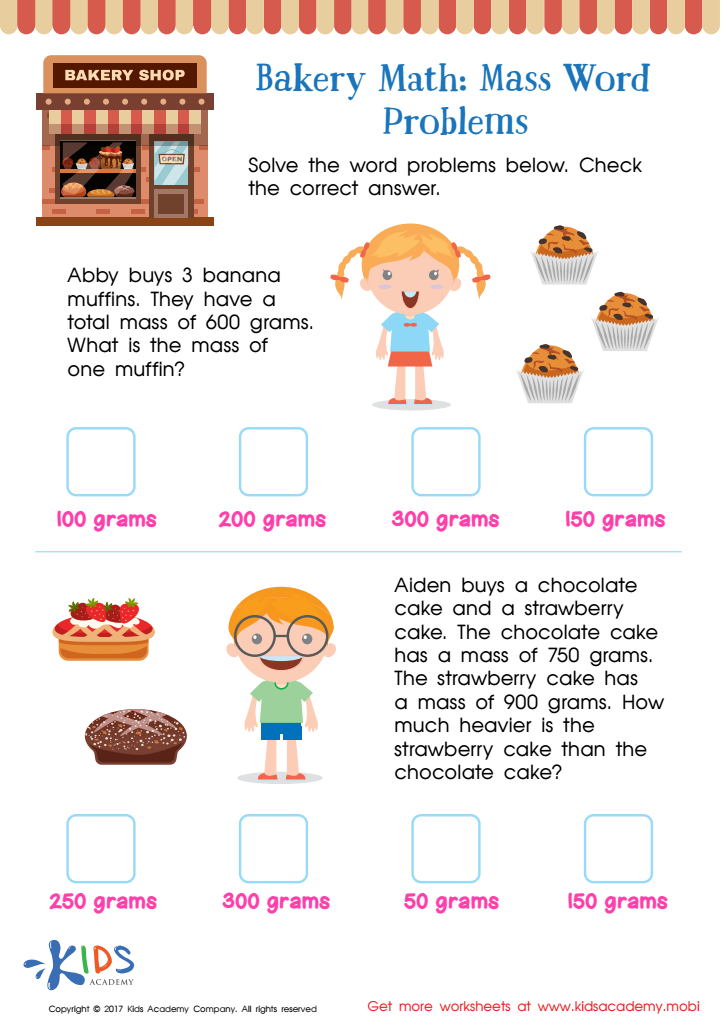
Mass Word Problems Worksheet
 Assign to My Students
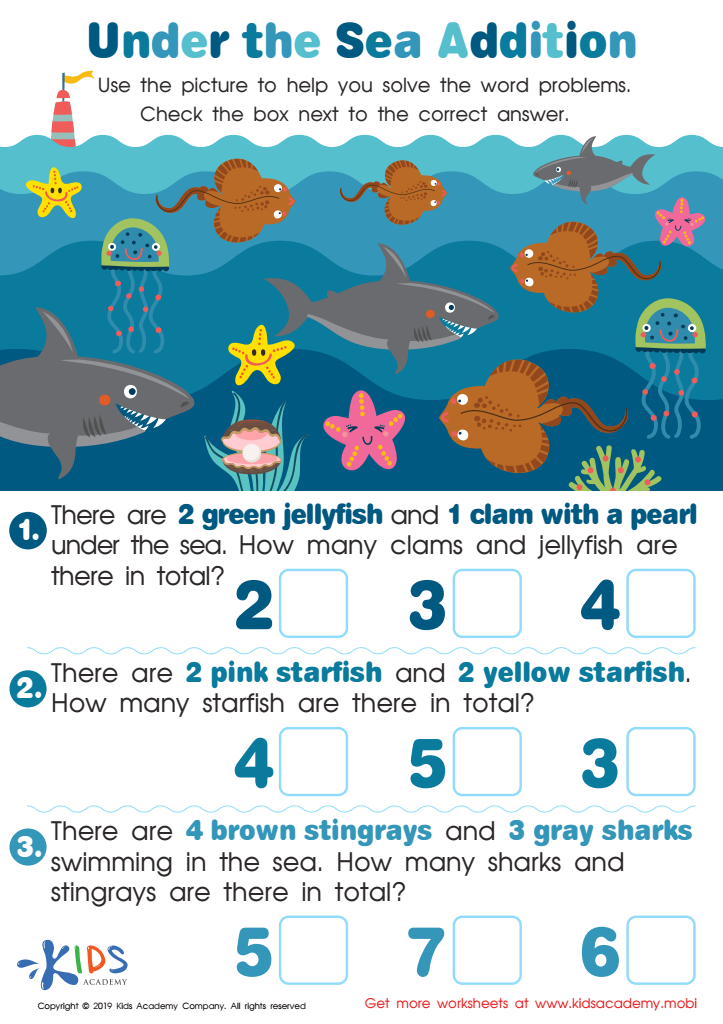
Under the Sea Addition Worksheet
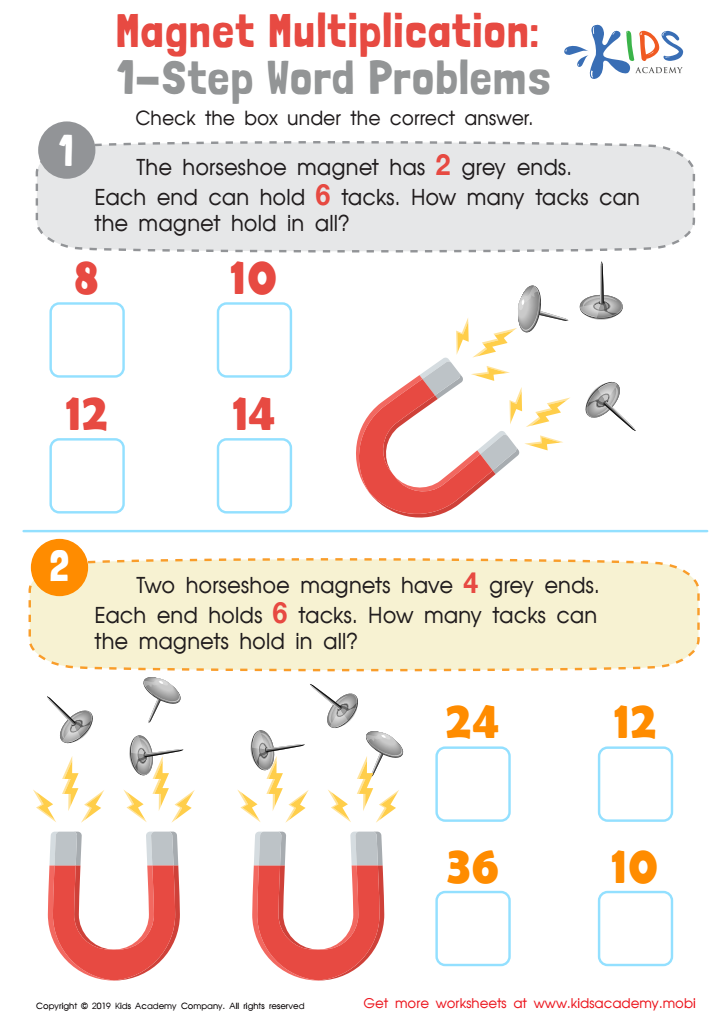
Magnet Multiplication: 1-Step Word Problems Worksheet








Developing problem-solving skills through word problems is crucial for children aged 6-9, as it lays the foundation for their mathematical understanding and critical thinking capabilities. First, word problems bridge the gap between abstract mathematical concepts and real-life applications. By encountering relatable scenarios, children learn to interpret information, identify relevant details, and make logical connections, enhancing both their comprehension and mathematical reasoning.
Additionally, solving word problems fosters persistence and resilience in young learners. They encounter challenges that require them to strategize, navigate setbacks, and find diverse solutions. This trial-and-error approach cultivates a growth mindset, encouraging them to view problems as opportunities for learning rather than obstacles.
Moreover, word problems also enhance language skills. As children read and decipher the text, they improve their vocabulary and comprehension, which are vital across all subjects, not just math. Teachers and parents play a pivotal role by providing support and encouragement during this process, allowing children to explore different methods and approaches.
In summary, nurturing problem-solving skills through word problems equips young learners with essential tools they will use not only in mathematics but also in daily life, academically and beyond. This investment in their development not only aids in immediate success but also fosters lifelong learning habits.








