Mental math practice Word Problems Worksheets for Ages 6-9
3 filtered results
-
From - To
Enhance your child's mathematical abilities with our Mental Math Practice Word Problems Worksheets designed for ages 6-9. These engaging worksheets feature a variety of word problems that encourage critical thinking and quick mental calculations. Perfect for developing essential math skills such as addition, subtraction, and problem-solving, our resources make learning fun and interactive. By tackling these real-life scenarios, kids will gain confidence in their abilities while honing their mental math techniques. Whether for classroom use or at-home practice, our worksheets are a fantastic tool for every young learner eager to improve their math skills. Explore our collection today!
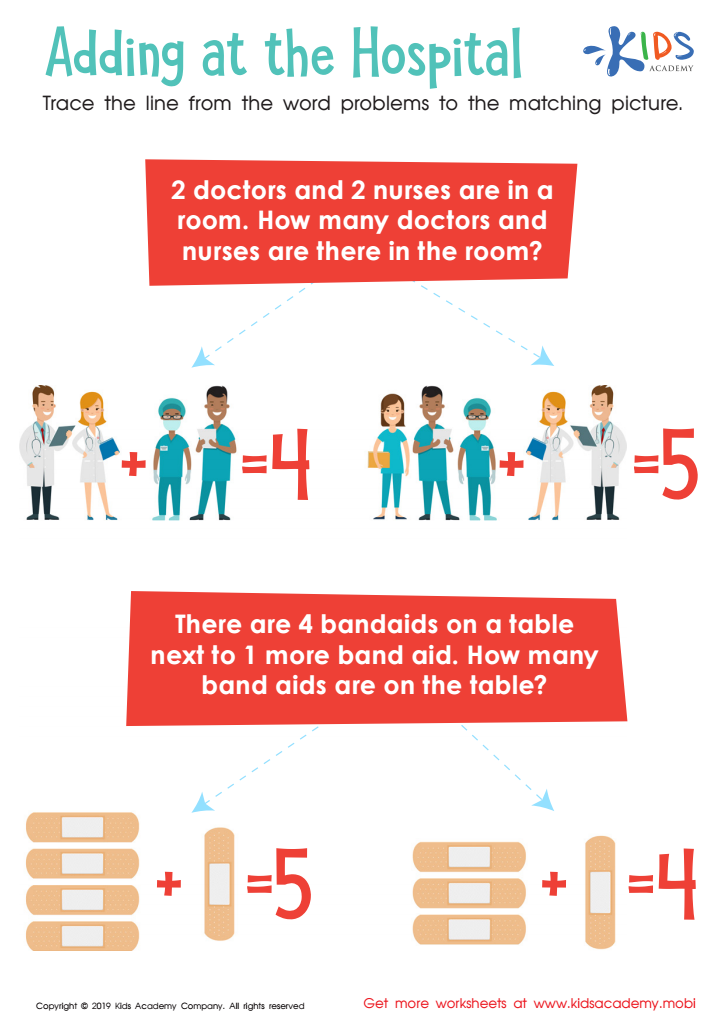
Adding at the Hospital Worksheet
 Assign to My Students
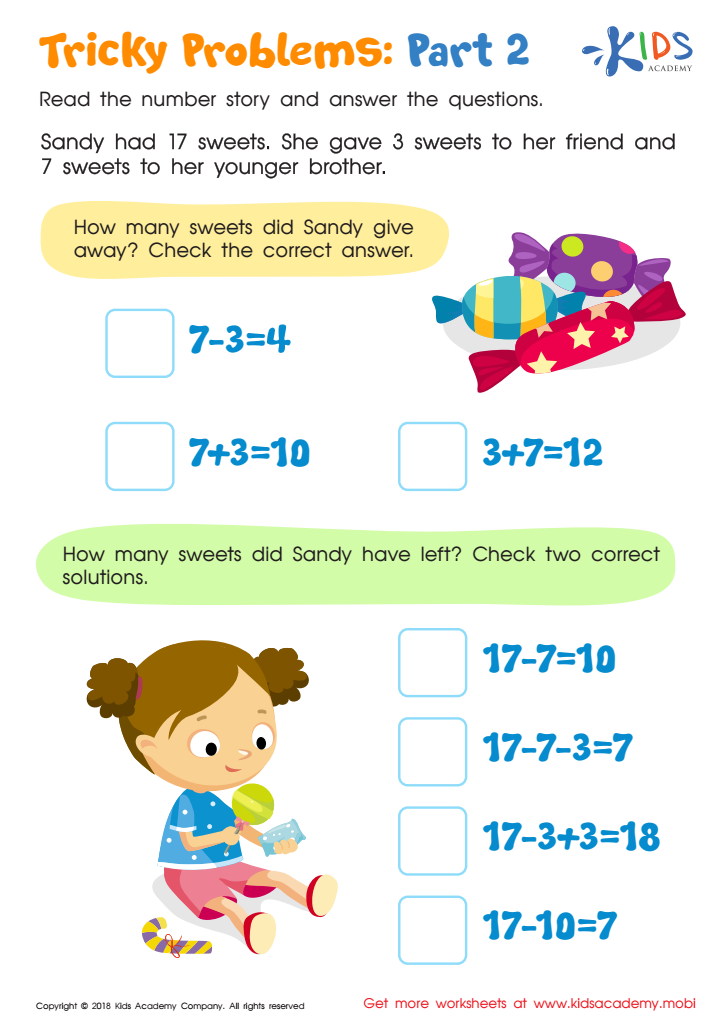
Tricky Problems Worksheet: Part 2
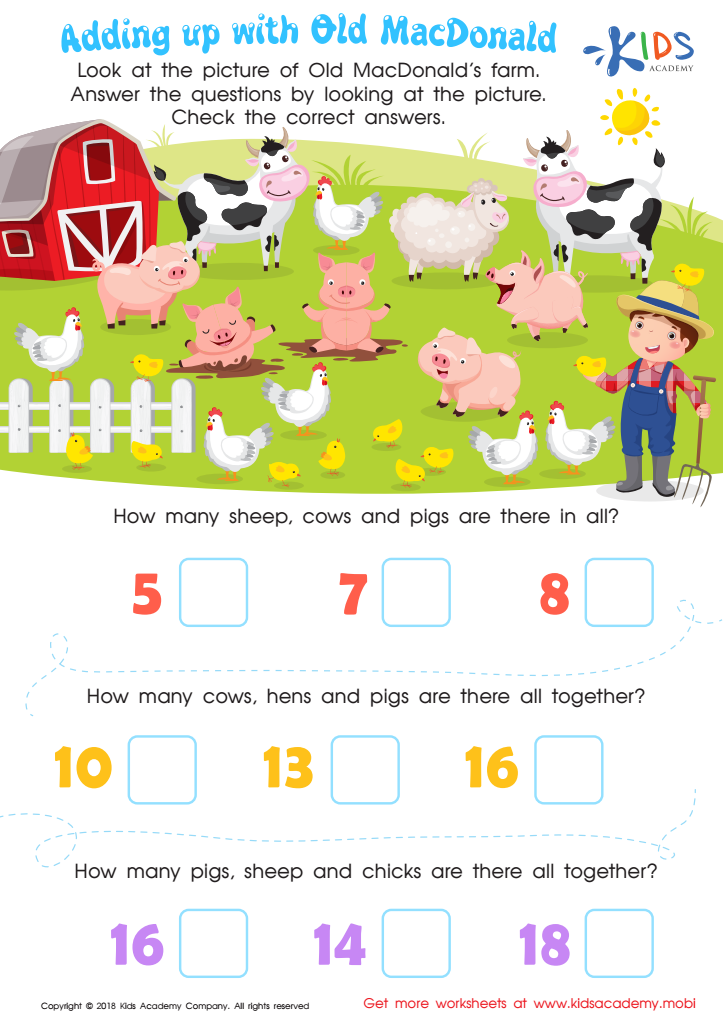
Adding Up with Old MacDonald Worksheet








Mental math practice through word problems is crucial for children aged 6-9 as it builds foundational mathematical skills and boosts cognitive development. At this age, children are developing their problem-solving abilities, and engaging with word problems helps them connect math to real-life scenarios. This not only enhances their understanding of mathematical concepts but also fosters critical thinking and reasoning skills.
Additionally, mental math encourages children to perform calculations in their head, improving their number sense and fluency. This is essential, as it prepares them for more complex mathematics in the future. It also builds confidence, allowing children to tackle challenges without relying solely on calculators or paper.
Furthermore, word problems enhance literacy skills; children must read, comprehend, and extract relevant information to solve the problem. This dual focus on math and literacy promotes overall academic success, fostering a growth mindset where students learn to see challenges as opportunities to grow.
Lastly, consistent practice with mental math word problems instills a love for learning, making math relatable and enjoyable. Thus, parents and teachers should prioritize mental math word problems in their educational approach, empowering children with essential skills for lifelong learning.








