Visual Learning Word Problems Worksheets for Ages 6-9
5 filtered results
-
From - To
Discover our engaging Visual Learning Word Problems Worksheets designed specifically for children aged 6-9. These worksheets utilize vibrant images and relatable scenarios to make math concepts more accessible and enjoyable. By connecting visuals to mathematical challenges, kids can enhance their problem-solving skills while boosting their confidence. Our carefully crafted problems cater to various skill levels, ensuring a suitable challenge for every learner. With a focus on real-world applications, these worksheets help kids understand and enjoy math in a fun, interactive way. Explore our collection today and support your child's mathematics journey with enriching visual learning tools!
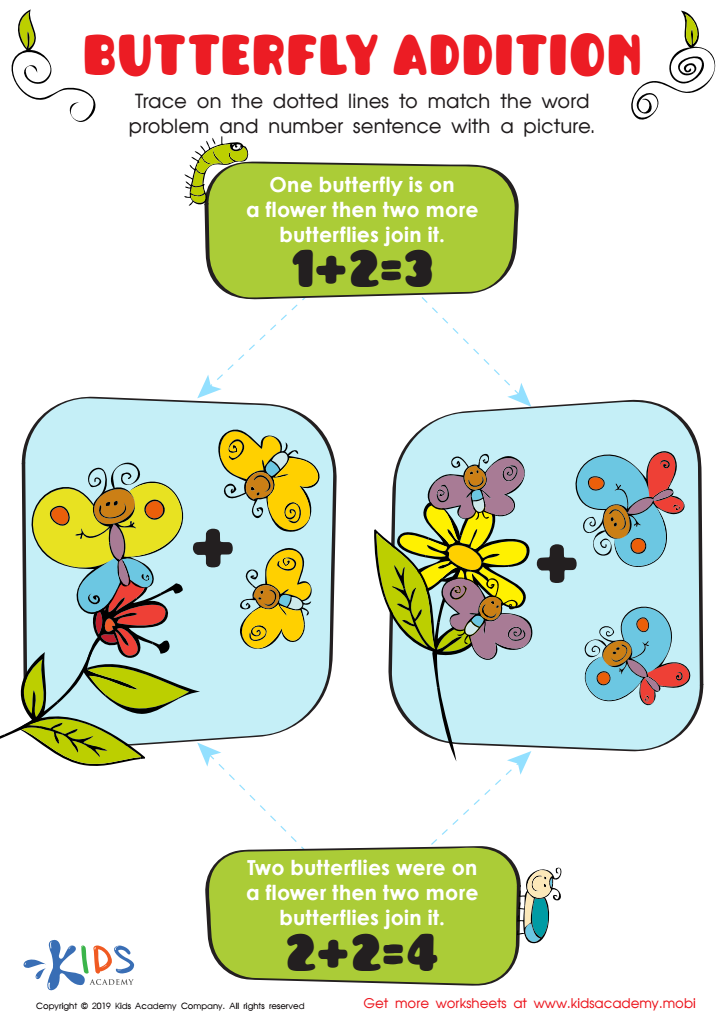
Butterfly Addition Worksheet
 Assign to My Students
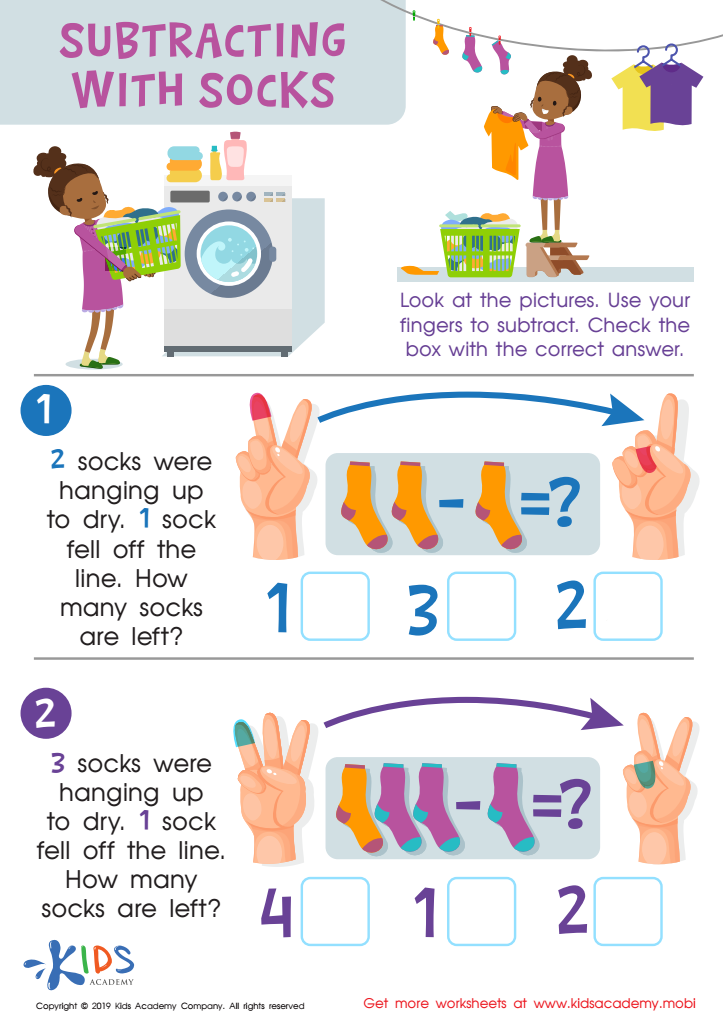
Subtracting Socks Worksheet
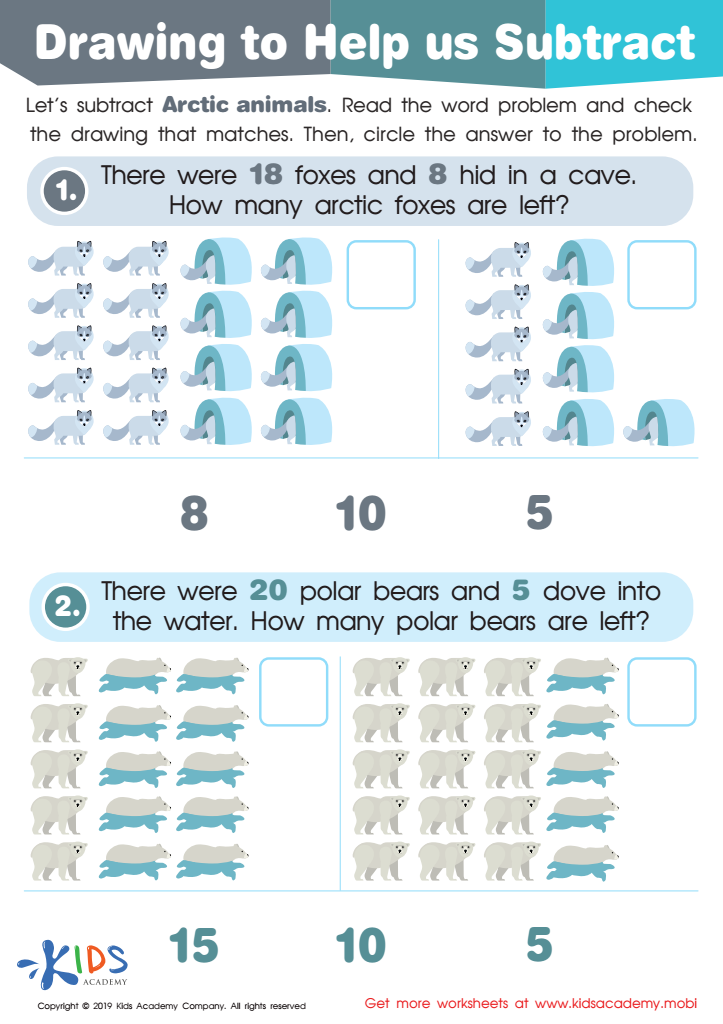
Drawing to Help Us Subtract Worksheet
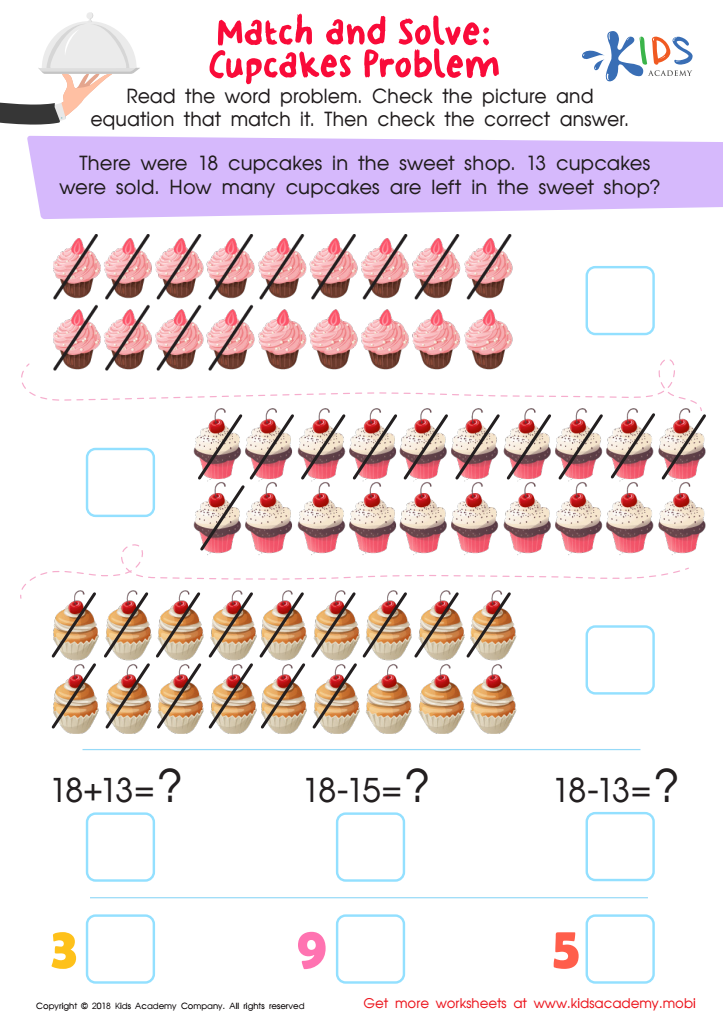
Match and Solve: Cupcakes Problem Worksheet
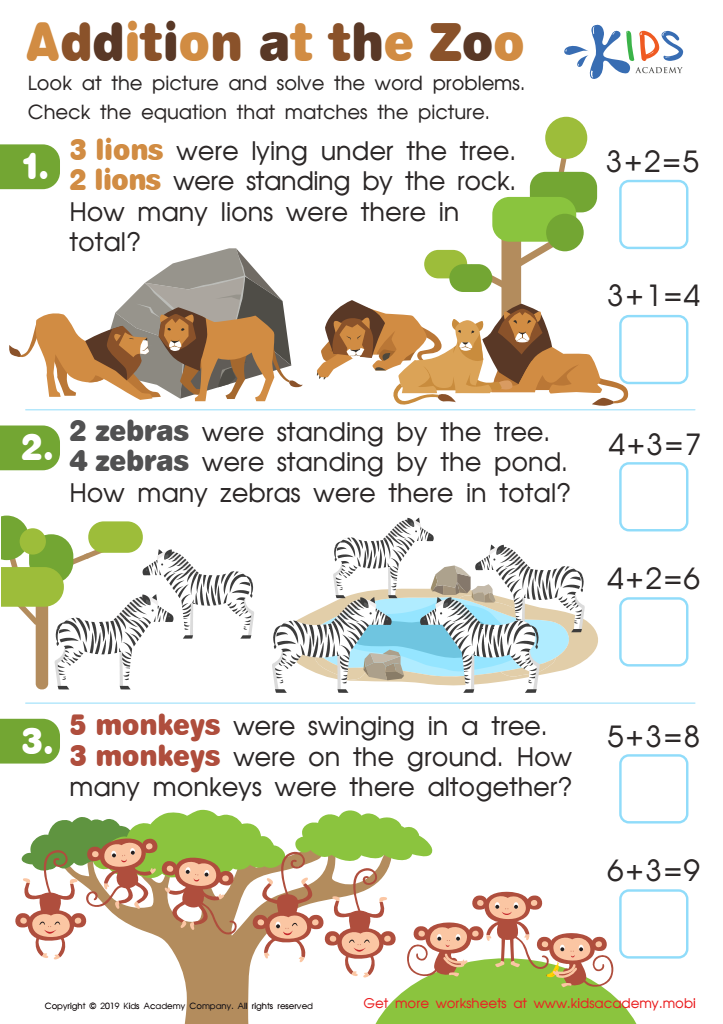
Addition at the Zoo Worksheet








Visual learning word problems are crucial for children aged 6-9 as they align with this developmental stage's cognitive abilities, enhancing comprehension and problem-solving skills. At this age, children are transitioning from concrete to more abstract thinking. Visual aids like images, diagrams, and charts provide tangible representations of abstract concepts, making it easier for them to grasp mathematical relationships and operations.
Parents and teachers should care because visual learning caters to various learning styles, particularly those of visual learners who may struggle with traditional text-based problems. When faced with a visual problem, children can visualize scenarios, leading to better engagement and retention of concepts. This approach also promotes critical thinking, as children learn to interpret and analyze information presented visually.
Additionally, incorporating visual learning in word problems can foster a lifelong interest in mathematics. It helps build a strong foundation for future mathematical skills by encouraging curiosity and exploration. By emphasizing these techniques, parents and teachers can support children's academic growth while instilling confidence in their ability to tackle more complex challenges as they progress. Consequently, embracing visual learning in word problems significantly contributes to a well-rounded and effective educational experience for young learners.








