Moral lesson understanding Building Vocabulary Worksheets for Ages 6-9
3 filtered results
-
From - To
Explore our engaging "Moral Lesson Understanding Building Vocabulary Worksheets," designed specifically for children aged 6-9. These worksheets not only enhance vocabulary skills but also introduce young learners to fundamental moral concepts. Through creative exercises and relatable scenarios, children will develop their understanding of values such as honesty, kindness, and empathy. Our resources are aligned with educational standards, promoting critical thinking and encouraging discussions about ethical situations. Perfect for home or classroom use, these worksheets make learning both fun and meaningful. Foster a love for reading while instilling essential life lessons – a great way to build a brighter future, one word at a time!
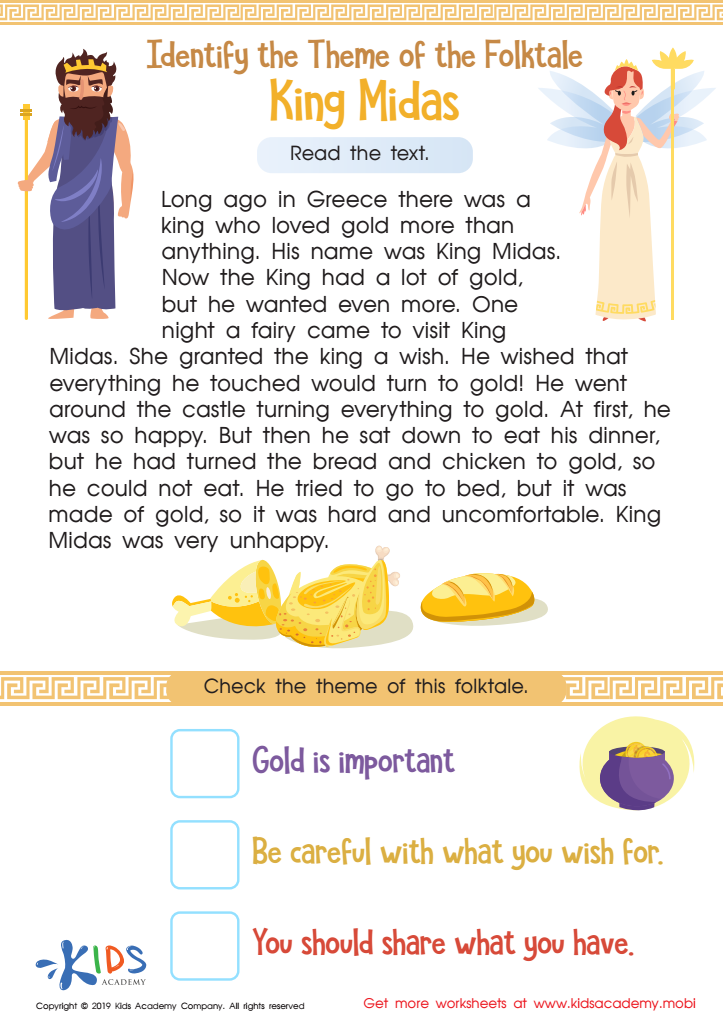
King Midas Worksheet
 Assign to My Students











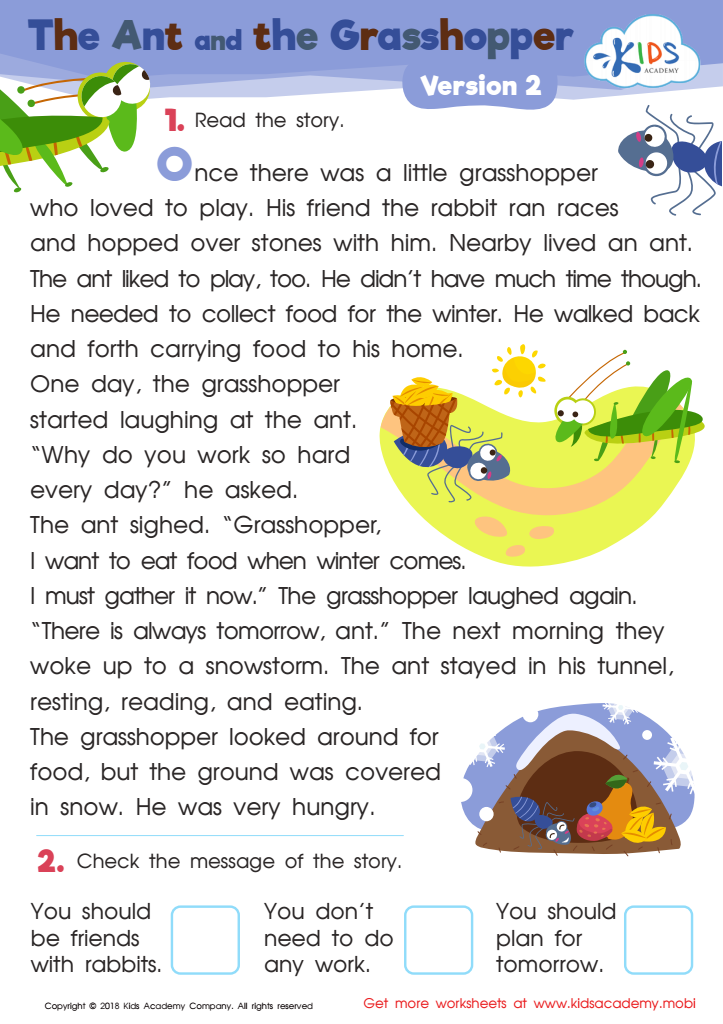
The Ant and The Grasshopper Version 2 Worksheet
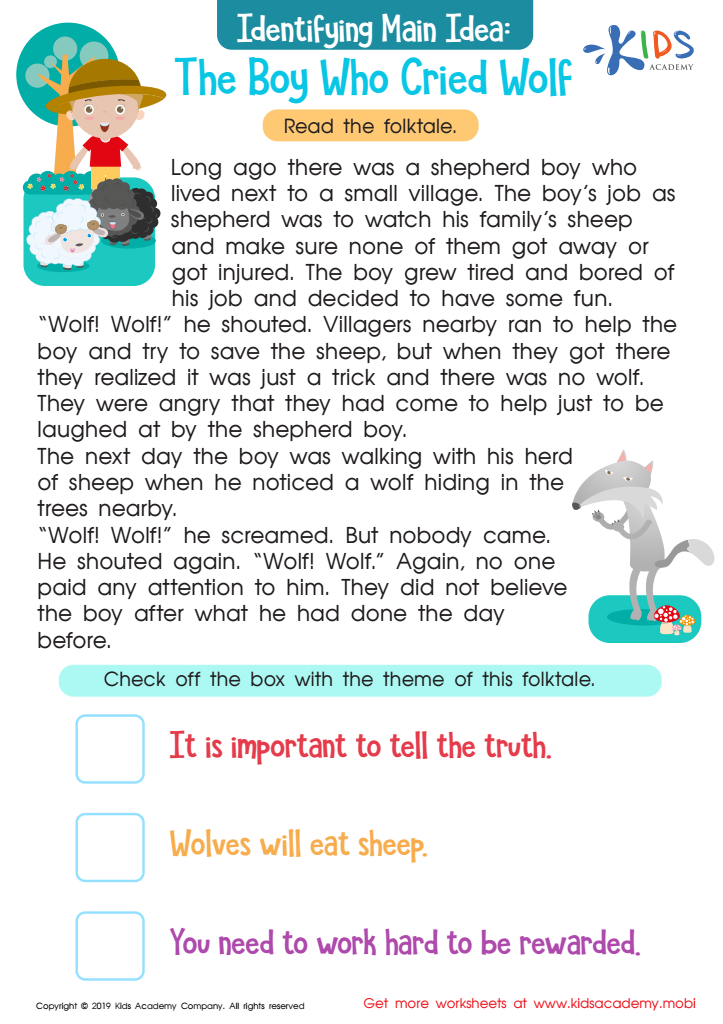
The Boy Who Cried Wolf Part 2 Worksheet








Understanding moral lessons and building vocabulary in children aged 6-9 are crucial aspects of their development. At this age, children are increasingly aware of the world around them and are forming their values and beliefs. Teaching them moral lessons cultivates their empathy, integrity, and respect for others, enabling them to navigate social interactions and make thoughtful decisions as they grow.
In addition, a strong vocabulary is a vital tool for effective communication. As children learn new words, they can better express their thoughts and emotions, which enhances their social interactions and overall confidence. Vocabulary development also plays a significant role in academic success, as it is directly tied to reading comprehension and learning across subjects.
Parents and teachers can create an enriching environment by incorporating moral lessons into discussions, literature, and daily activities while simultaneously introducing diverse and complex vocabulary. Through stories, games, and purposeful conversation, educators can foster an appreciation for both moral and linguistic growth. Together, by nurturing these foundational elements, we empower children not only to articulate their ideas clearly but also to understand and appreciate the ethical dimension of their choices, providing them with the tools needed for a positive future.








