
Shape identification Building Vocabulary Worksheets for Ages 6-9
3 filtered results
Difficulty Level
Grade
Age
-
From - To
Subject
Activity
Standards
Explore our Shape Identification Building Vocabulary Worksheets, designed specifically for children ages 6-9. These engaging worksheets help young learners master essential shape vocabulary and identification skills critical for early math and reading development. Each activity blends fun and education, guiding kids through recognizing, naming, and describing various shapes. Building a solid foundation in shape identification also bolsters their ability to follow directions and boosts problem-solving skills. Ideal for classroom use or at-home learning, our expertly crafted resources ensure your child gains confidence and a head start in their academic journey. Empower your young learner with these interactive tools today!
Favorites
With answer key
Interactive
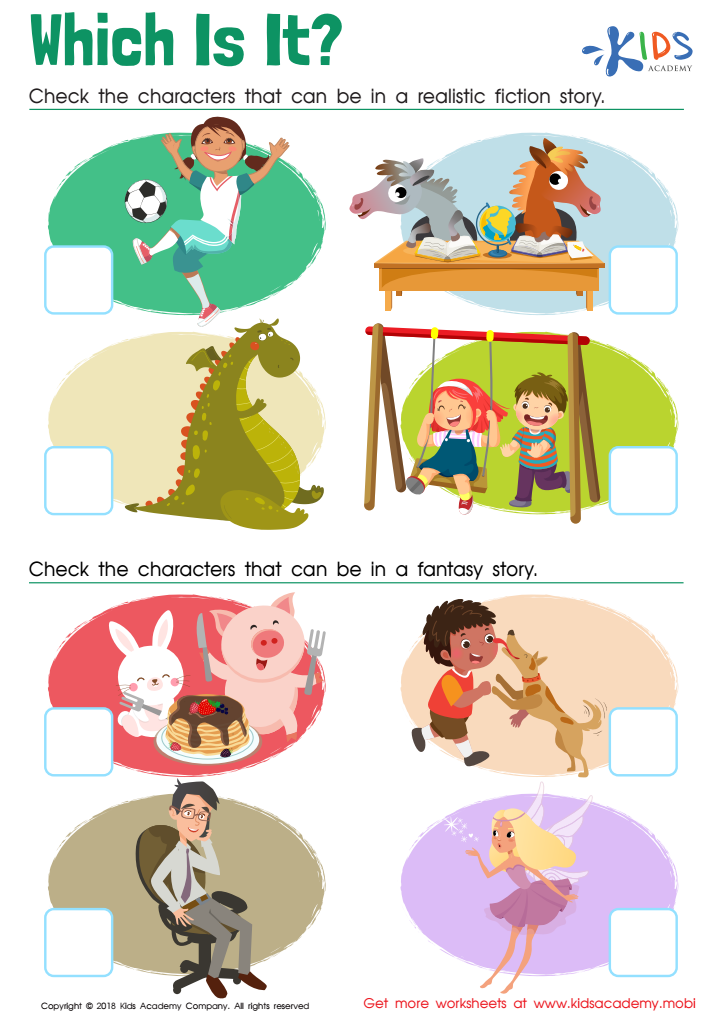
Which Is It? Worksheet
This colorful worksheet helps young readers identify elements of fact and fiction using fun picture clues. They can check off characters who exist in realistic fiction stories, which makes learning the difference between the two genres fun and engaging.
 Assign to My Students
Which Is It? Worksheet
Worksheet











Join Kids Academy for Free
Who is primarily going to use this learning content?





.jpg)


Shape identification and building vocabulary are foundational skills that serve as the cornerstones of early childhood education for children aged 6-9. During these formative years, kids rapidly develop cognitive and spatial abilities critical for academic success and everyday problem-solving.
Understanding shapes isn't just about recognizing circles and squares; it aids in enhancing spatial awareness, fine motor skills, and visual processing. When children identify and differentiate between shapes, they are also building reasoning and observation skills that translate into subjects like math and science. These skills are the precursors to geometry, which they will encounter in higher grades.
Likewise, building a robust vocabulary at this age lays the groundwork for effective communication and literacy. A richer vocabulary enables children to express their thoughts, understand instructions, and engage more deeply with books and curriculum content. As they learn names and attributes of various shapes, they concurrently expand their verbal and categorical understanding, linking language and visual information.
Parents and teachers play an essential role by integrating shape-related activities and vocabulary-building exercises into daily routines. This engaged approach not only makes learning fun and engaging but also reinforces concepts through practical, real-world applications. Consequently, investing time in these areas boosts a child's academic self-confidence and sets the stage for a successful educational journey.








