Sight words recognition Building Vocabulary Worksheets for Ages 6-9
5 filtered results
-
From - To
Boost your child's reading skills with our "Sight Words Recognition Building Vocabulary Worksheets" designed for ages 6-9. These engaging resources empower young learners to recognize and master essential sight words, fostering increased vocabulary and reading fluency. Each worksheet is tailored to reinforce understanding through fun exercises, interactive activities, and creative challenges that make learning enjoyable. As children practice sight words, they build a solid foundation for reading comprehension and confidence. Perfect for classrooms or home use, these worksheets provide a comprehensive approach to vocabulary development. Start your child's reading journey today and watch their skills soar!
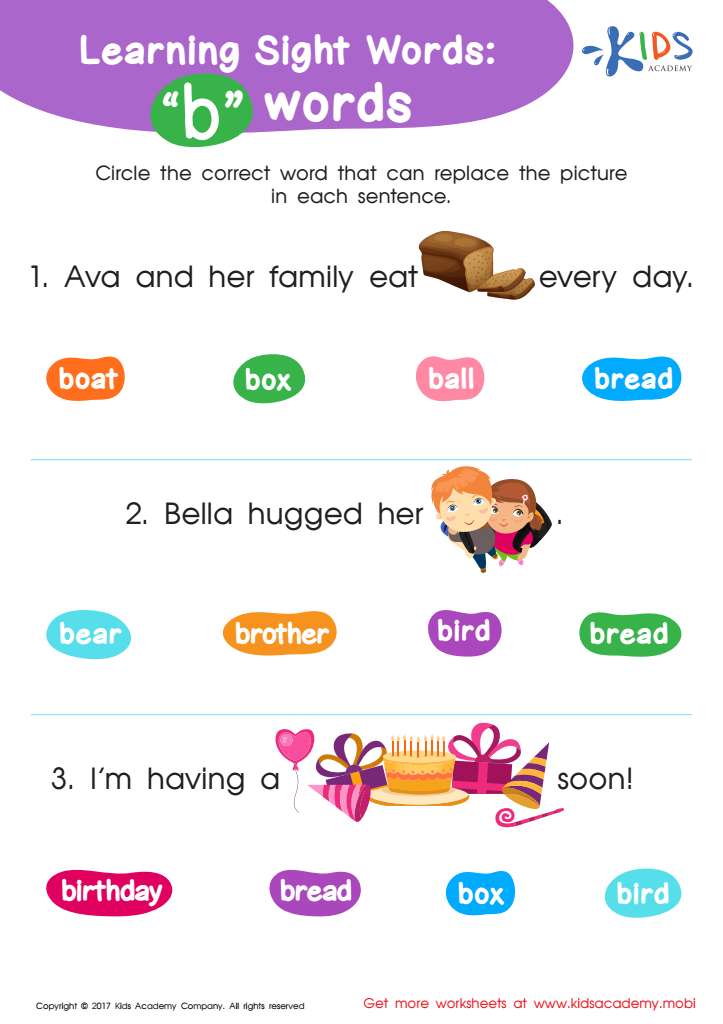
Sight Words Free Worksheet – B Words
 Assign to My Students











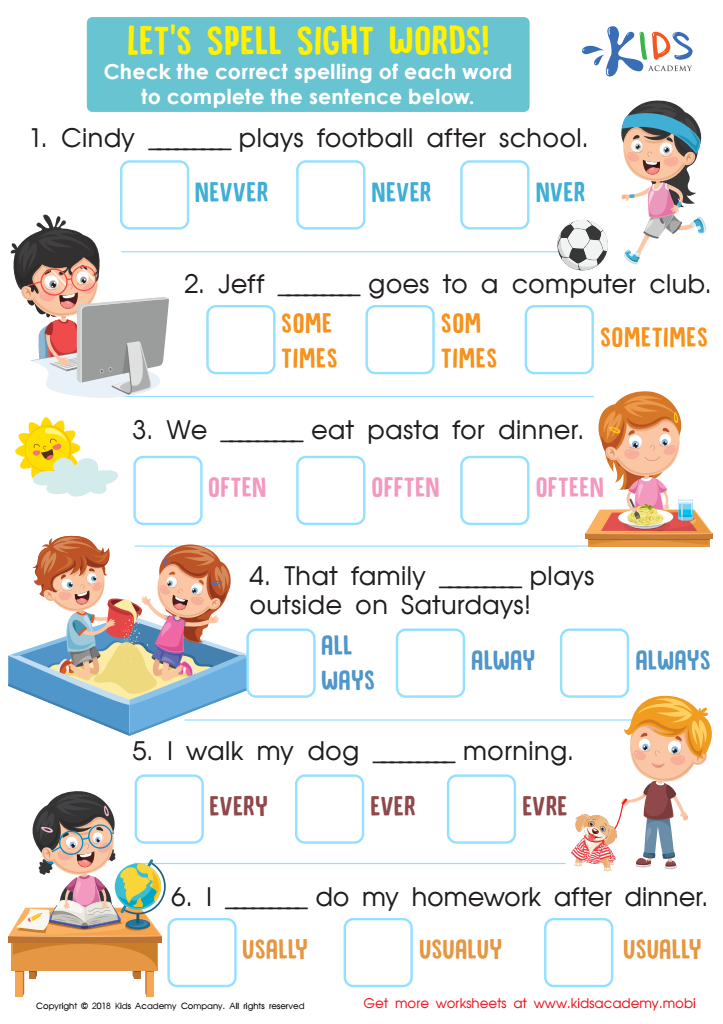
Let's Spell Sight Words Worksheet
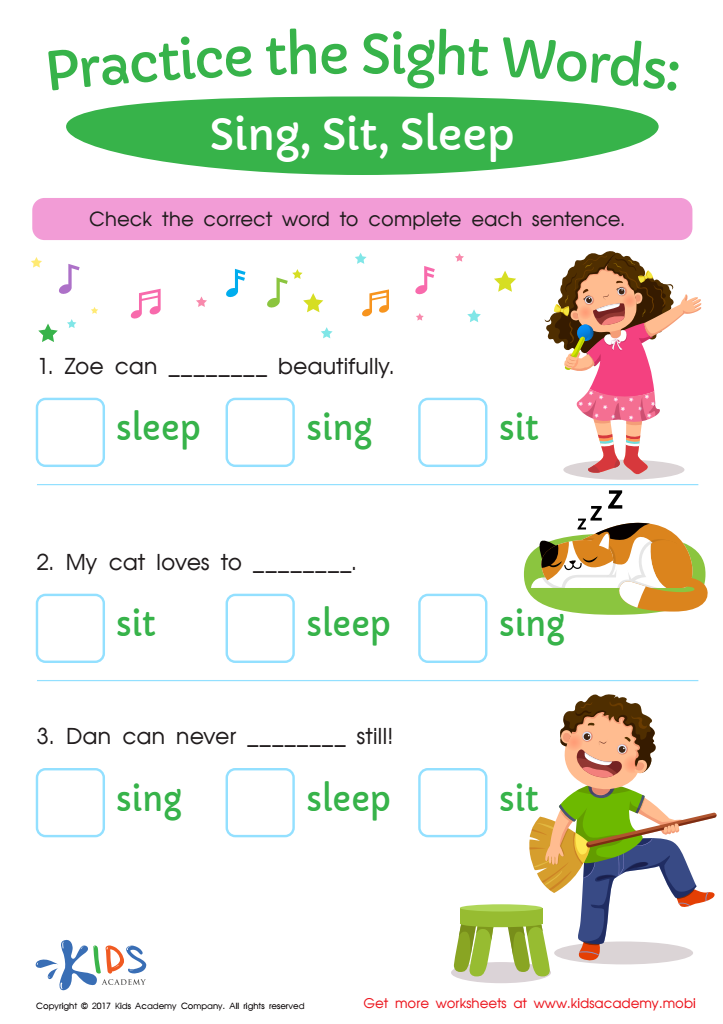
Sing, Sit, Sleep Sight Words Worksheet
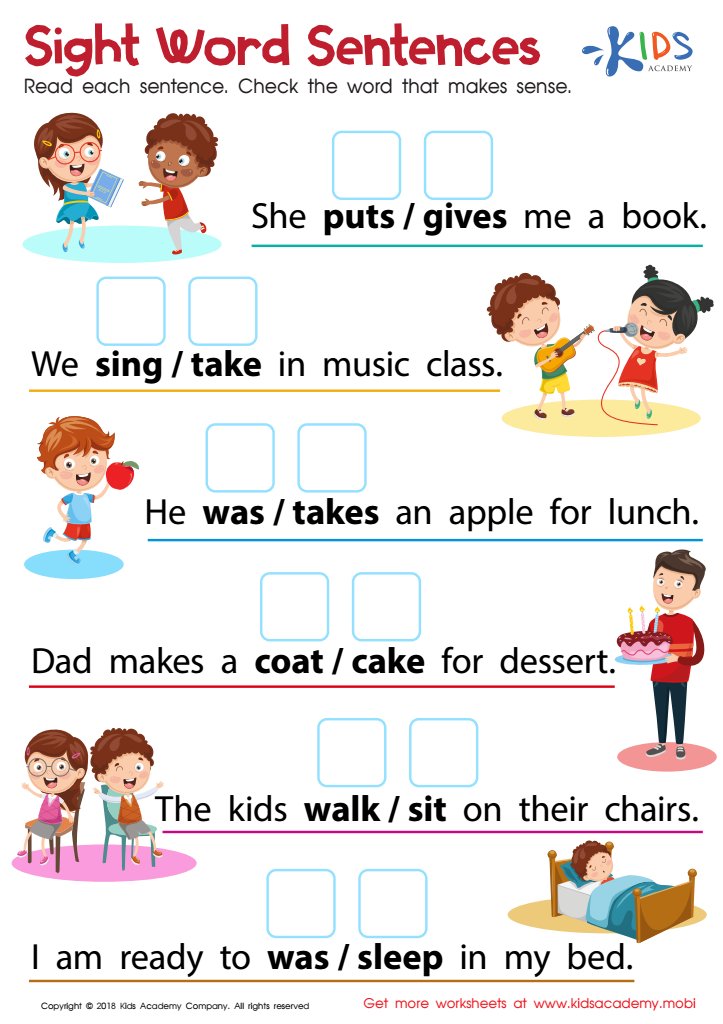
Sight Words Sentences Worksheet
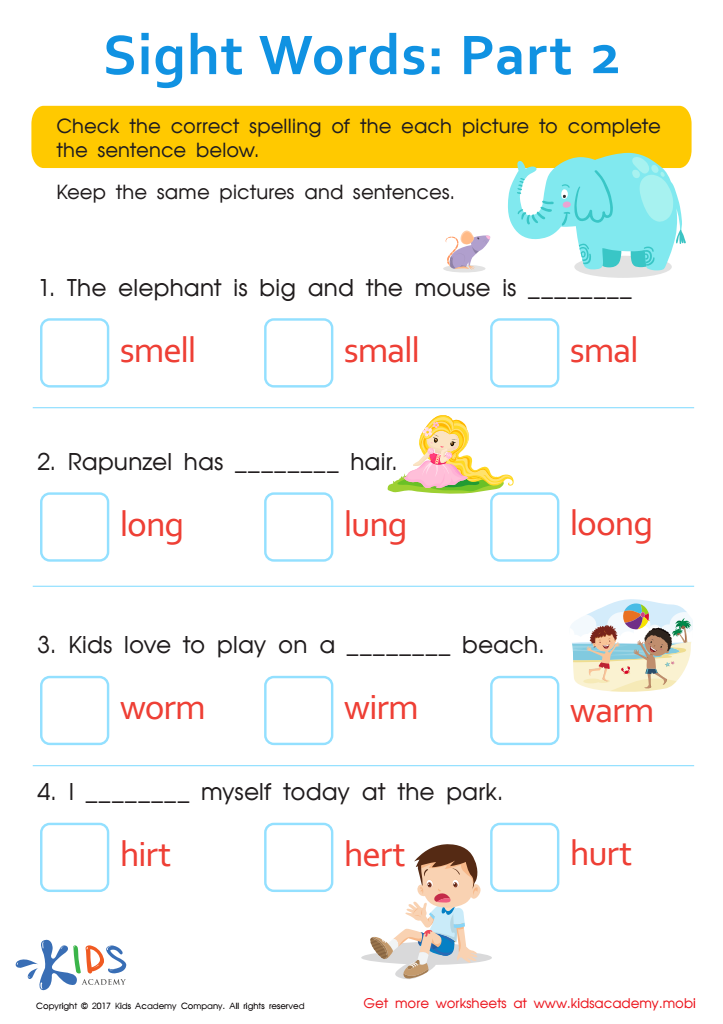
Sight Words Worksheet







Sight word recognition is crucial for children aged 6-9 as it lays the foundation for fluent reading and overall literacy development. When children can quickly recognize common words without needing to process every letter, they can focus on understanding the meaning of the text rather than getting bogged down in decoding. This skill enhances reading fluency, enabling kids to tackle more complex texts with confidence.
Building vocabulary at this age is equally important; it expands a child's ability to express themselves and comprehend what they read. A robust vocabulary supports literacy skills, fosters critical thinking, and enhances communication abilities. Children who encounter diverse vocabulary in their reading are better equipped to grasp new concepts in various subjects, creating a more enriching educational experience.
Furthermore, both sight word recognition and vocabulary building promote overall academic achievement. They aid in developing valuable skills such as inference and comprehension, which are essential for success beyond early education. Parents and teachers play a vital role in nurturing these skills, providing guidance and resources such as reading materials and exercises. Recognizing the importance of these foundational abilities is key to supporting children's literacy journeys, ensuring they become proficient and confident readers.








