
Sound Association Building Vocabulary Worksheets for Ages 6-9
4 filtered results
Difficulty Level
Grade
Age
-
From - To
Subject
Activity
Standards
Enhance your child's vocabulary with our engaging Sound Association Building Vocabulary Worksheets designed for ages 6-9! These printable activities focus on developing strong phonemic awareness by connecting sounds with corresponding images and words. Packed with colorful illustrations and fun exercises, your child will learn to recognize and associate sounds effortlessly. Ideal for home or classroom use, these worksheets help boost reading skills and foster a love for language. Encourage creativity and critical thinking while making learning enjoyable. Perfect for early-grade learners, our sound association worksheets are a valuable resource for educators and parents alike. Start building a strong vocabulary foundation today!
Favorites
With answer key
Interactive
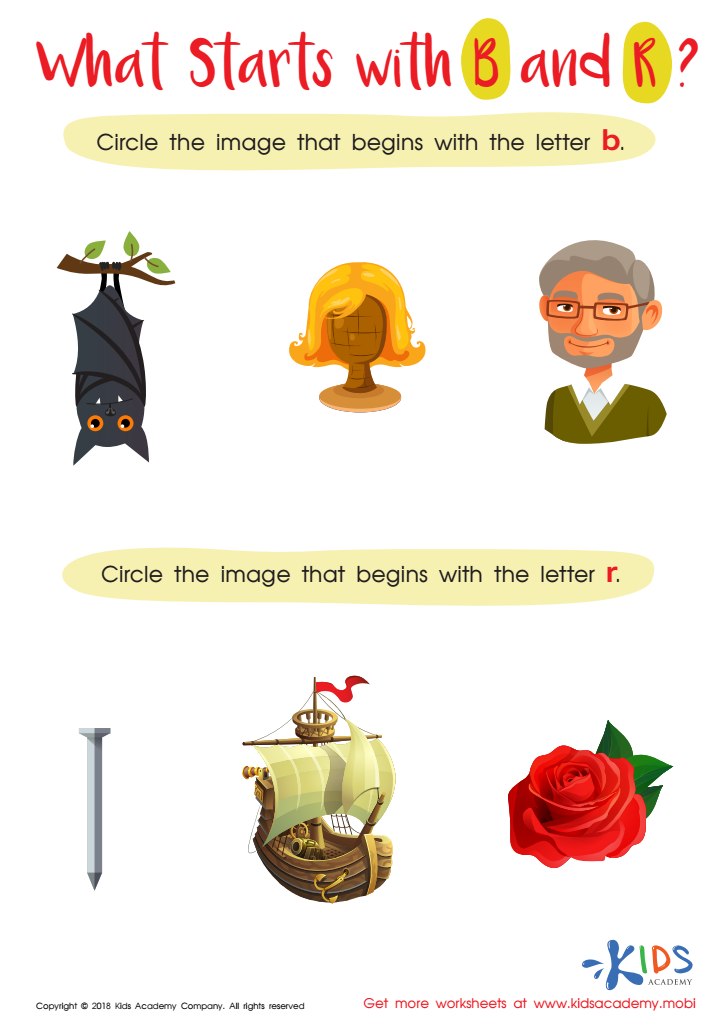
What Starts with B and R? Worksheet
Download this worksheet to help young readers practice visual and motor skills! They'll enjoy matching pictures with "B" and "R" letters while tracing the images. Bright and colorful, this engaging activity will help kids differentiate between words and have fun doing it.
 Assign to My Students
What Starts with B and R? Worksheet
Worksheet











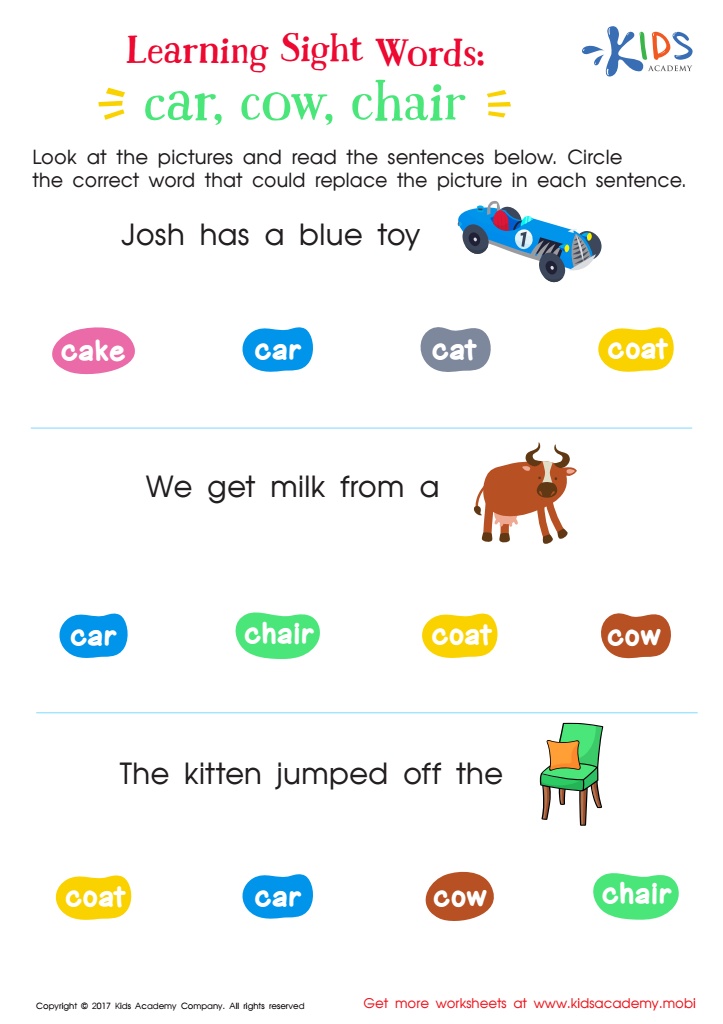
Car, Cow, Chair Worksheet Sight Words Worksheet
Reading can be difficult, so these assignment sheets can help kids stay on track. This one with the words 'Car', 'Cow' and 'Chair' will help your child choose the right words to complete a sentence, strengthen their literacy and give them more confidence in reading.
Car, Cow, Chair Worksheet Sight Words Worksheet
Worksheet
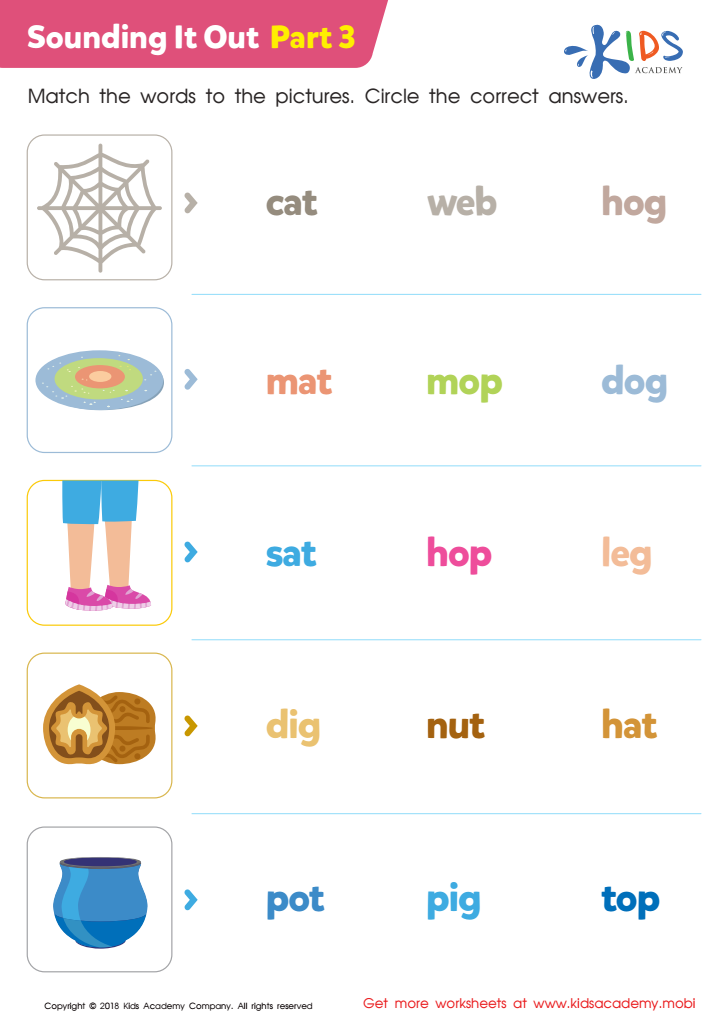
Sounding it Out: Part 3 Worksheet
Once Parts 1 and 2 are complete, this printable phonics worksheet will help kids take their reading skills to the next level! As they gain confidence, give them hints less often and direct their attention to three words in a row. Ask them to read and circle the correct word to complete!
Sounding it Out: Part 3 Worksheet
Worksheet
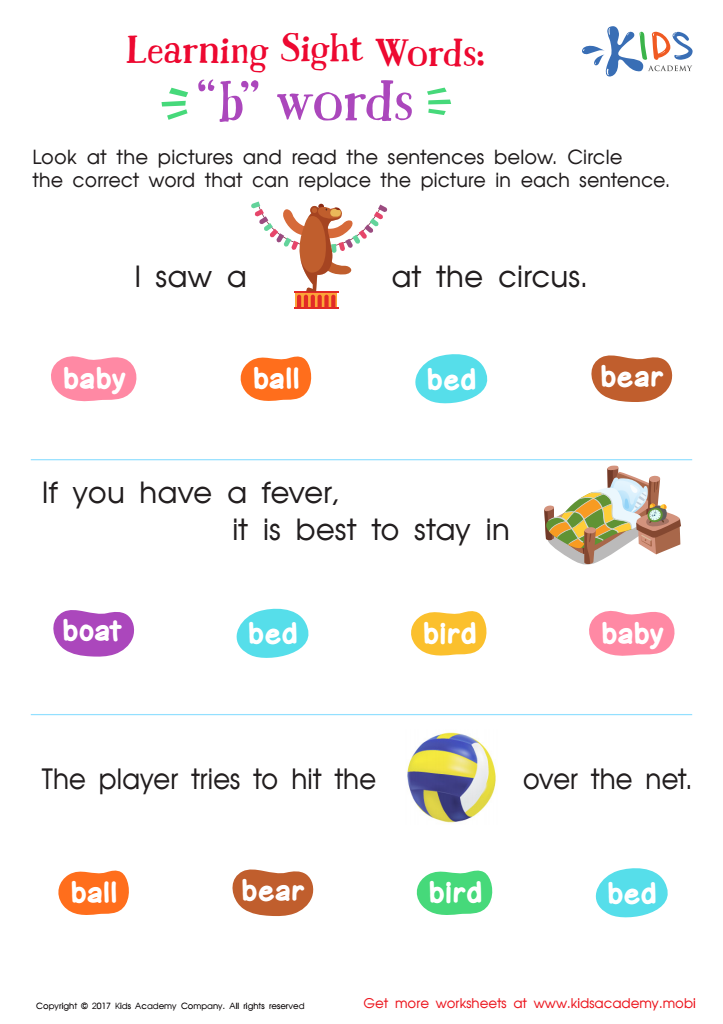
"B" Words Printable Sight Words Worksheet
Kids will learn sight words quickly with this fun worksheet! "B" Words offers guided practice with simple sentences and pictures. Build your child's reading confidence with this helpful worksheet and watch them become a master!
"B" Words Printable Sight Words Worksheet
Worksheet
Join Kids Academy for Free
Who is primarily going to use this learning content?






.jpg)

Sound association building is crucial for vocabulary development in children aged 6-9, as it lays the foundation for successful reading and comprehension skills. At this stage, children are refining their understanding of phonics and how sounds correspond with letters and words. When parents and teachers emphasize sound association, they help children make connections between spoken and written language, facilitating better pronunciation and spelling.
Strong vocabulary is not only essential for effective communication but also enhances cognitive abilities. A robust vocabulary allows children to express their thoughts clearly, understand more complex texts, and engage in meaningful discussions. As they learn to associate sounds with words, children are better able to decode unfamiliar words, making them more confident readers.
Additionally, sound association exercises often involve playful activities like rhymes, songs, and word games, which make learning enjoyable. This positive reinforcement encourages a love for language and learning.
Moreover, a collaborative effort from both parents and teachers is key, as consistency in practice enhances retention. By prioritizing sound association, we equip our children with critical language skills that will support their academic journey and lifelong communicative competence. This is why parents and teachers should invest time in developing sound association skills in their children.








