Cognitive Development Reading Fiction Worksheets for Ages 6-9
3 filtered results
-
From - To
Enhance your child's cognitive development with our engaging Reading Fiction Worksheets, designed specifically for ages 6-9. These worksheets focus on improving critical thinking, comprehension, and analytical skills through enjoyable literary activities. Each worksheet presents age-appropriate fiction stories, followed by thought-provoking questions and tasks that encourage children to think independently. By exploring different characters and plots, young learners will not only build their reading skills but also foster creativity and emotional understanding. Perfect for use at home or in the classroom, these resources help nurture a love for reading while developing essential cognitive skills for lifelong learning. Explore today!
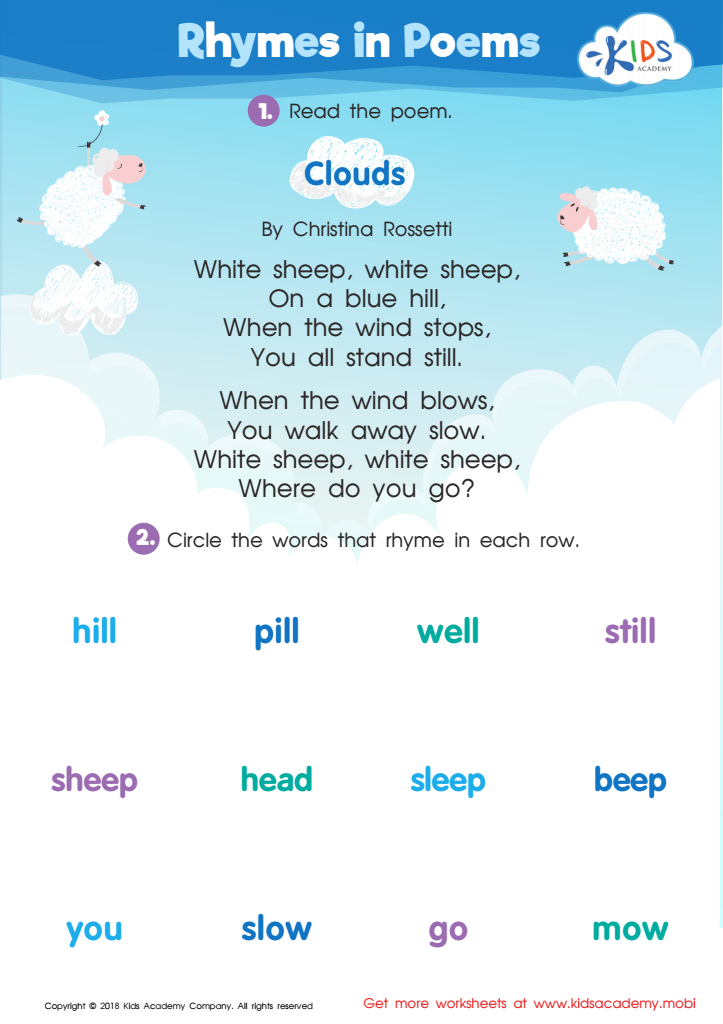
Rhymes in Poems Worksheet
 Assign to My Students
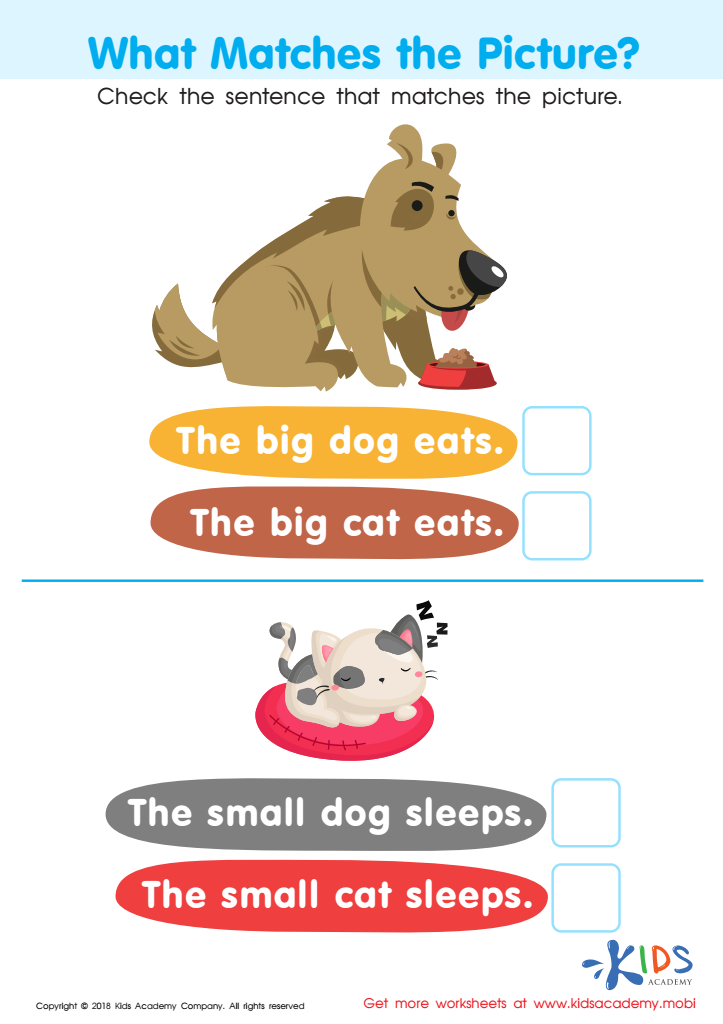
What Matches the Picture? Worksheet
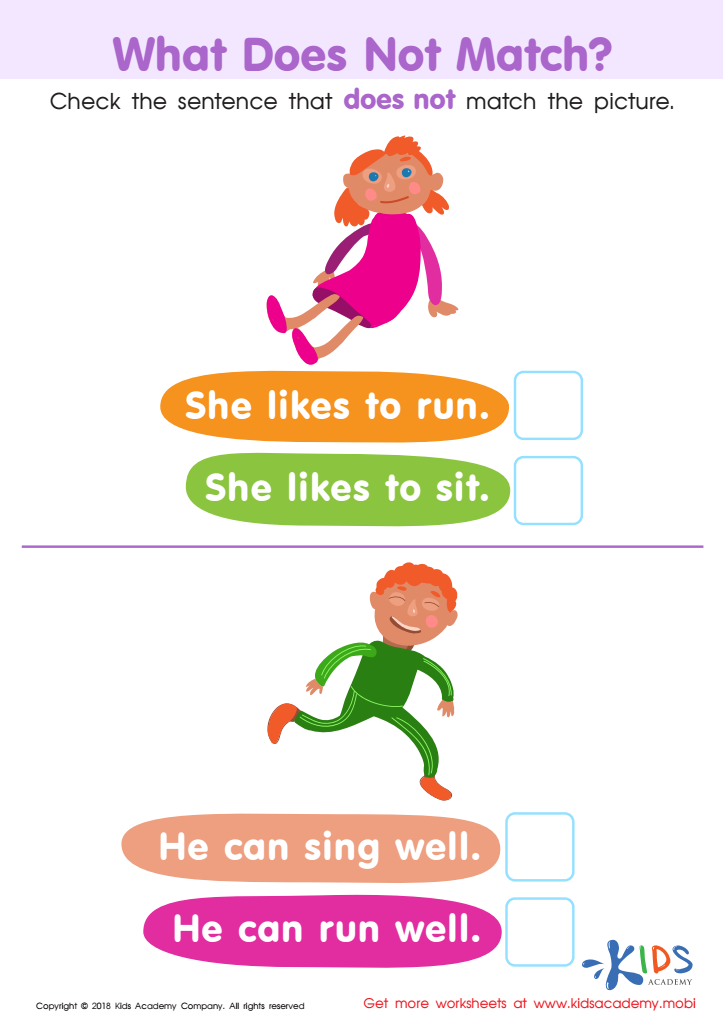
What Does Not Match? Worksheet







Cognitive development during the ages of 6-9 is a crucial stage in a child's life, and reading fiction plays a vital role in enhancing this growth. Engaging with fiction exposes children to diverse perspectives, fostering empathy and improving social understanding. As they immerse themselves in stories, children learn to navigate complex emotions and relationships, which cultivates their emotional intelligence.
Moreover, reading fiction stimulates cognitive skills such as critical thinking, problem-solving, and imagination. Children actively engage with plots, predicting outcomes and analyzing character motivations, which sharpens their reasoning abilities. This imaginative play not only nurtures creativity but also enhances verbal skills, as exposure to varied vocabulary and narrative structures helps improve language competence.
Additionally, regular reading builds focus and concentration, vital for academic success. Establishing a routine around reading fiction creates a safe space for children to explore ideas and challenges, reinforcing perseverance and resilience—key traits for lifelong learning.
For parents and teachers, promoting the reading of fiction helps develop well-rounded individuals. Advocating for storytime engenders a love for literature, establishing a strong foundation for future reading and academic achievements while overall enriching a child's growth and cognitive capabilities. Investing in their cognitive development now can yield lifelong benefits.








