
Creativity enhancement Reading Fiction Worksheets for Ages 6-9
3 filtered results
Difficulty Level
Grade
Age
-
From - To
Subject
Activity
Standards
Unlock your child's imagination with our Creativity Enhancement Reading Fiction Worksheets tailored for ages 6-9! These engaging worksheets are designed to inspire young readers while boosting their creativity. Through thought-provoking exercises and captivating stories, kids are encouraged to dive deeper into narratives, think critically, and express their ideas creatively. Perfect for both classroom settings and home learning, our worksheets provide an exciting, educational adventure that fosters a love for reading and storytelling. Give your child the tools they need to expand their creative horizons and fuel their passion for fictional worlds!
Favorites
With answer key
Interactive
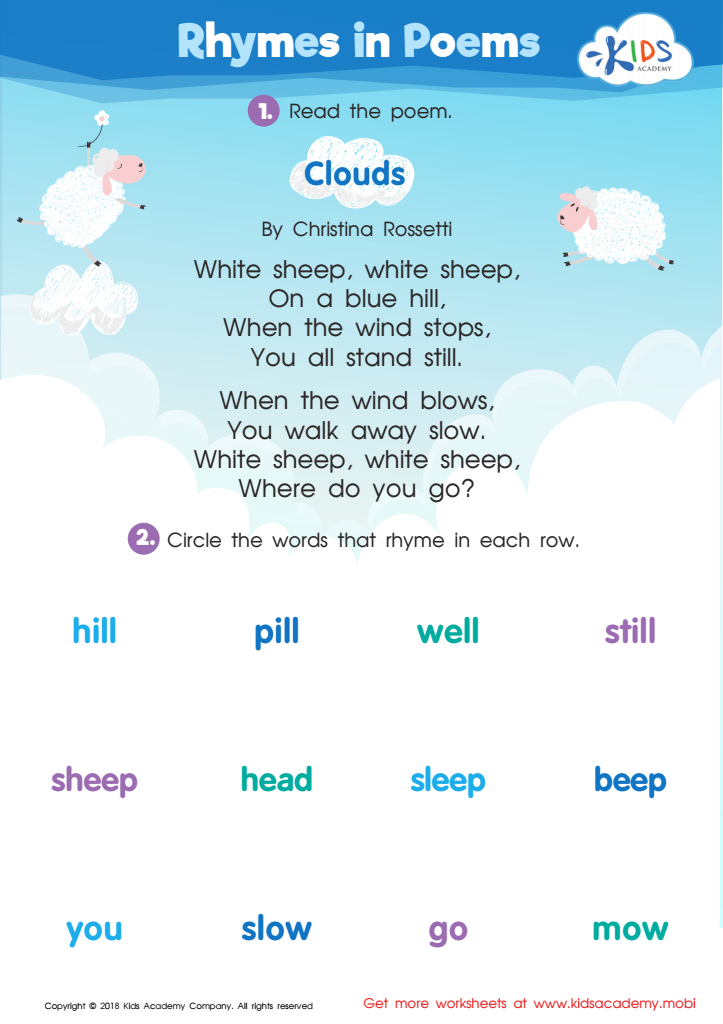
Rhymes in Poems Worksheet
Poems are lovely works of literature; some with rhymes, and some without. This poem for kids is full of rhymes and tells the tale of a sheep. Read it aloud to your kids, then help them circle the rhyming words.
Rhymes in Poems Worksheet
Worksheet
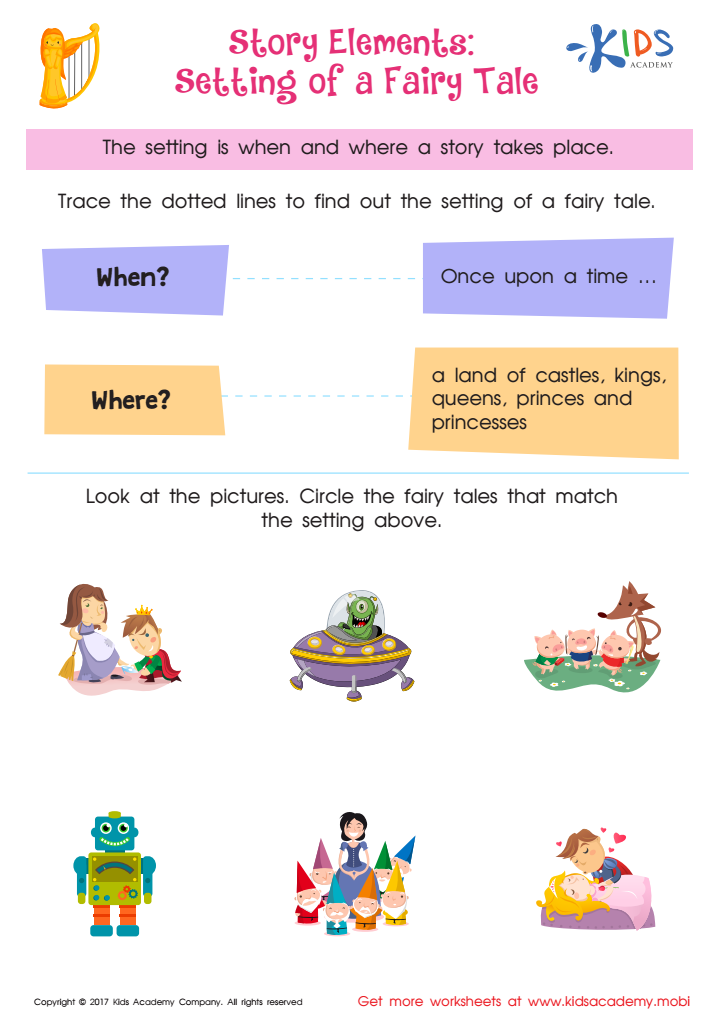
Story Elements: Setting of a Fairy Tale Printable
Help your child learn to analyze stories starting with setting. Use Story Elements worksheet to break down setting into two parts. This will help your child recognize setting quickly and understand its importance in the plot.
Story Elements: Setting of a Fairy Tale Printable
Worksheet
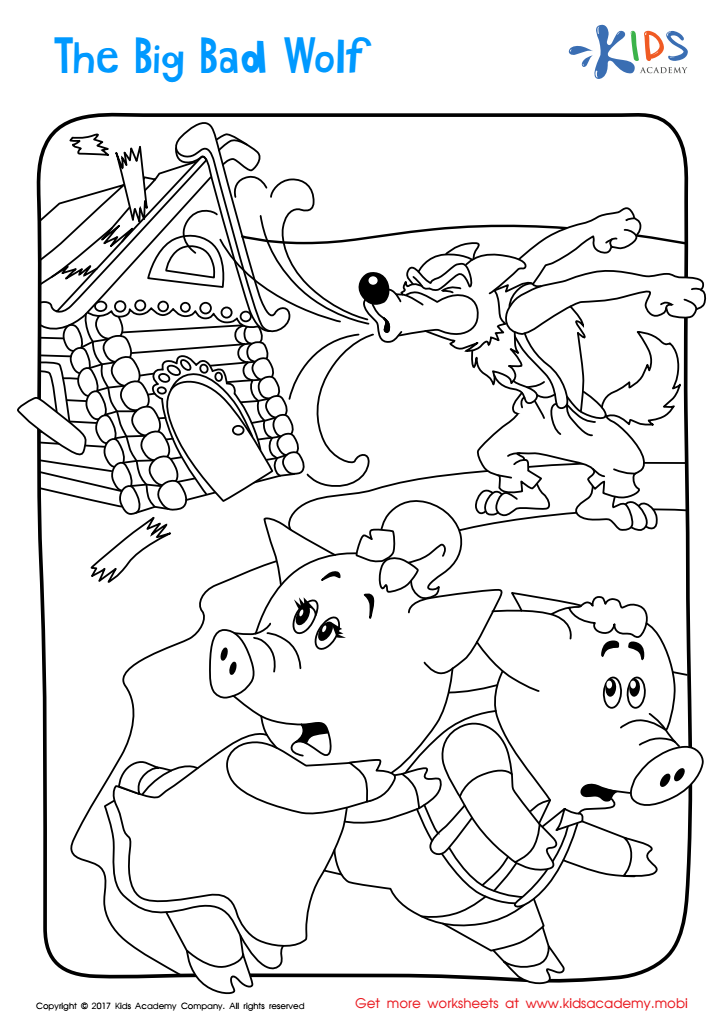
Big Bad Wolf Printable Coloring Page
Let your child have fun coloring the Big Bad Wolf blowing down the little pig's house! This printable coloring page introduces the classic tale, helping to develop reading comprehension skills.
Download (PDF)
 Assign to My Students
Assign to My Students
Big Bad Wolf Printable Coloring Page
Worksheet
Join Kids Academy for Free
Who is primarily going to use this learning content?




.jpg)
.jpg)
Encouraging children aged 6-9 to read fiction is essential for fostering creativity and holistic development. At this formative stage, young minds are incredibly impressionable, and exposure to imaginative stories stimulates critical areas of cognitive and emotional growth. Fiction transports children to fantastical worlds, introduces them to diverse characters, and presents them with a myriad of scenarios, all of which ignite their imagination. By navigating these narrative landscapes, children learn to think outside of the box, embrace new perspectives, and envision possibilities beyond their immediate reality.
Moreover, reading fiction at this age nurtures empathy and emotional intelligence. As children immerse themselves in the lives of characters, they learn to understand and relate to feelings and experiences different from their own. This process helps develop the ability to empathize, an essential skill for their interpersonal relationships and guide through social challenges.
Teachers who incorporate fiction into their curriculum also enhance language skills. Rich, descriptive narratives expand vocabulary, improve comprehension, and sharpen listening skills, creating a solid foundation for academic success. Additionally, early exposure to fiction promotes a lifelong love for reading, establishing patterns of curiosity and learning that transcend the classroom.
Overall, embracing fiction not only enriches creative capacities but also supports well-rounded character development, making it vital for children’s growth.








