Understanding perspectives Reading Fiction Worksheets for Ages 6-9
3 filtered results
-
From - To
Explore our "Understanding Perspectives" Reading Fiction Worksheets, designed for ages 6-9, to enhance young readers' comprehension skills. These worksheets engage children in identifying different viewpoints in stories, helping them to think critically about characters’ feelings, thoughts, and motivations. Each worksheet offers interactive activities that encourage discussion and deeper understanding of narratives. Perfect for the classroom or at-home learning, our resources nurture empathy and improve analytical skills through enjoyable reading exercises. Foster a love for literature while promoting essential skills in your early learners. Dive into the world of perspectives with our creative and educational worksheets today!
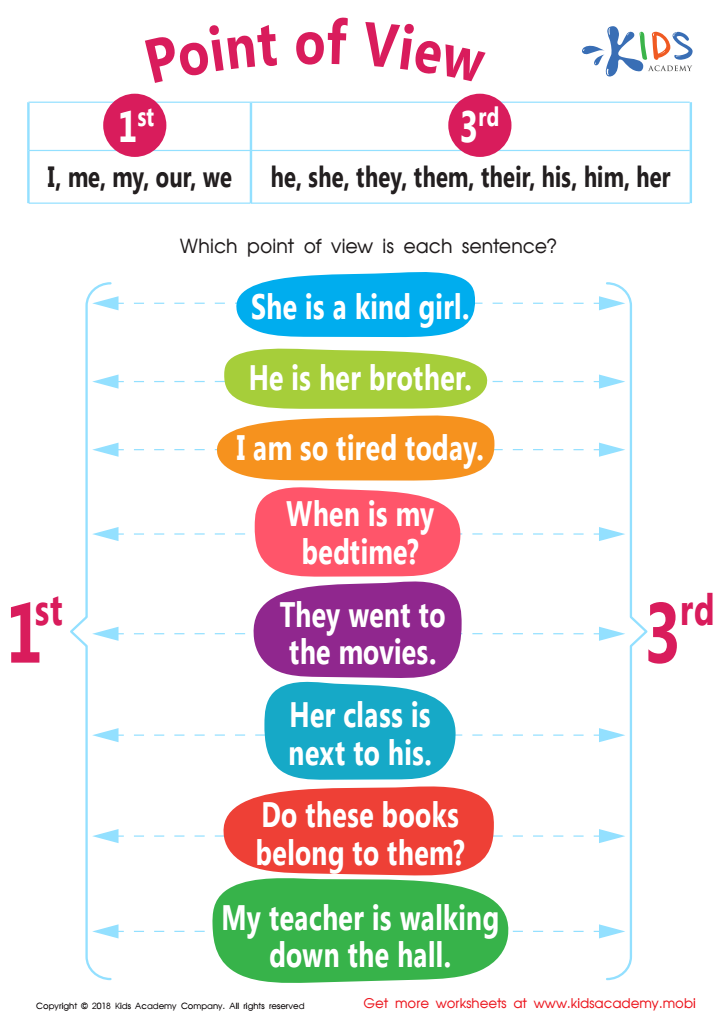
Point of View Worksheet
 Assign to My Students
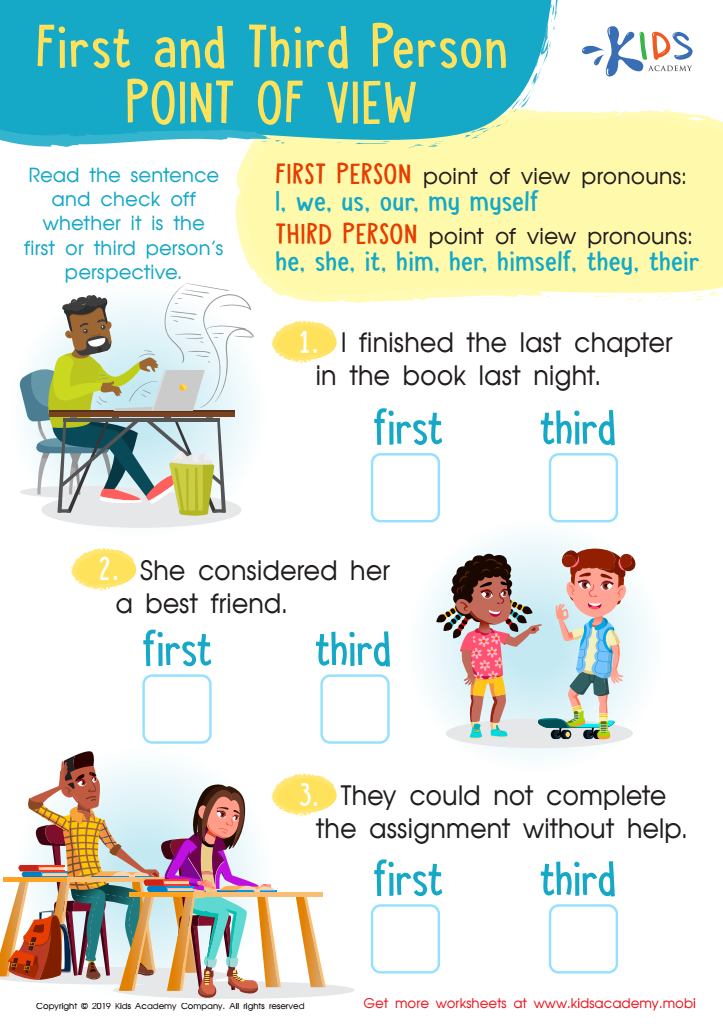
First and Third Person Point of View Worksheet
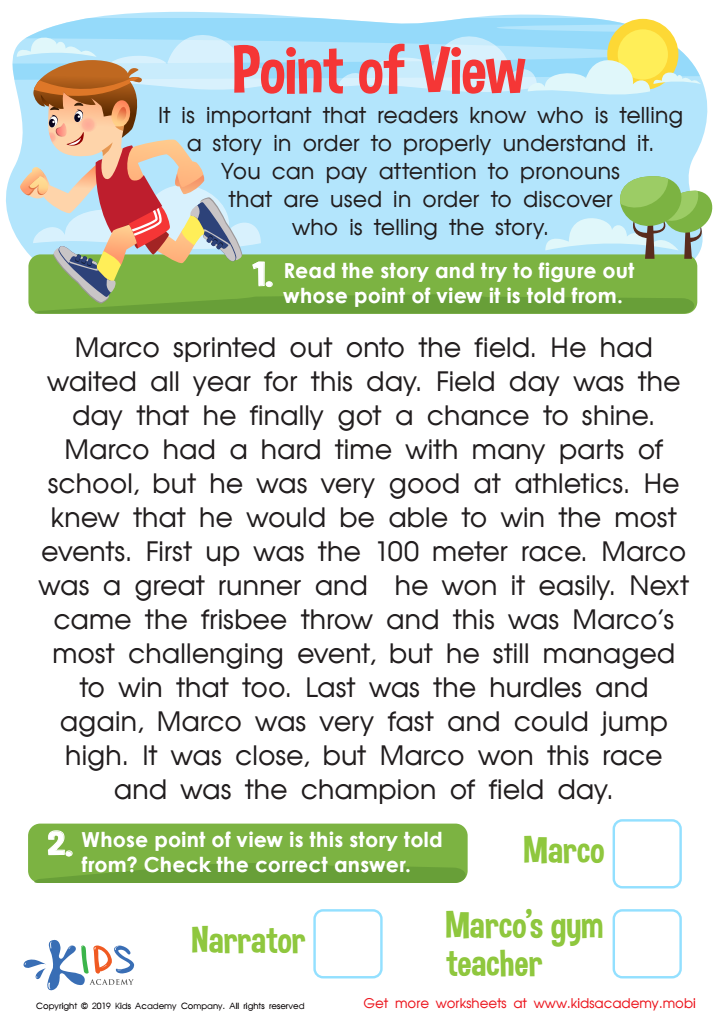
Point of View Worksheet







.jpg)
Understanding perspectives in reading fiction is crucial for children ages 6-9, as it promotes empathy, critical thinking, and social skills. At this age, children are beginning to explore their emotions and the feelings of others, making it essential for parents and teachers to guide them in understanding different viewpoints.
When children read fiction, they encounter diverse characters and scenarios that present various perspectives. This exposure helps them develop empathy, allowing them to appreciate feelings and experiences outside their own. Understanding the motivations and emotions of fictional characters can translate to real-life situations, fostering better relationships with peers.
Moreover, discussing these perspectives encourages critical thinking. Children learn to analyze motives and predict outcomes based on characters' choices, enhancing their problem-solving skills. By engaging in conversations about various perspectives, educators and parents can help ignite a child’s curiosity and improve their communication skills.
Finally, cultivating an appreciation of different viewpoints helps children navigate social dynamics in school and at home with greater ease. Overall, promoting understanding perspectives in reading fiction not only enriches literacy skills but also equips children with essential interpersonal tools for their future.








