
Visual interpretation Reading Fiction Worksheets for Ages 6-9
5 filtered results
Difficulty Level
Grade
Age
-
From - To
Subject
Activity
Standards
Explore our engaging Visual Interpretation Reading Fiction Worksheets designed specifically for children ages 6-9. These interactive resources enhance reading comprehension by guiding young learners to analyze and interpret visual elements within stories. Each worksheet encourages kids to connect illustrations to text, boosting their understanding and critical thinking skills. With a variety of age-appropriate activities, children will develop a deeper appreciation for fiction while honing their ability to analyze visuals in literature. Perfect for classroom or home use, these worksheets provide a fun and educational way to promote reading enjoyment and storytelling skills. Spark imagination and learning with our creative worksheets today!
Favorites
With answer key
Interactive
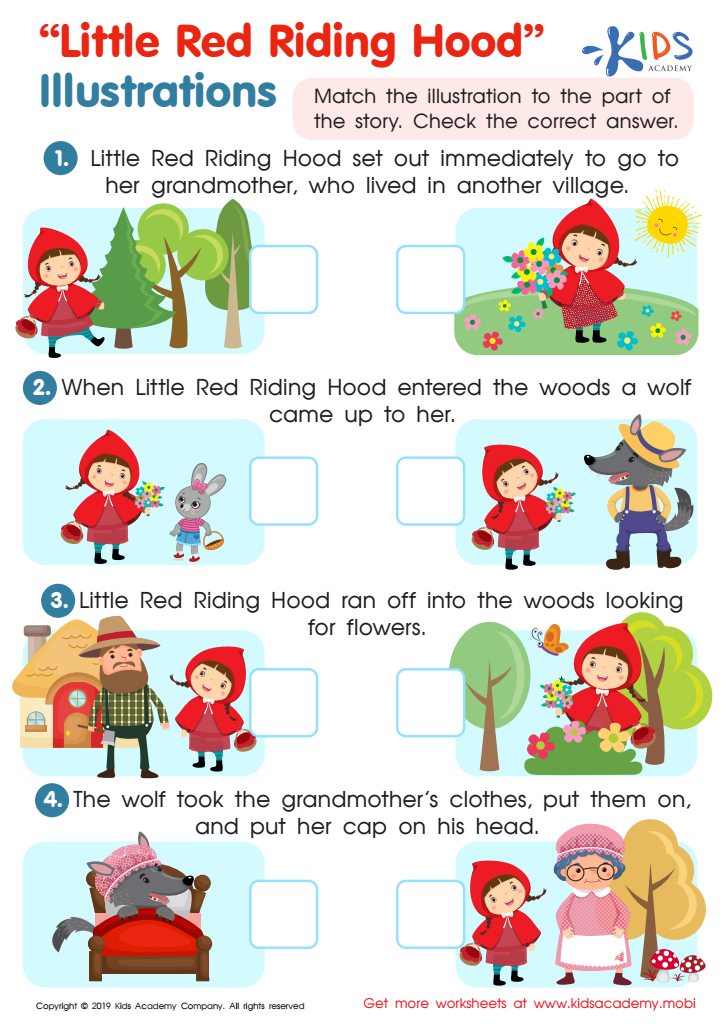
Little Red Riding Hood: Illustrations Worksheet
Comprehension is improved by having young readers recall and retell stories. This worksheet uses colorful illustrations of the fairytale Little Red Riding Hood. Children use their comprehension skills and strategy to match illustrations to the story parts, check off the appropriate boxes and use the pictures as clues.
 Assign to My Students
Little Red Riding Hood: Illustrations Worksheet
Worksheet
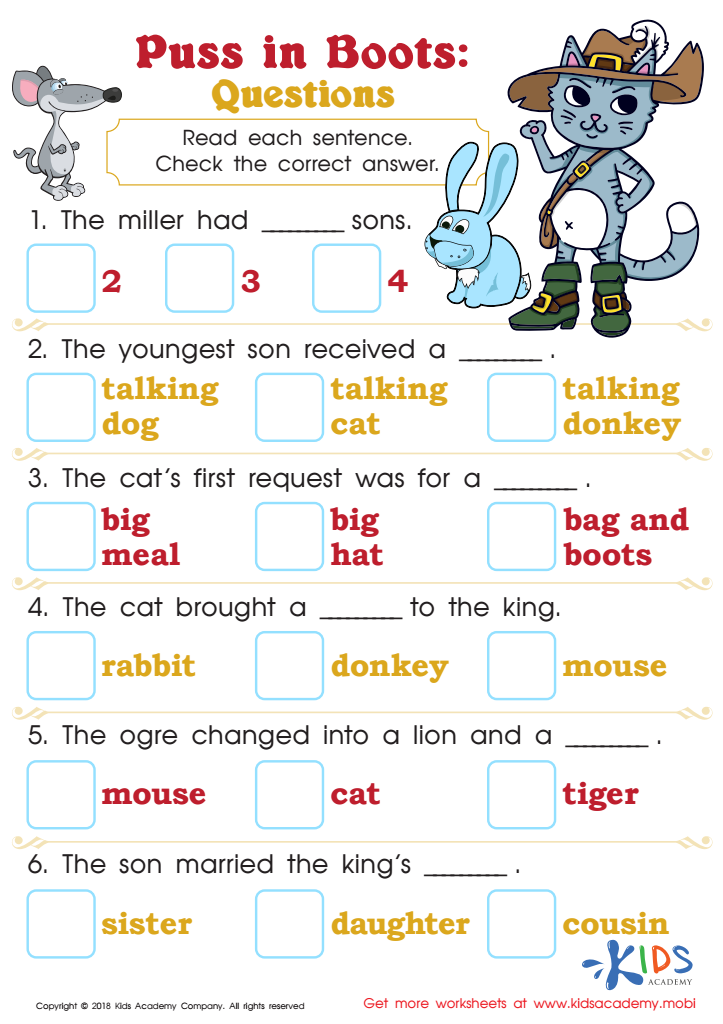
Puss in Boots: Questions Worksheet
This worksheet contains questions to be checked with boxes for the correct answers. It also has pictures of animals; ask kids to identify them, noting the objects with them. Read the questions and have kids provide the answers. Help them check the boxes for the right answer.
Puss in Boots: Questions Worksheet
Worksheet
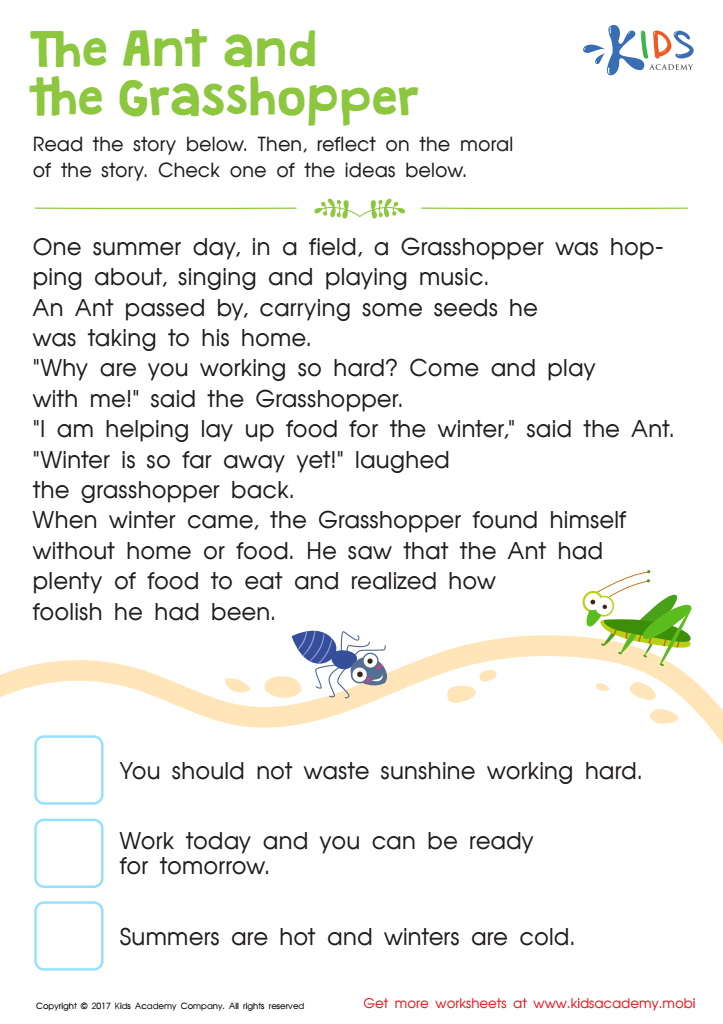
The Ant and The Grasshopper Printable
Aesop's fables have clear messages, which make them memorable and loved by children and adults. Use Kids Academy's ant and grasshopper worksheet to help your child reflect on stories and discover the life lesson.
The Ant and The Grasshopper Printable
Worksheet
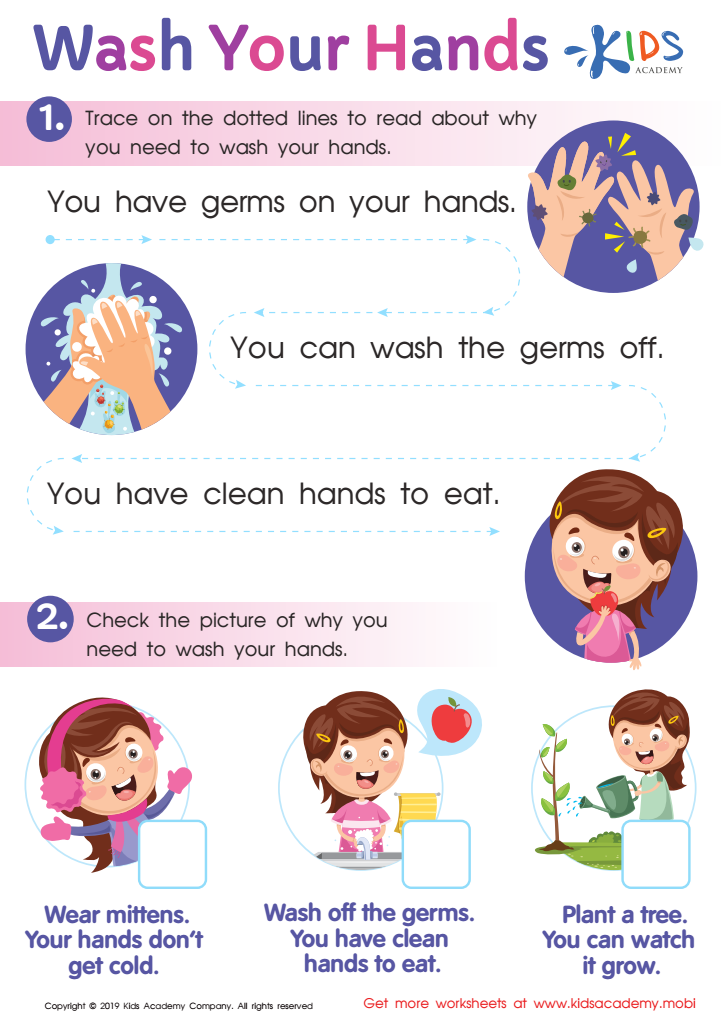
Wash Your Hands Worksheet
Kids learn best when they understand why they need to do something. This free worksheet uses traceable lines and pictures to teach them about germs and why washing hands is important. The child follows a left-to-right sequence and must check the correct picture to show they understand.
Wash Your Hands Worksheet
Worksheet
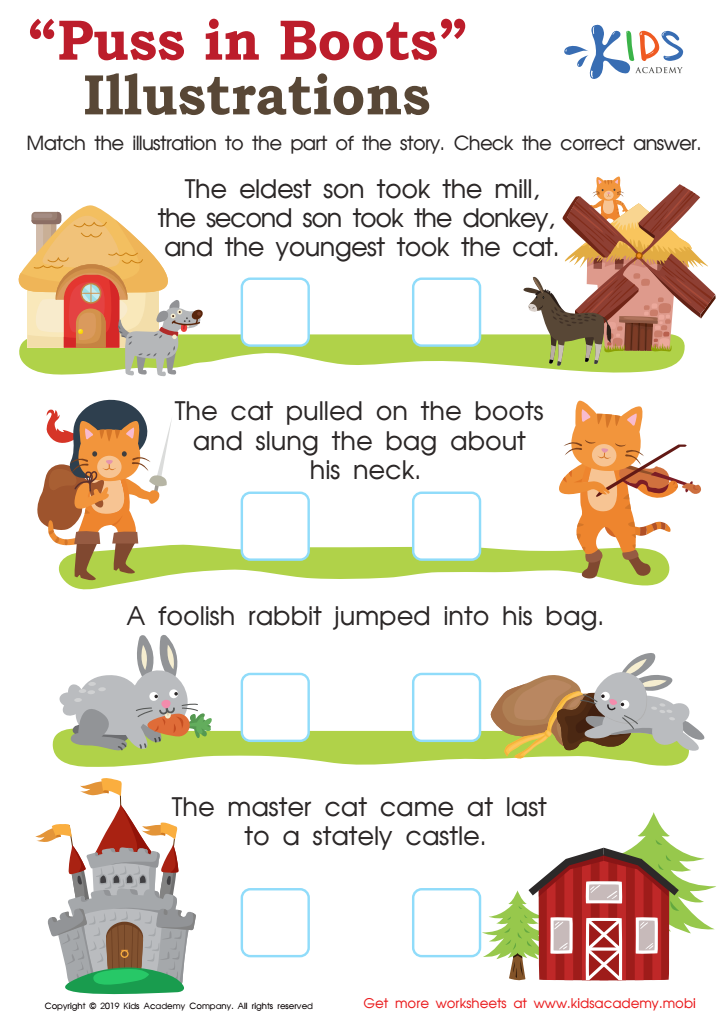
Puss in Boots Illustrations Worksheet
This Puss In Boots Illustrations worksheet is a great way to help kids learn about retelling stories. They'll match images to different parts of the story and check off the correct answer. As they recall events and put them in sequence they'll enjoy this fun and creative activity.
Puss in Boots Illustrations Worksheet
Worksheet
Join Kids Academy for Free
Who is primarily going to use this learning content?






.jpg)
Visual interpretation in reading fiction for children aged 6-9 is crucial for developing critical literacy skills. At this age, children are not only learning to read but also to understand and engage with stories on multiple levels. Visual elements—such as illustrations, layout, and even typography—provide additional context that facilitates comprehension and deepens emotional connections to the narrative.
Parents and teachers should care about visual interpretation because it helps foster a child’s imagination and analytical thinking. Recognizing how illustrations complement or enhance text encourages children to look beyond words, promoting a richer understanding of the story. These visual cues can guide readers in identifying themes, character emotions, and plot development, enhancing their ability to draw inferences and make predictions.
Additionally, early exposure to visual literacy cultivates skills that extend beyond the classroom. In a visually driven world, the ability to interpret imagery is vital for navigating various forms of media. By nurturing skills in visual interpretation, educators and parents can support holistic literacy development that empowers children to become thoughtful readers and critical thinkers, setting the stage for lifelong learning and comprehension skills.








