Vocabulary enhancement Reading Fiction Worksheets for Ages 6-9 - Page 2
26 filtered results
-
From - To
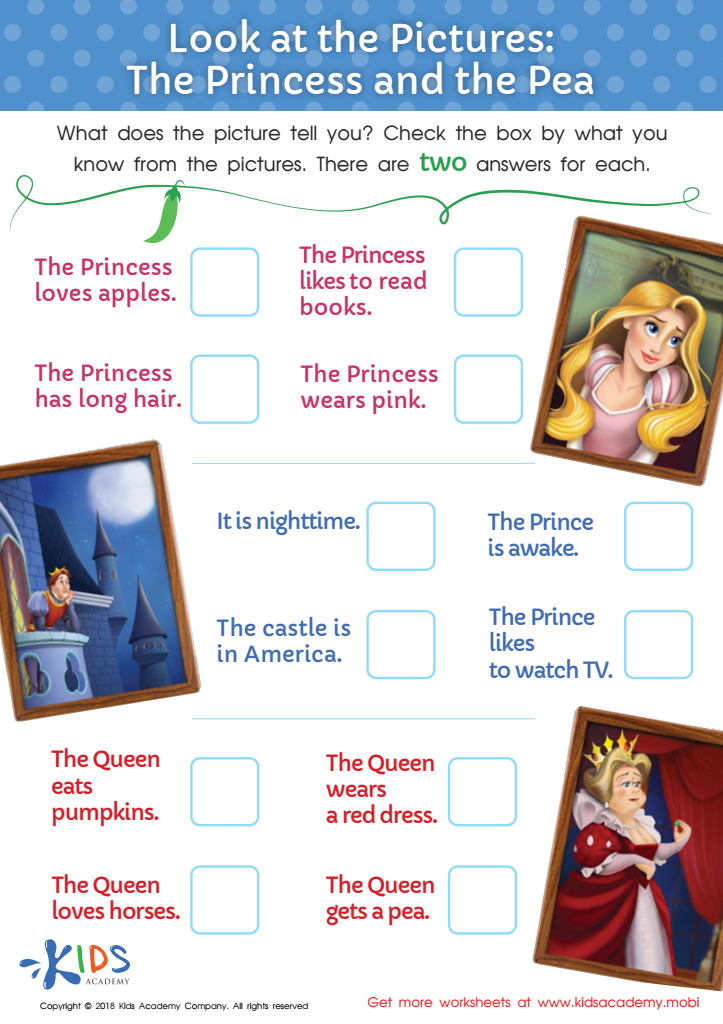
Look at the Pictures: The Princess and the Pea Worksheet
 Assign to My Students
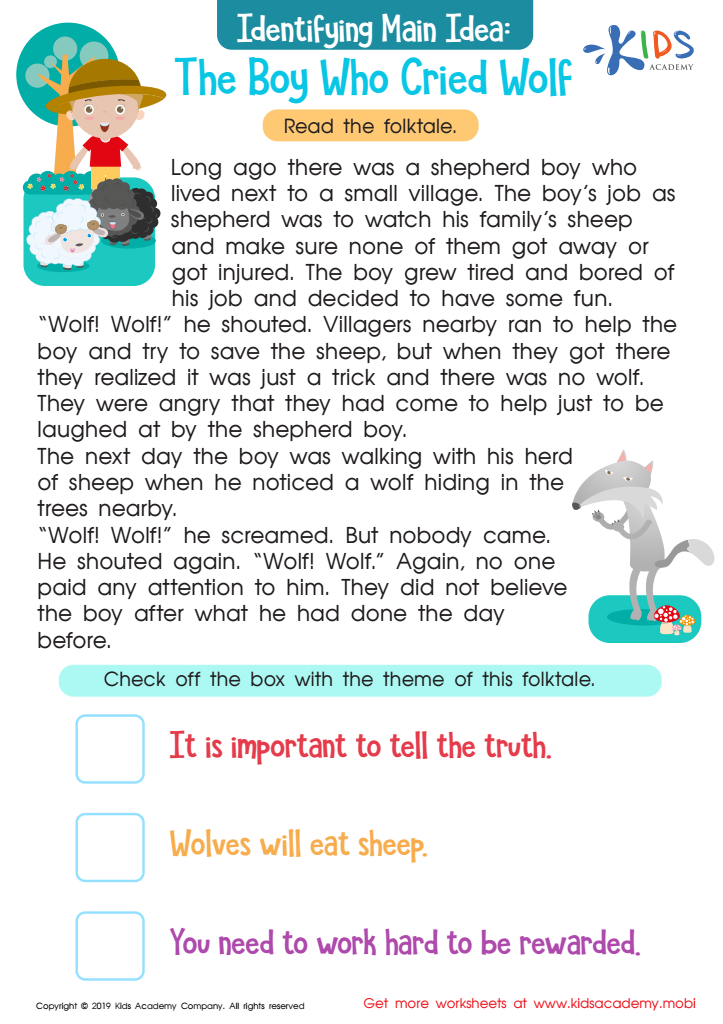
The Boy Who Cried Wolf Part 2 Worksheet







Vocabulary enhancement through reading fiction is crucial for children ages 6-9, as it plays a significant role in their overall language development and cognitive growth. During these formative years, children are in a critical period for language acquisition, and exposure to a rich vocabulary can enhance their communication skills. Reading fiction introduces young readers to diverse words and phrases in engaging contexts, helping them understand nuances, emotions, and different narrative styles.
Fiction also encourages imagination and creativity, enabling children to form connections between words and experiences. A robust vocabulary enhances their ability to express thoughts, ask questions, and interact meaningfully with peers and adults. Moreover, strong vocabulary skills laid down early can lead to improved reading comprehension, critical thinking, and academic success as children progress through school.
For parents and teachers, fostering a love for reading through fiction can instill lifelong learning habits. Encouraging discussions about stories and unfamiliar words allows children to internalize new vocabulary, making it part of their active language use. Ultimately, focusing on vocabulary enhancement within fiction reading cultivates not only better readers but also confident communicators, setting a strong foundation for future educational achievements.








