Basic Addition Skills Sight Words Worksheets for Ages 6-9
6 filtered results
-
From - To
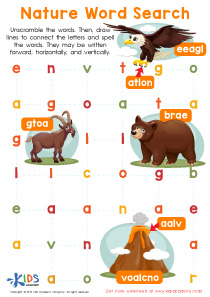
Empower young learners with our Basic Addition Skills Sight Words Worksheets, designed exclusively for kids aged 6-9. These engaging printable worksheets combine essential sight words with basic addition exercises to build a strong foundation in both reading and math. Tailored to foster confidence and proficiency, our fun activities help children seamlessly integrate sight word recognition with arithmetic practice. Each worksheet challenges and excites young minds, making learning enjoyable. Enhance your child's educational journey with our expertly crafted resources, and watch them excel academically while having a blast. Discover the perfect blend of reading and math skill-building today!
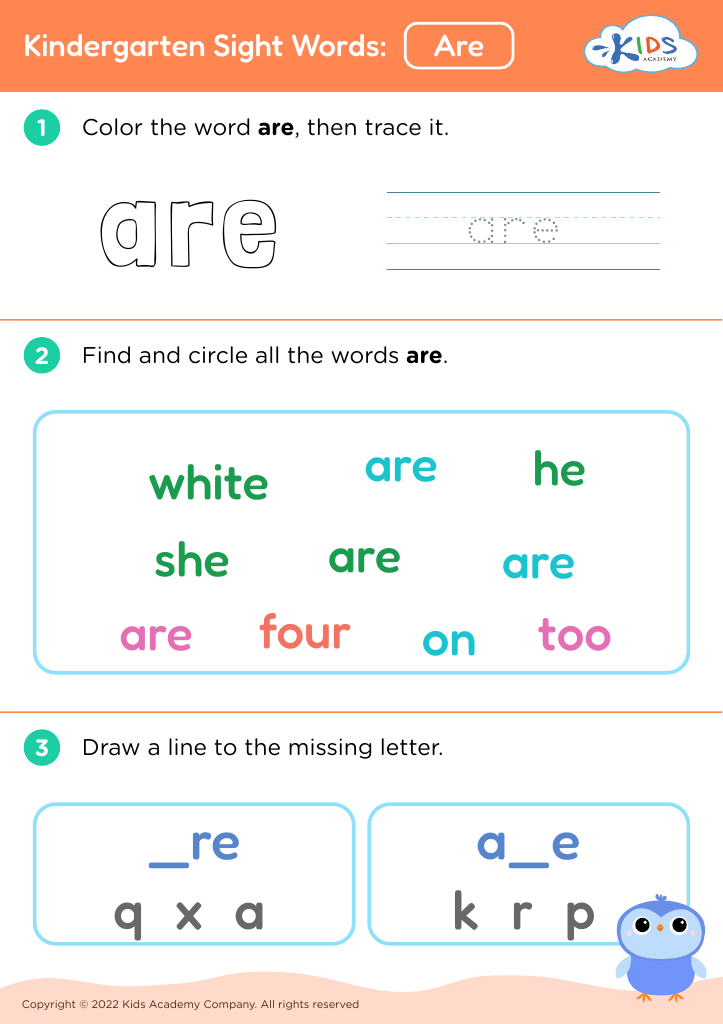




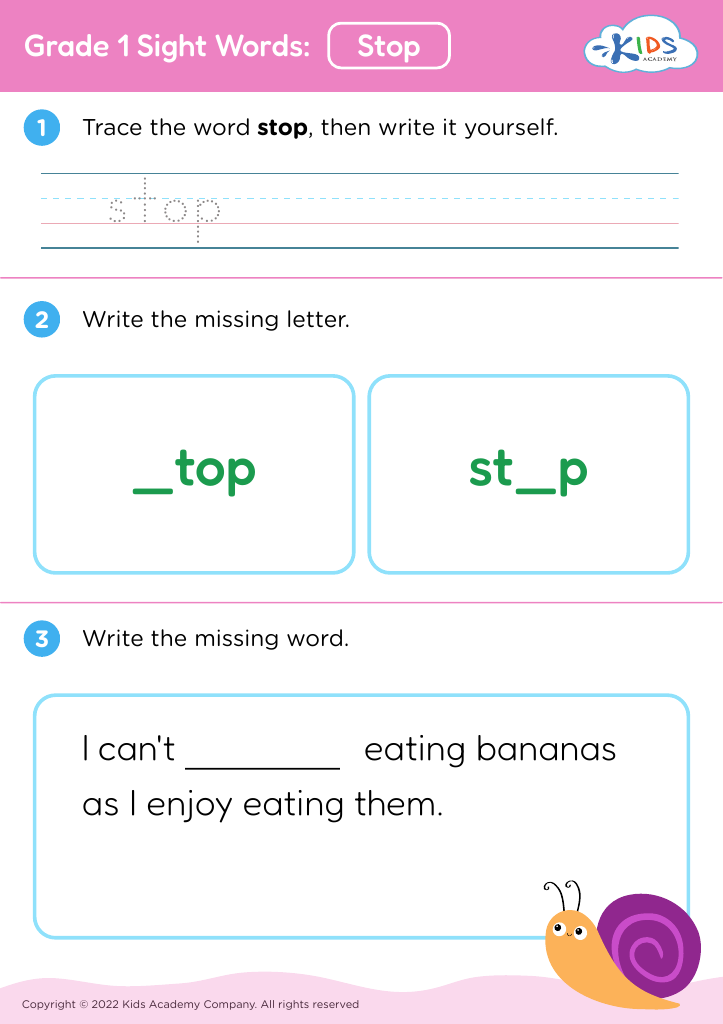
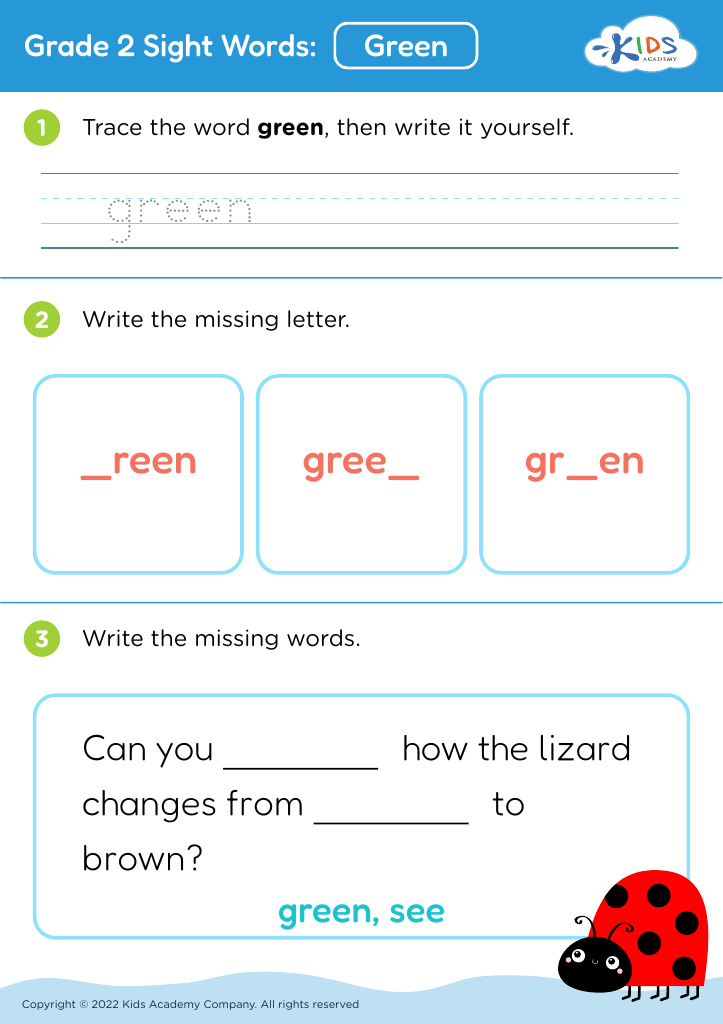
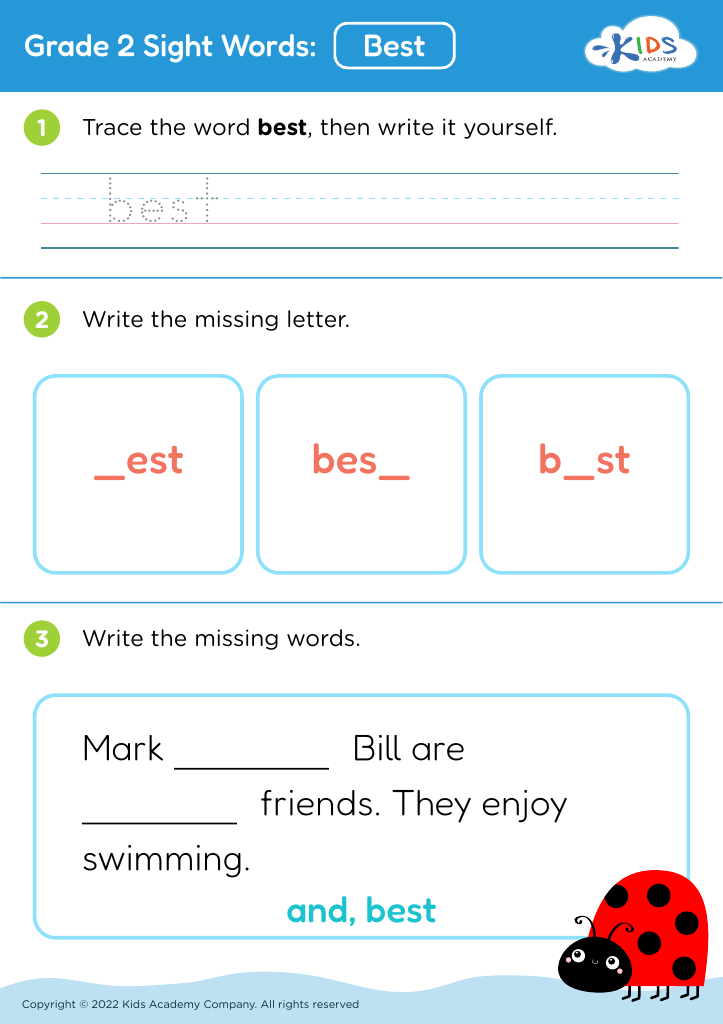
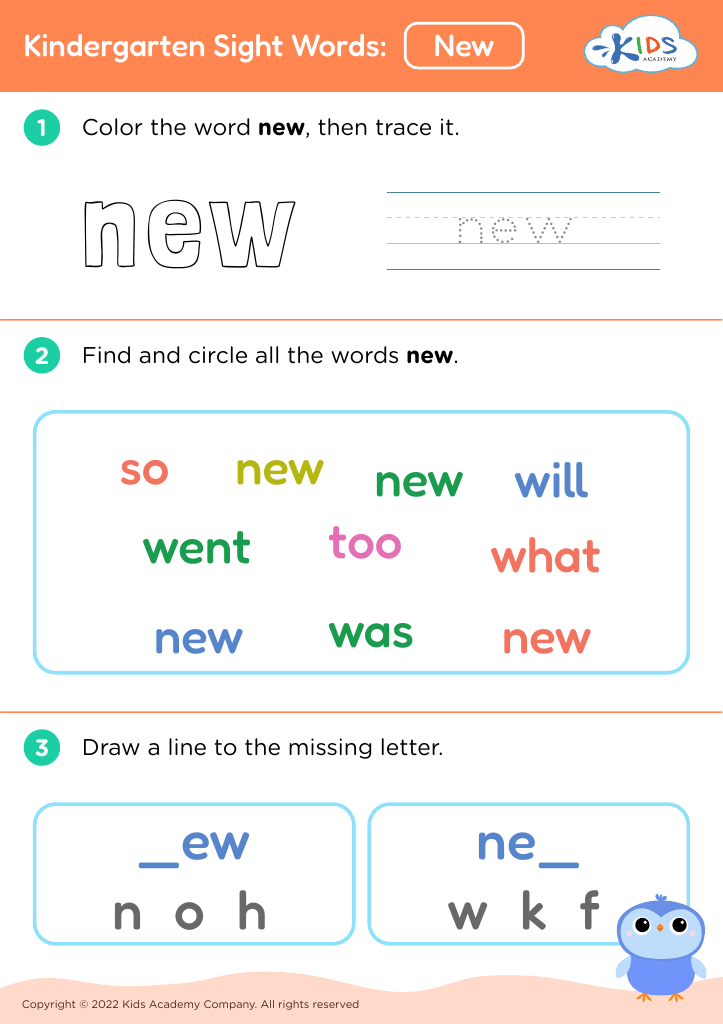







Basic addition skills and sight words are essential building blocks for young learners aged 6-9, forming the foundation for future academic success. Mastering basic addition not only equips children with crucial math skills pivotal for tackling more complex arithmetic but also enhances their problem-solving abilities and logical thinking. These skills are employed daily in making sense of patterns, understanding equitable sharing, budgeting, and beyond, all of which are quintessential for real-life applications.
Sight words, on the other hand, constitute a significant portion of the text in children's reading materials. These are high-frequency words that children need to recognize instantly for fluid reading and comprehensive understanding. Familiarity with sight words lowers the cognitive load during reading, allowing youngsters to focus on decoding more complex words and grasping the overall context. This builds language proficiency, fostering better communication skills and a love for reading.
Both basic addition and sight word recognition bode well for increased confidence and independence in young learners. Supporting these foundational skills through engaging activities and consistent practice at home or in the classroom fosters a positive attitude toward learning, promotes academic advancement, and sets the stage for continued educational enjoyment and success.