Cursive writing practice Cursive Numbers Worksheets for Ages 6-9
10 filtered results
-
From - To
Discover our Cursive Numbers Worksheets, specially designed for children aged 6-9! These engaging worksheets provide an excellent way for young learners to practice their cursive writing skills with a focus on numbers. Our activities help boost fine motor skills and enhance number recognition while making learning fun and interactive. Each worksheet features traceable cursive numbers, allowing kids to build confidence as they express themselves through writing. Ideal for home or classroom use, our resources support your child’s development in penmanship and critical thinking. Explore the joy of cursive writing today and empower your child's creativity and learning journey!
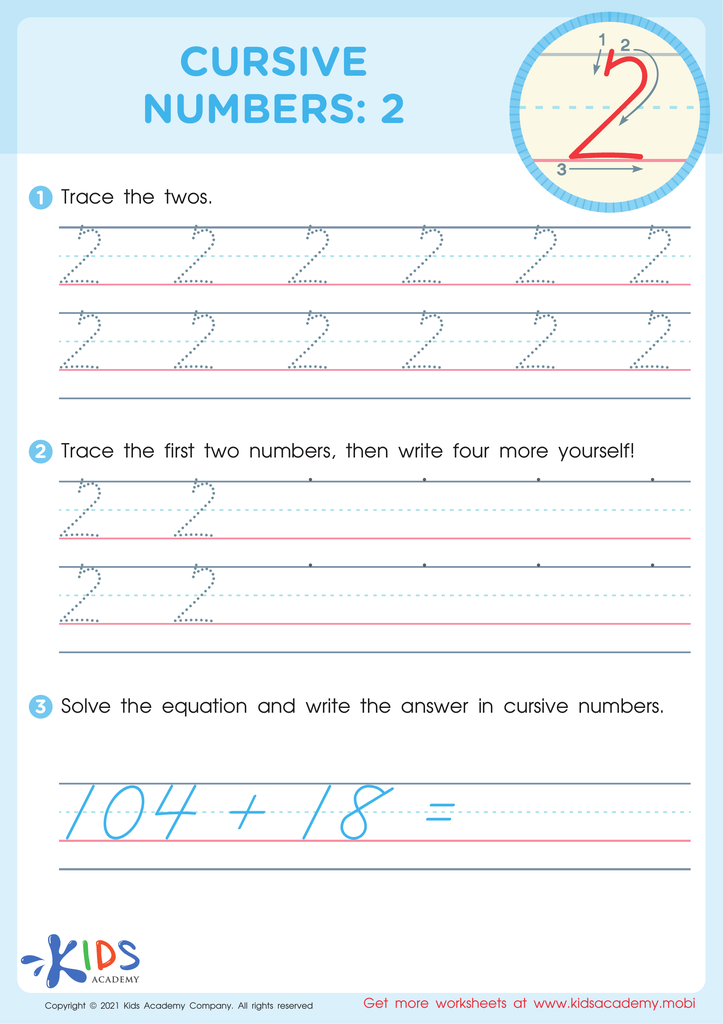
Cursive Numbers: 2 Worksheet
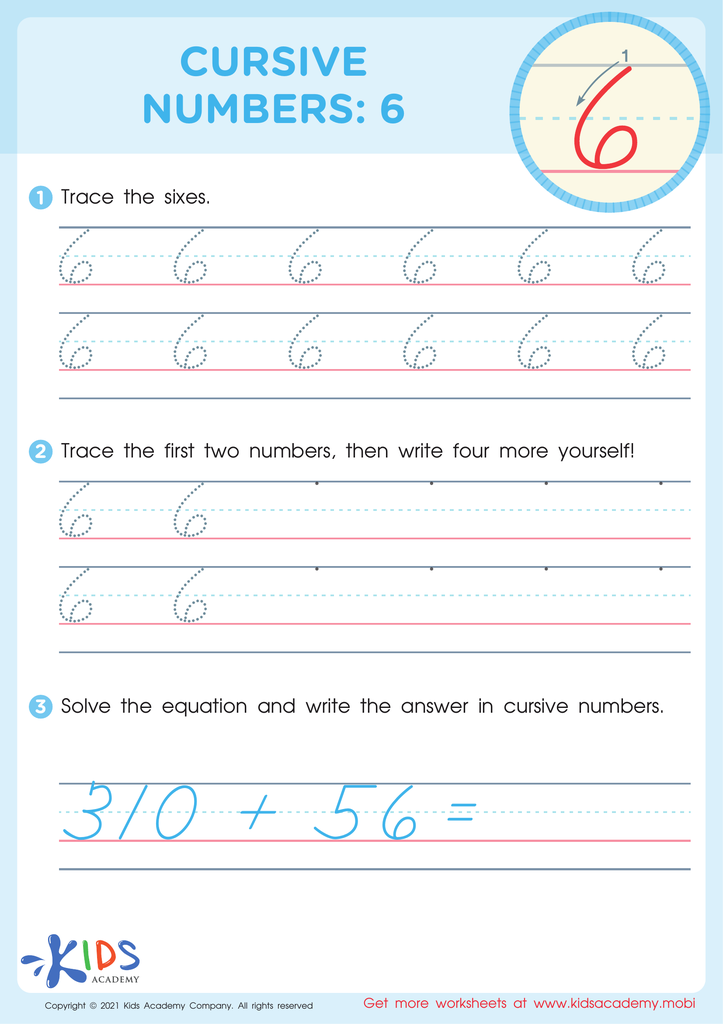
Cursive Numbers: 6 Worksheet
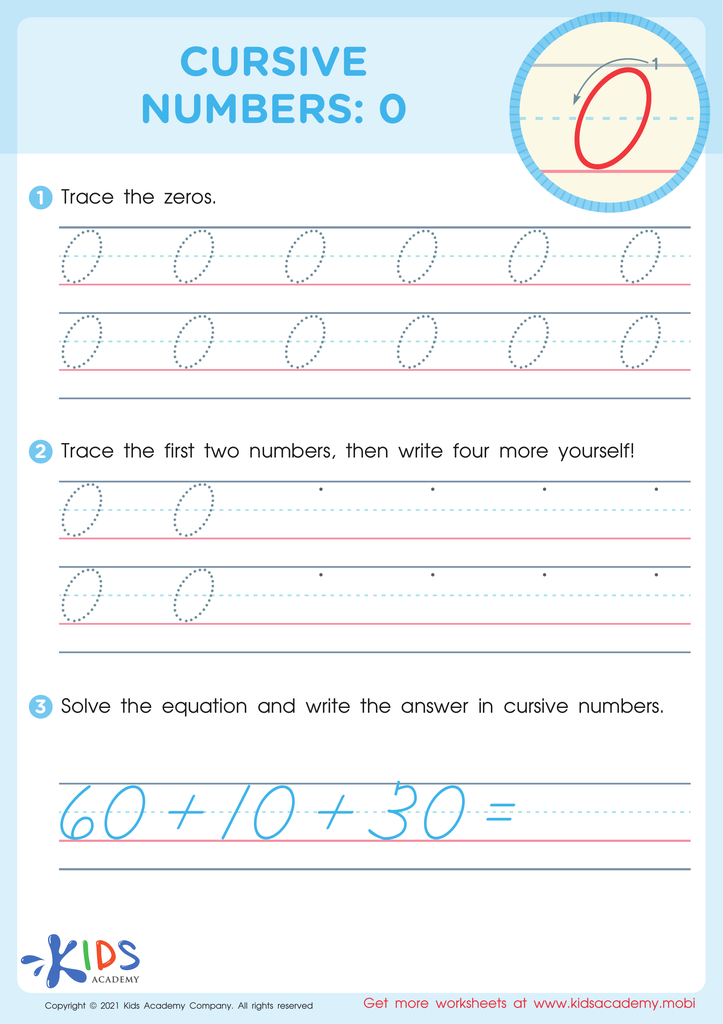
Cursive Numbers: 0 Worksheet
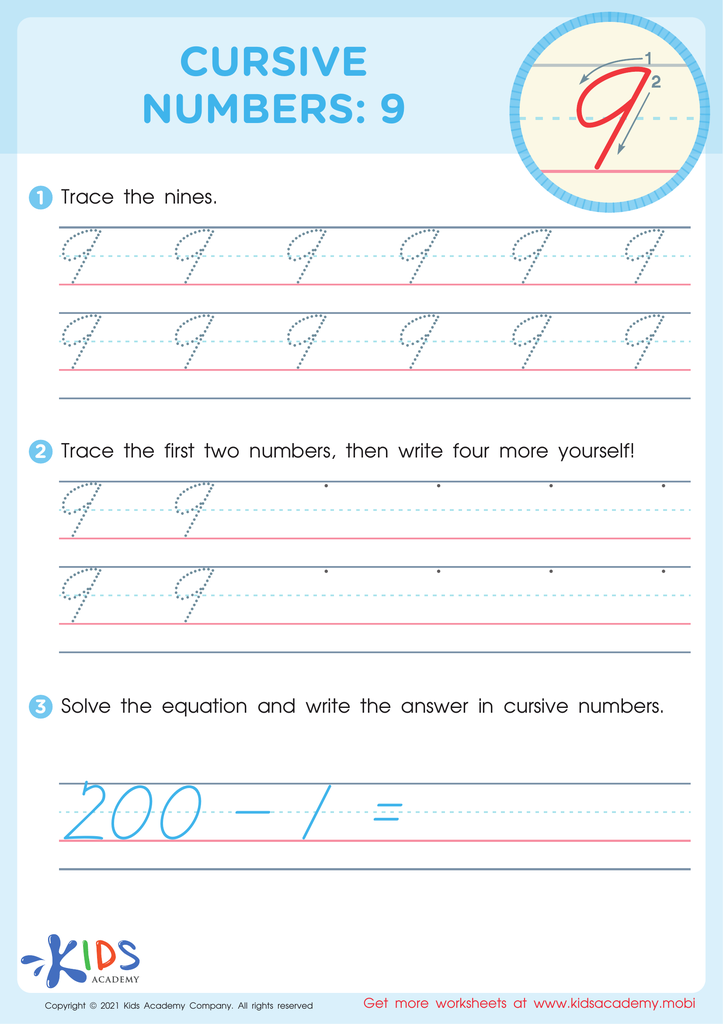
Cursive Numbers: 9 Worksheet
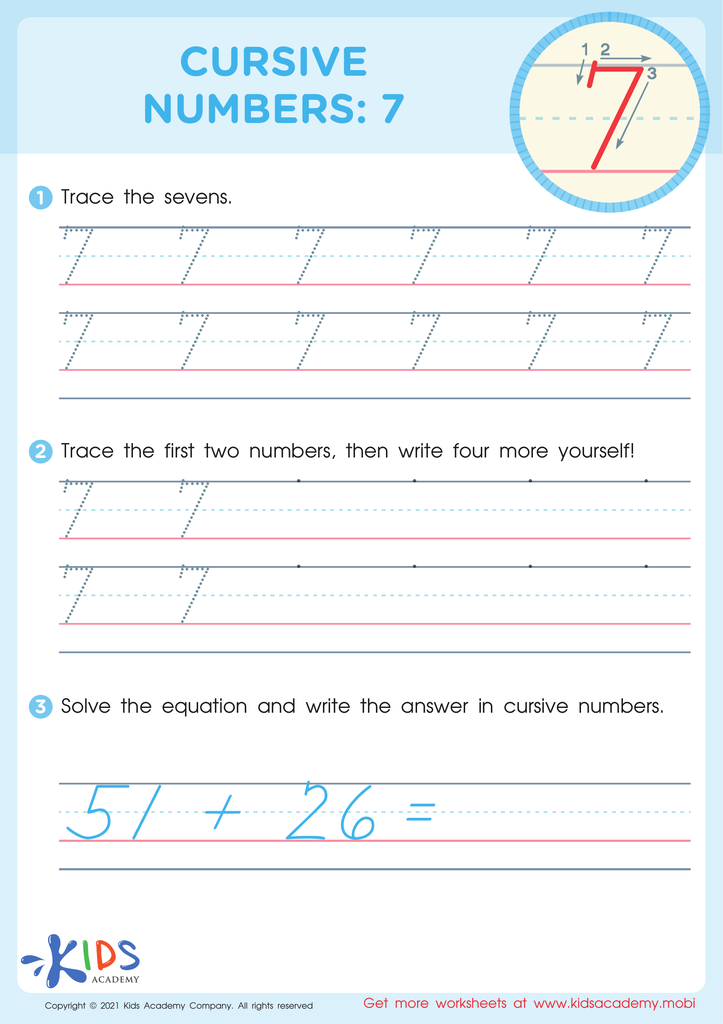
Cursive Numbers: 7 Worksheet
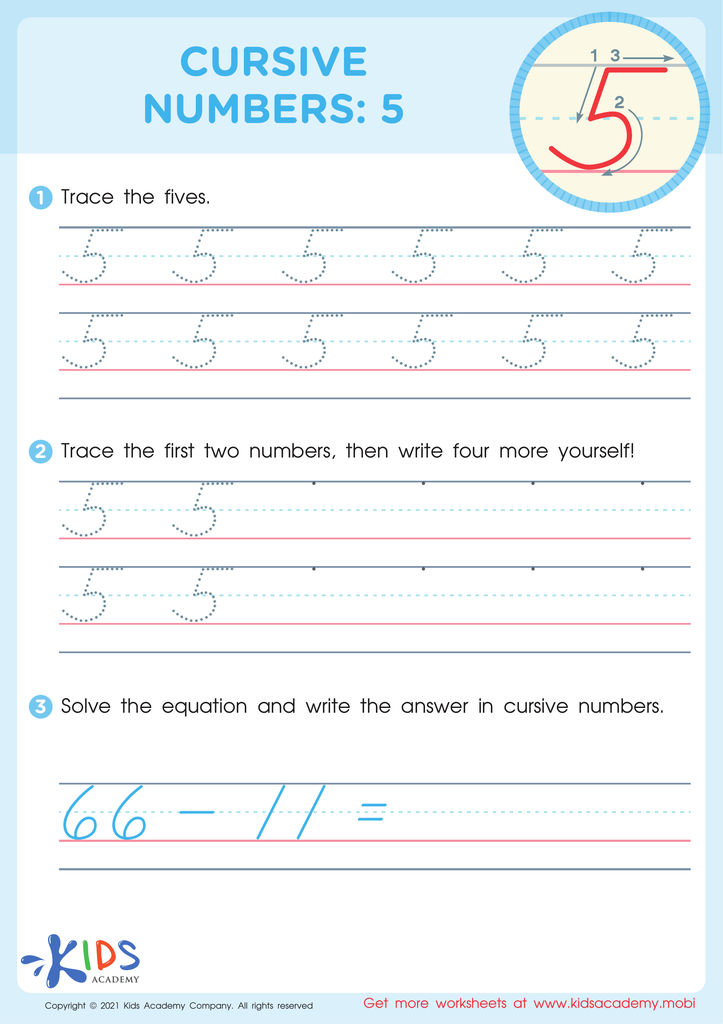
Cursive Numbers: 5 Worksheet
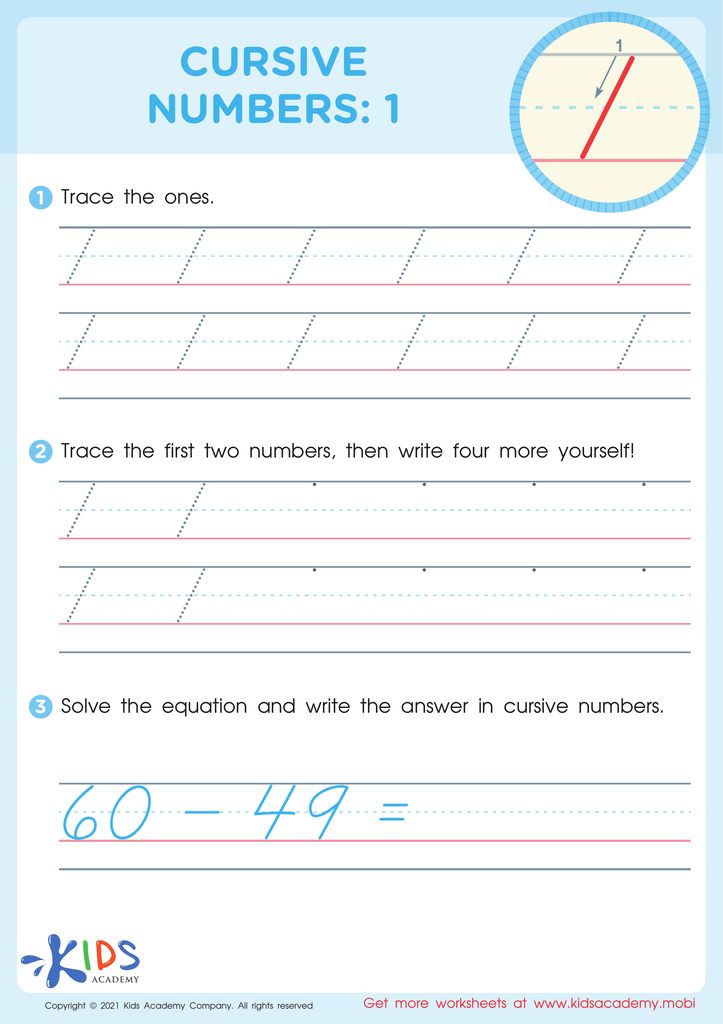
Cursive Numbers: 1 Worksheet
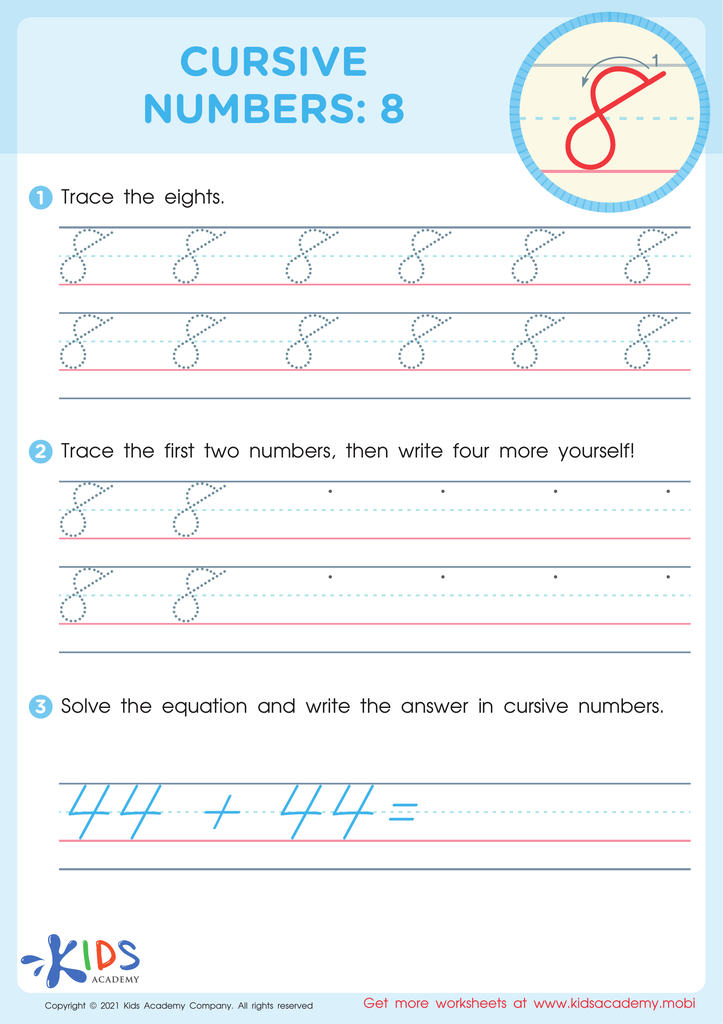
Cursive Numbers: 8 Worksheet
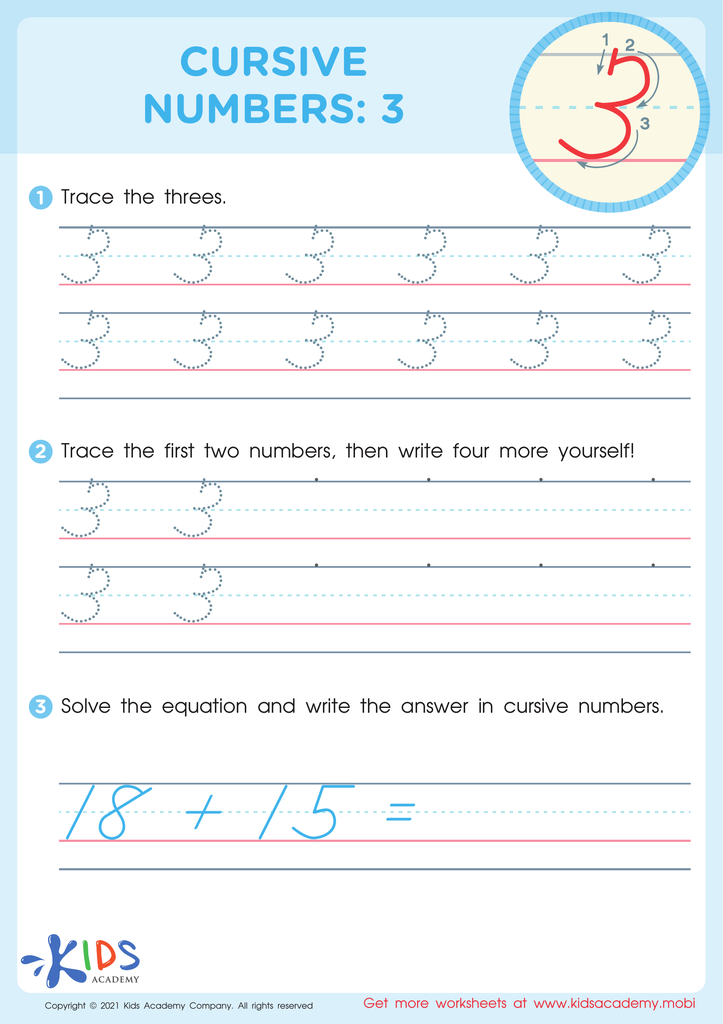
Cursive Numbers: 3 Worksheet
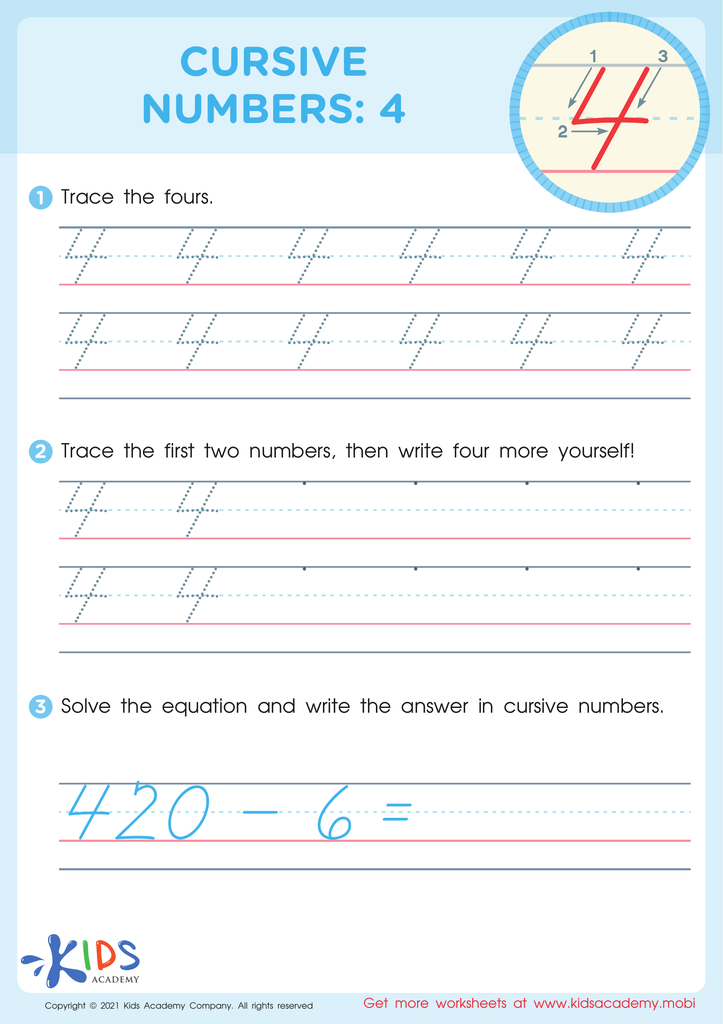
Cursive Numbers: 4 Worksheet



Cursive writing practice, especially for numbers, is a valuable skill for children ages 6-9. In an age dominated by digital communication, promoting cursive writing ensures that students develop fine motor skills and hand-eye coordination essential for physical writing. Cursive writing characters are more fluid and connected, which can foster a more comfortable writing style and speed over time.
Additionally, learning cursive numbers aids in memory retention and cognitive development. The repetitive motion involved in writing cursive strengthens pathways in the brain critical for literacy and numeracy, enhancing concentration and focus. By engaging in cursive practice, children improve their overall handwriting, leading to better presentation in assignments and notes, which can bolster academic confidence.
Moreover, cursive writing includes distinct styles and formations tailored to each number, fostering creativity and allowing children to express themselves artistically. Teachers and parents play a vital role in encouraging these practices, as they contribute to a comprehensive foundation in educational tools necessary for future learning. In a world that's becoming increasingly digital, knowing how to appropriately connect with traditional writing forms not only benefits personal expression but also preserves a skill that might be underappreciated in today's educational approaches.








