
Logical thinking Grammar Worksheets for Ages 6-9
3 filtered results
Difficulty Level
Grade
Age
-
From - To
Subject
Activity
Standards
Enhance your child's critical thinking skills with our Logical Thinking Grammar Worksheets designed for ages 6-9. These engaging worksheets are thoughtfully crafted to combine grammar practice with logical reasoning exercises, helping young learners build essential language skills while developing their analytical abilities. Each worksheet features fun activities that challenge students to think critically, identify patterns, and enhance their comprehension. Parents and teachers will appreciate the structured approach to learning that fosters independence and confidence in writing. Spark your child’s curiosity about grammar and cultivate their logical thinking with these enjoyable and educational resources! Get started today!
Favorites
With answer key
Interactive
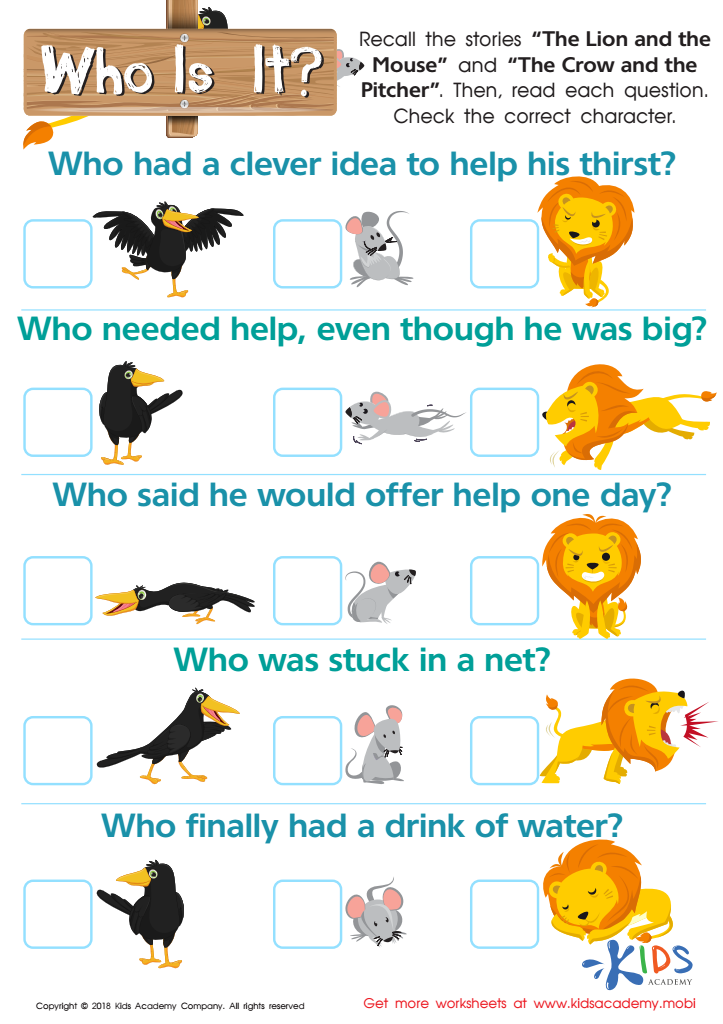
Who Is It? Worksheet
This worksheet helps students recall details from The Crow and the Pitcher and The Lion and the Mouse stories. Students will answer questions about the characters' actions. Use it to assess their understanding of both stories, as this is a key comprehension skill.
 Assign to My Students
Who Is It? Worksheet
Worksheet
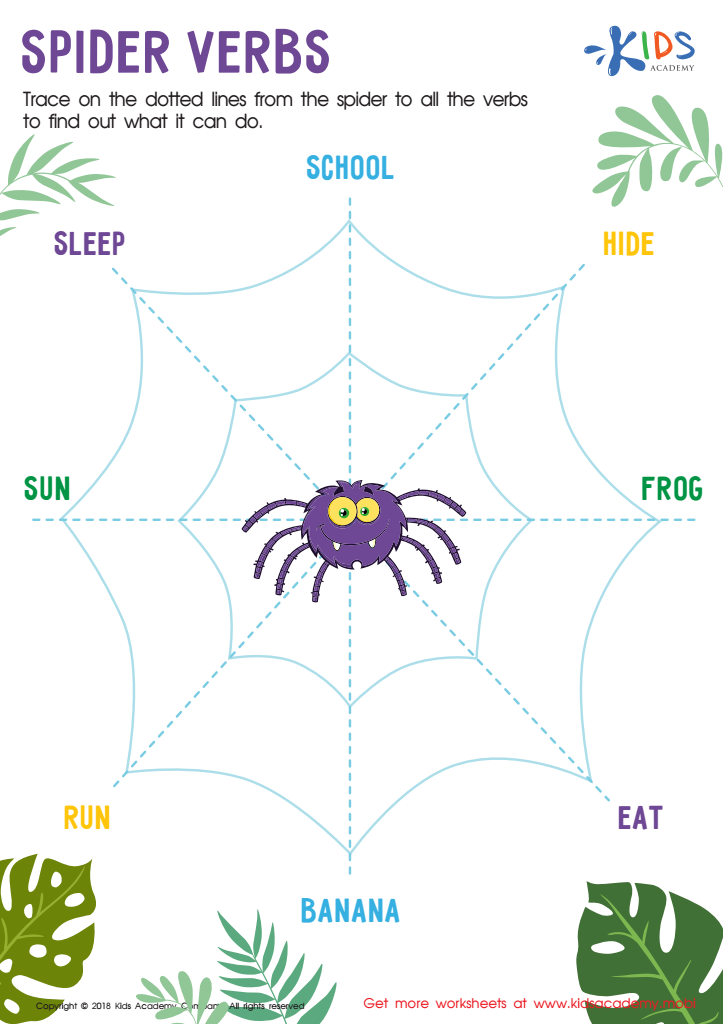
Spider Verbs Worksheet
Verbs are action words. Examples: run, play, talk. Show your child this tracing sheet for them to learn about verbs. Ask them to trace the dotted lines from the spider to the words that are verbs. These words are what the spider can do.
Spider Verbs Worksheet
Worksheet
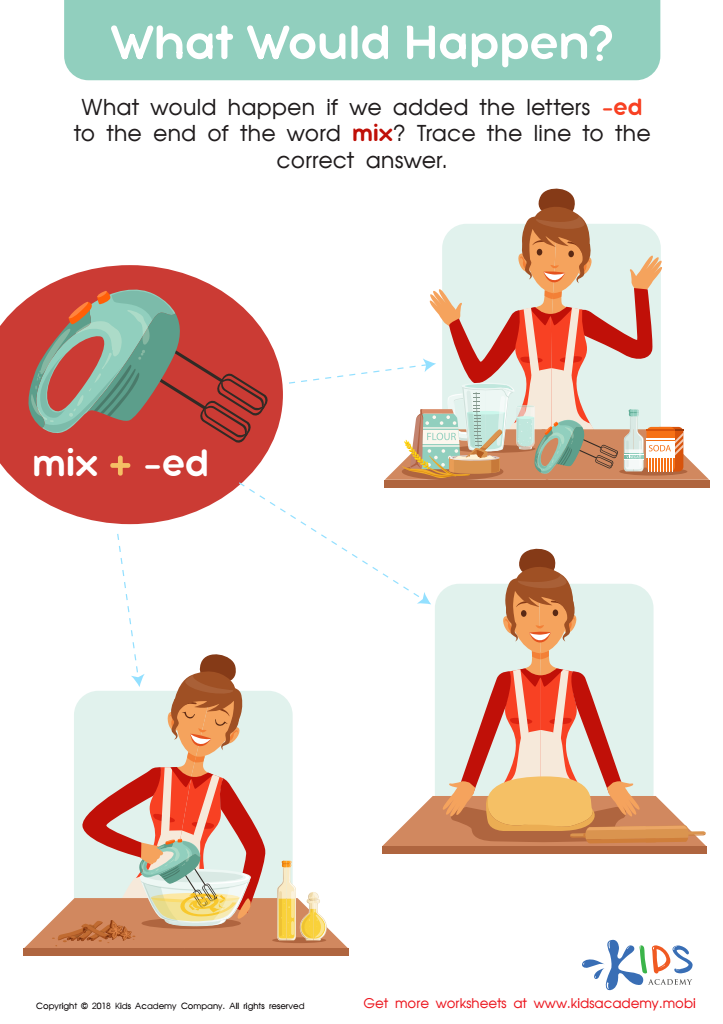
What Would Happen? Worksheet
Are your kids struggling with tenses? Use this worksheet to help them. See what they know by asking them to add '-ed' to the end of 'mix'. Guide them through the tracing sheet as they look for the correct answer.
What Would Happen? Worksheet
Worksheet
Join Kids Academy for Free
Who is primarily going to use this learning content?





.jpg)


Logical thinking grammar is crucial for children aged 6-9 as it lays the foundation for effective communication and analytical skills. During these formative years, children are not only acquiring vocabulary and constructing sentences but also learning to think critically about how language works. Understanding the rules of grammar helps students organize their thoughts and express their ideas clearly, which is essential for both academic success and social interactions.
For parents and teachers, fostering logical thinking grammar supports cognitive development. It encourages students to recognize patterns, draw connections, and make inferences, further enhancing their problem-solving abilities. These skills are transferable across subjects, improving performance in areas such as math and science.
Moreover, children who grasp the logical structure of language find it easier to understand and analyze texts, boosting their reading comprehension skills. Exposure to proper grammar cultivates confidence in their writing abilities, motivating them to share their ideas creatively.
Ultimately, investing time in teaching logical thinking and grammar paves the way for lifelong learning. As children grow into proficient readers and writers, they develop the ability to navigate the complexities of communication, which is vital in today's increasingly interconnected world.








