Understanding adjectives Grammar Worksheets for Ages 6-9
5 filtered results
-
From - To
Explore our engaging "Understanding Adjectives Grammar Worksheets" designed specifically for children aged 6-9! These worksheets aim to enhance your child's grasp of adjectives, helping them describe nouns with vivid detail. Through fun and interactive exercises, kids will learn to identify and use adjectives effectively in their writing. The activities not only promote creativity but also strengthen essential grammar skills, making learning enjoyable. Perfect for home or classroom use, our worksheets cater to various learning styles and abilities. Start your child's journey towards mastering adjectives and watch their writing skills flourish! Download now and bring excitement to grammar learning!
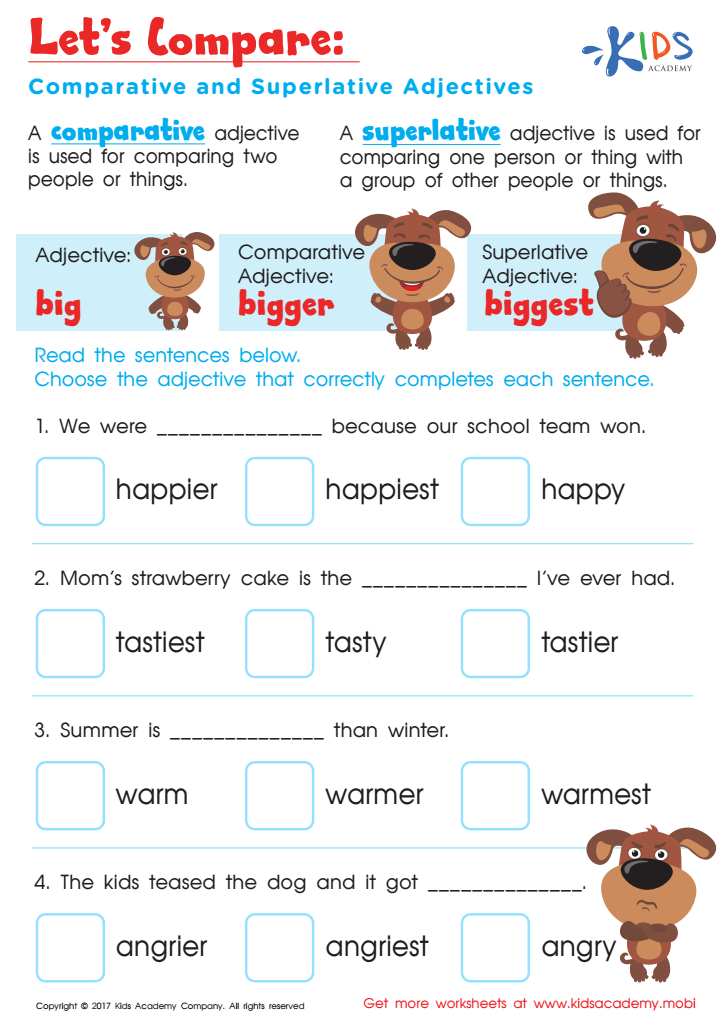
Comparative and Superlative Worksheet
 Assign to My Students
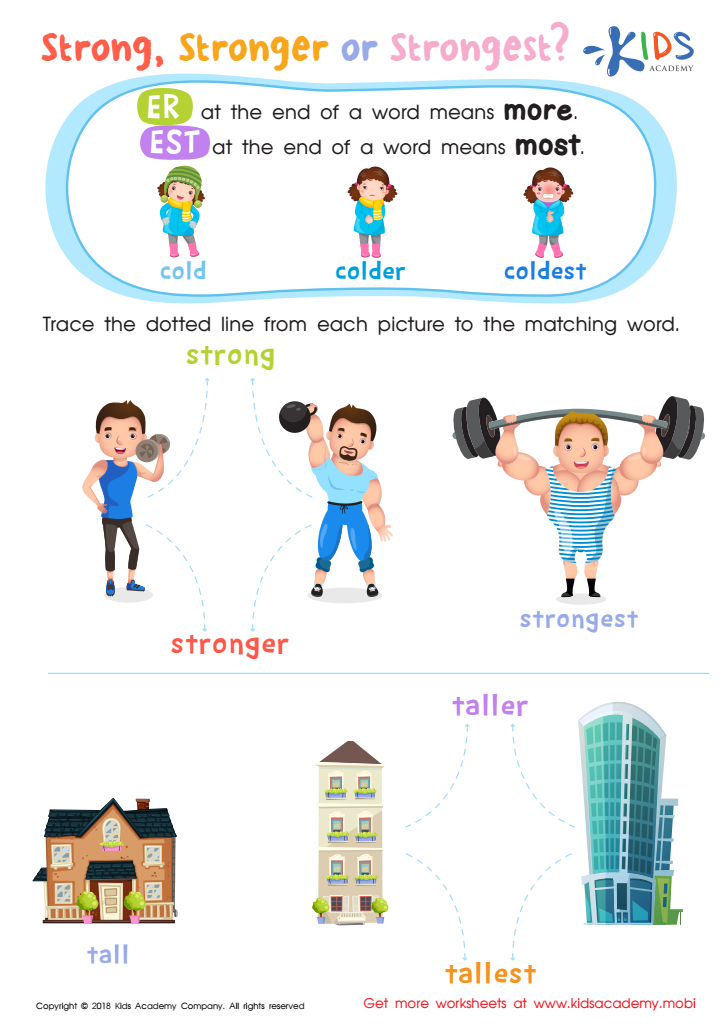
Strong or Stronger? Worksheet
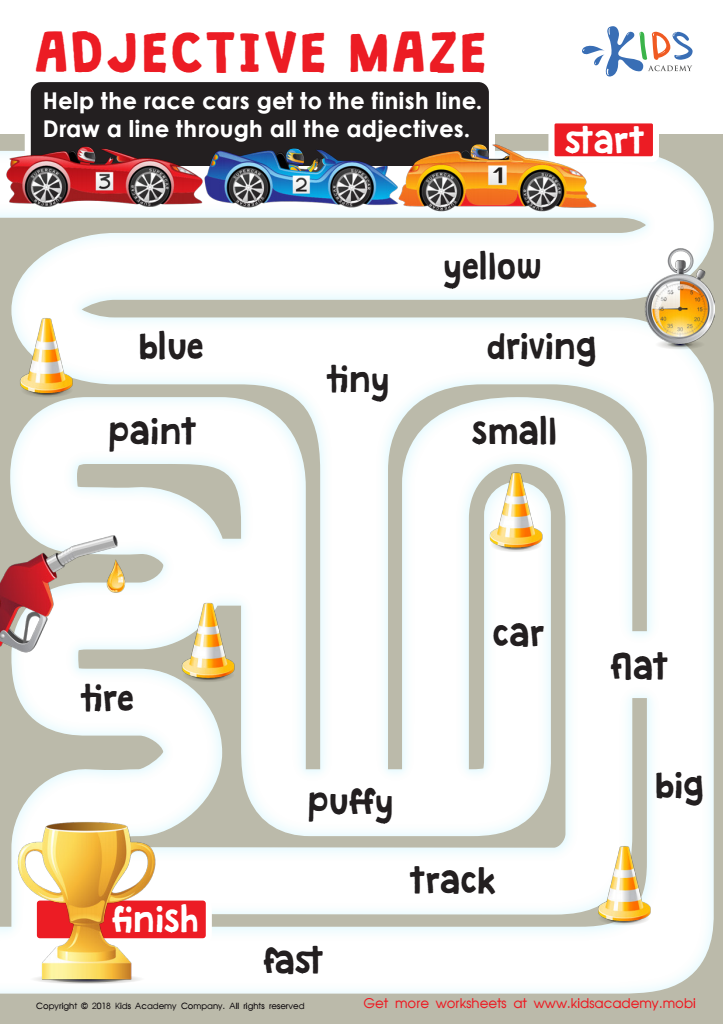
Adjective Maze Worksheet
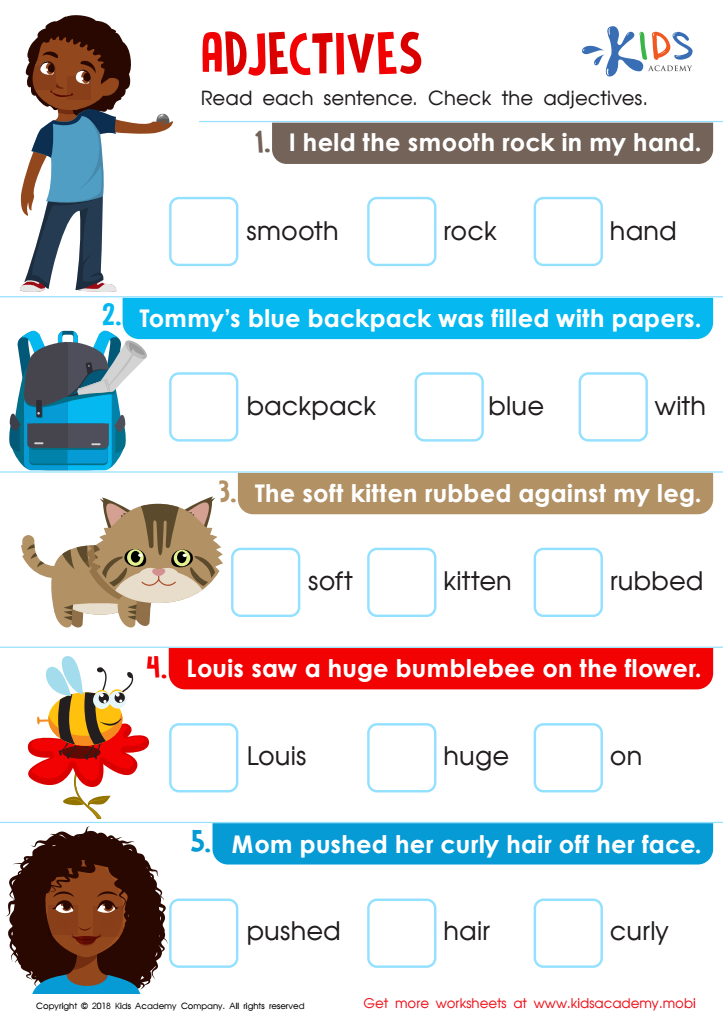
Adjectives Worksheet
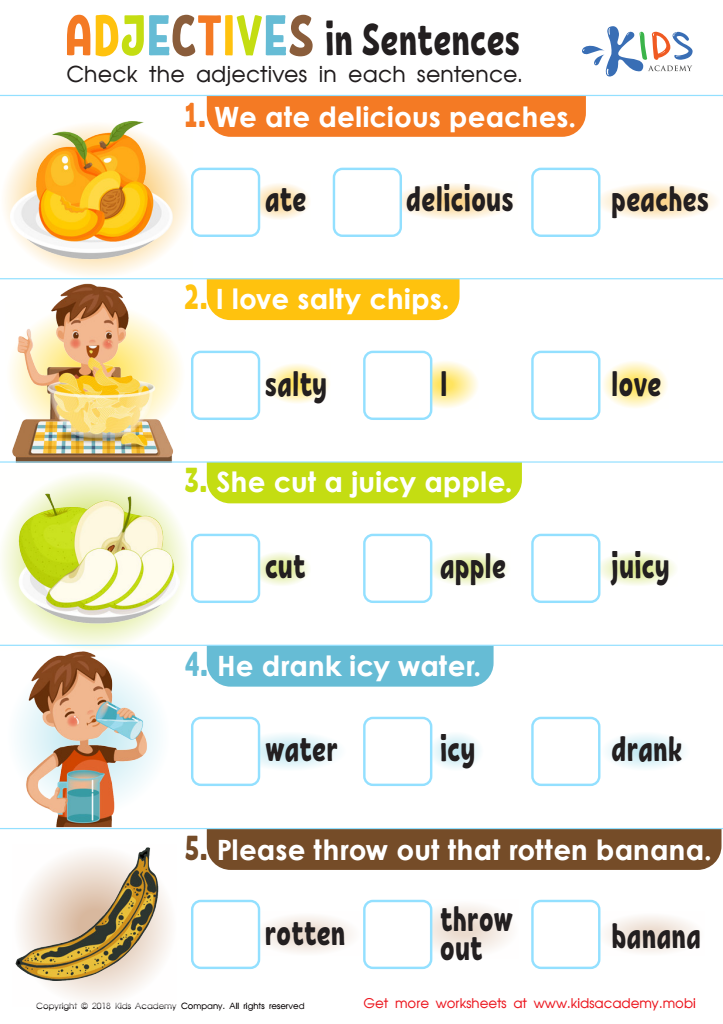
Adjectives in Sentences Worksheet





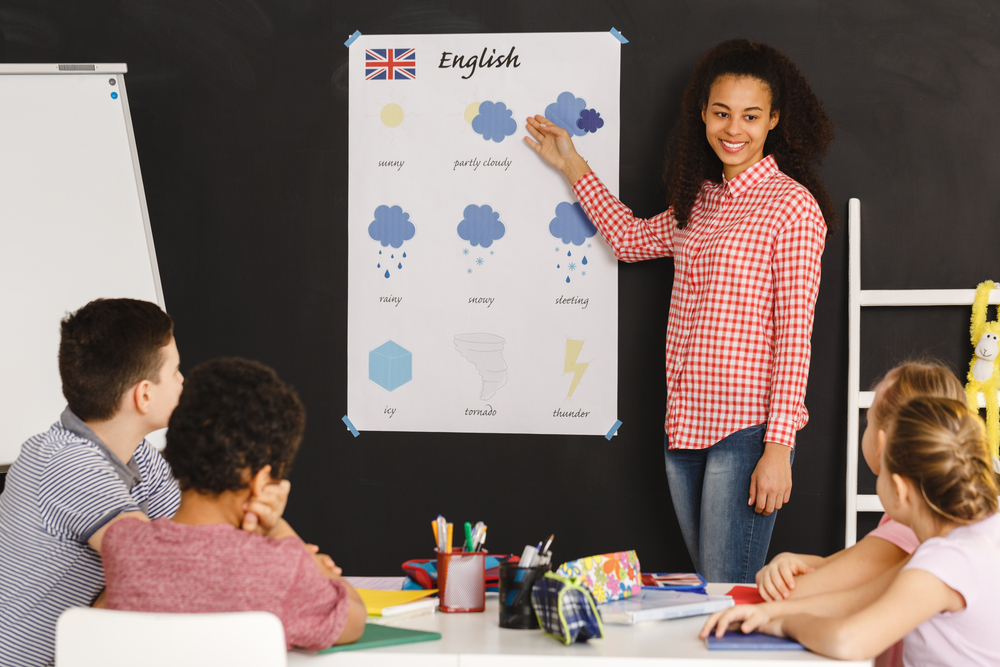
Understanding adjectives is crucial for children aged 6-9 as it forms the foundation for their language development, communication skills, and academic success. Adjectives enrich children's vocabulary and help them describe people, places, and things more vividly. By learning how adjectives function, children become more effective storytellers and writers, creating explications that engage their audience.
Moreover, mastering adjectives enhances reading comprehension; when children recognize descriptive words, they grasp the nuances of the text and develop a deeper understanding of characters and settings. Teachers and parents should emphasize adjectives in everyday conversations and activities, as this knowledge fosters self-expression and creativity.
Additionally, the use of adjectives assists children in categorizing and comparing objects, which is fundamental not only in language arts but also in mathematics and science. For instance, adjectives help them articulate size, color, and shape, allowing for better observation and analysis.
Finally, a solid understanding of adjectives is critical for developing an awareness of language nuances, aiding in social interaction and emotional intelligence. By prioritizing adjective usage, parents and teachers equip children with essential tools for effective communication, ultimately contributing to their overall educational experience.








