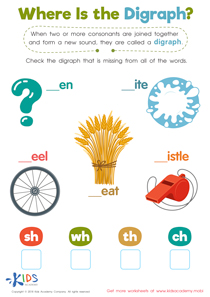
Phonics Skills Beginning Consonants Worksheets for 6-Year-Olds
4 filtered results
Difficulty Level
Grade
Age
-
From - To
Subject
Activity
Standards
Discover engaging Phonics Skills Beginning Consonants Worksheets designed specifically for 6-year-olds! Our worksheets offer a fun and interactive way to help young learners master the foundation of reading. With a focus on beginning consonants, children will enhance their phonetic recognition and reinforce letter sounds through a variety of activities, including tracing, matching, and coloring. These printable resources not only boost literacy skills but also encourage creativity and independent learning. Perfect for both classroom settings and at-home practice, our worksheets make phonics learning enjoyable and effective. Empower your child’s reading journey today with our exciting phonics worksheets!
Favorites
With answer key
Interactive
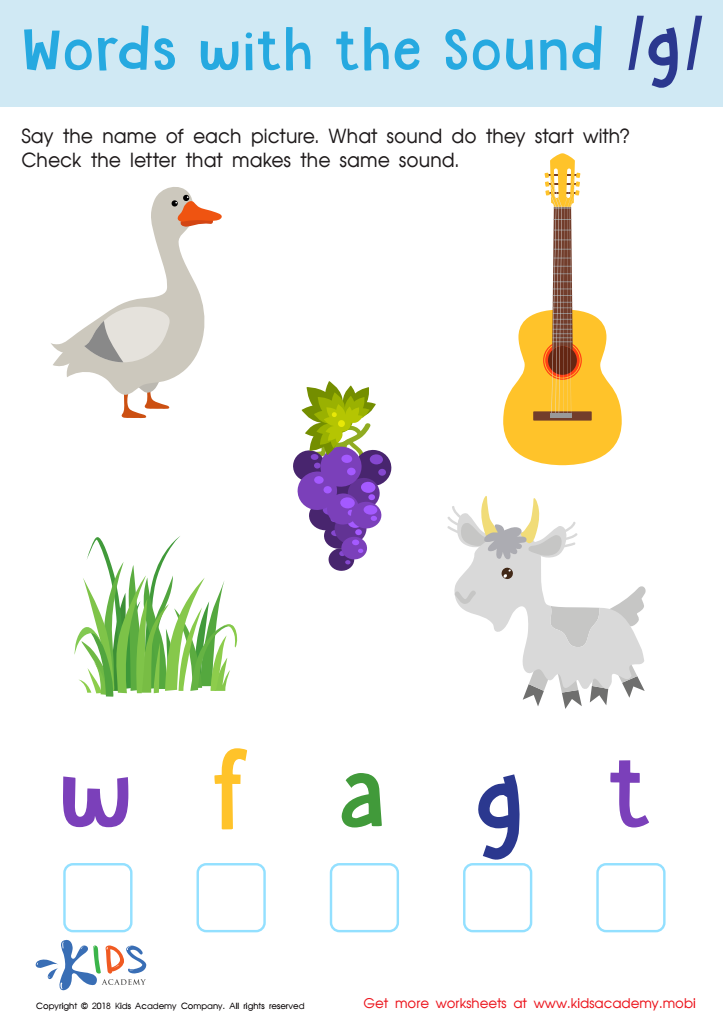
Words with sound g Reading Worksheet
Help your child learn the soft "g" sound with this phonics worksheet. Ask them to name each picture, then identify the letter sound it begins with. If it's "g", they can check the box. Have them repeat each word, listening for the soft "g" sound before moving on to the next page.
 Assign to My Students
Words with sound g Reading Worksheet
Worksheet
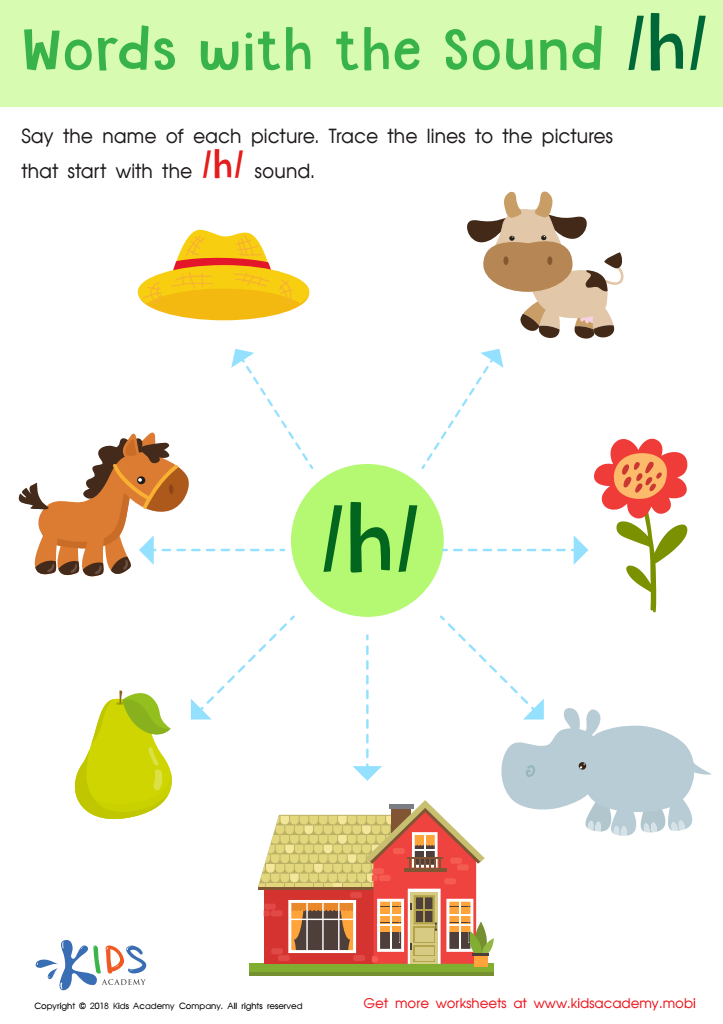
Words with sound h Reading Worksheet
The letter H can often be heard in words! Check your child's knowledge with an engaging worksheet from Kids Academy. Ask them to go around a circle and name each image aloud. Listen for the starting sound and trace the line from the middle letter to the images with the sound. This is a great way to practice phonics!
Words with sound h Reading Worksheet
Worksheet
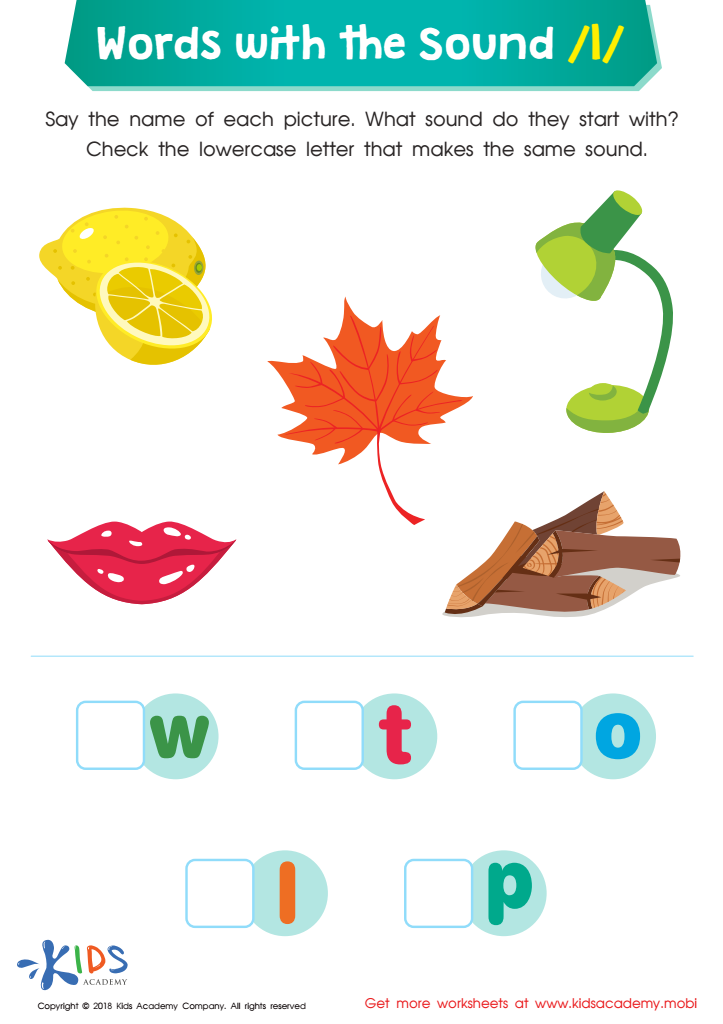
Words with Sound L Reading Worksheet
This PDF worksheet is great for helping emerging readers isolate initial sounds. Kids name familiar pictures, then identify the correct letter for the "l" sound. This worksheet strengthens fine motor skills, plus builds visual discernment. It's fun and colorful too!
Words with Sound L Reading Worksheet
Worksheet
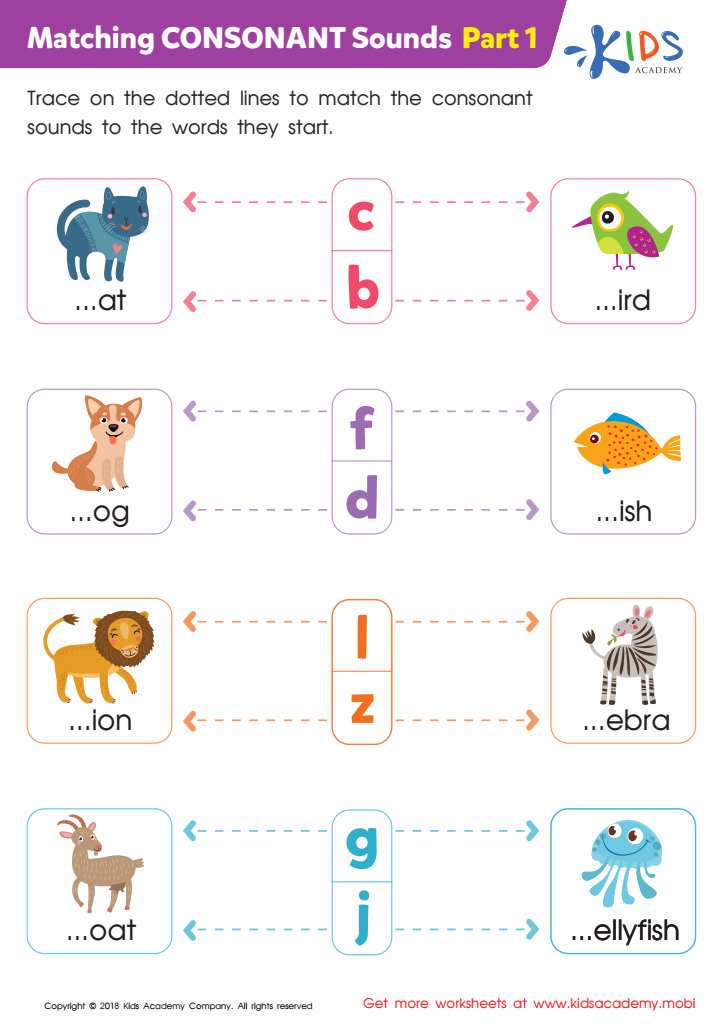
Matching Consonant Sounds: Part 1 Worksheet
Decide which letter matches each word and picture in this fun phonics worksheet. Slide your finger over each word, trying out each letter to check for matches. Once each pair is solved, trace the dotted lines with pencil to complete the printable. Who knew learning could be so enjoyable?
Matching Consonant Sounds: Part 1 Worksheet
Worksheet
Join Kids Academy for Free
Who is primarily going to use this learning content?


Phonics skills, particularly the understanding of beginning consonants, are crucial for 6-year-olds as they lay the foundation for effective reading and writing. At this age, children are beginning to develop their phonemic awareness, crucial for decoding words. Recognizing beginning consonants aids in identifying words, fostering vocabulary development, and improving spelling.
When children can connect sounds to letters, they are better equipped to blend sounds into recognizable words. This skill not only enhances reading fluency but also boosts confidence, encouraging early readers to tackle a broader range of texts. Furthermore, mastery of beginning consonants allows children to apply these skills across various subjects, enriching their overall learning experience.
Parents and teachers play a pivotal role in reinforcing phonics skills. By incorporating engaging phonics games and activities, they can help create a supportive learning environment that facilitates practice. Additionally, involvement in their child's literacy journey fosters a love for reading and learning.
Inculcating strong phonics skills early on ensures that children develop essential literacy foundations, enabling them to become confident readers and writers. This commitment to phonics education ultimately supports their academic success and lifelong love of literature.