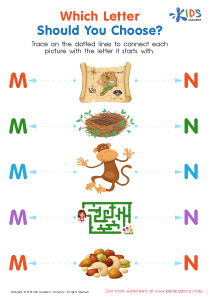
Alphabet sequencing Lowercase/Small Letters Worksheets for 6-Year-Olds
3 filtered results
-
From - To
Discover our engaging Alphabet Sequencing Worksheets for 6-year-olds, designed to make learning lowercase letters fun and interactive! These meticulously crafted worksheets help young learners practice the correct order of the alphabet while enhancing their letter recognition and fine motor skills. Each activity encourages children to sequence lowercase letters through various exercises, including tracing, matching, and filling in the blanks. Perfect for use at home or in the classroom, our worksheets provide a colorful and stimulating way to reinforce essential literacy skills. Empower your child's early learning journey with these delightful resources that spark creativity and foster a love for reading!
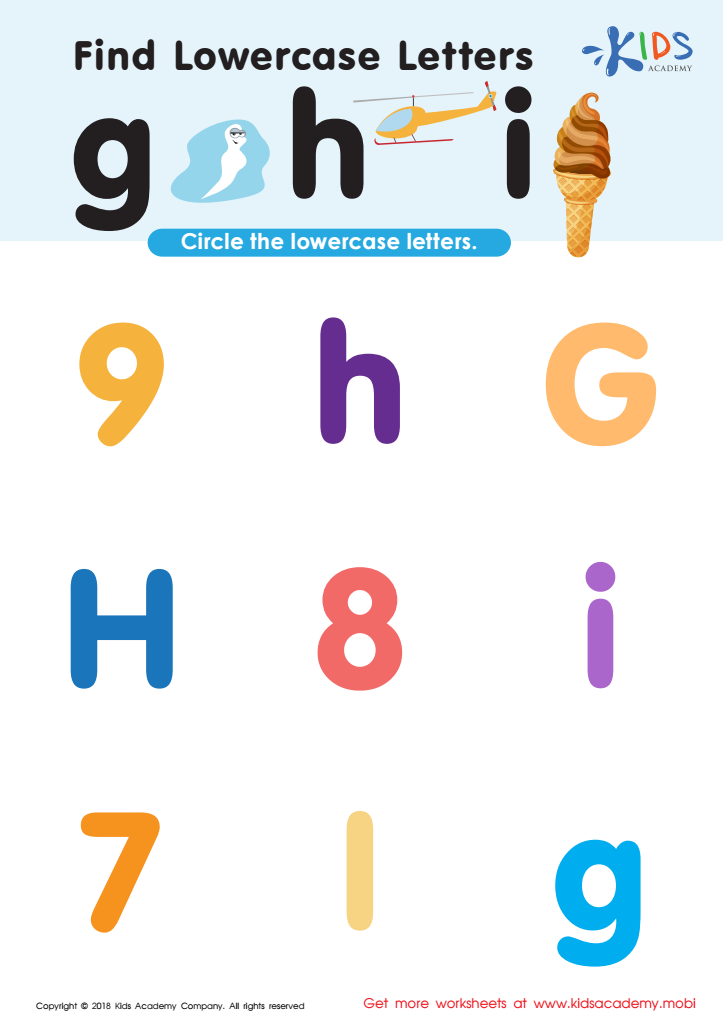
Find Lowercase Letters g h i Worksheet
 Assign to My Students
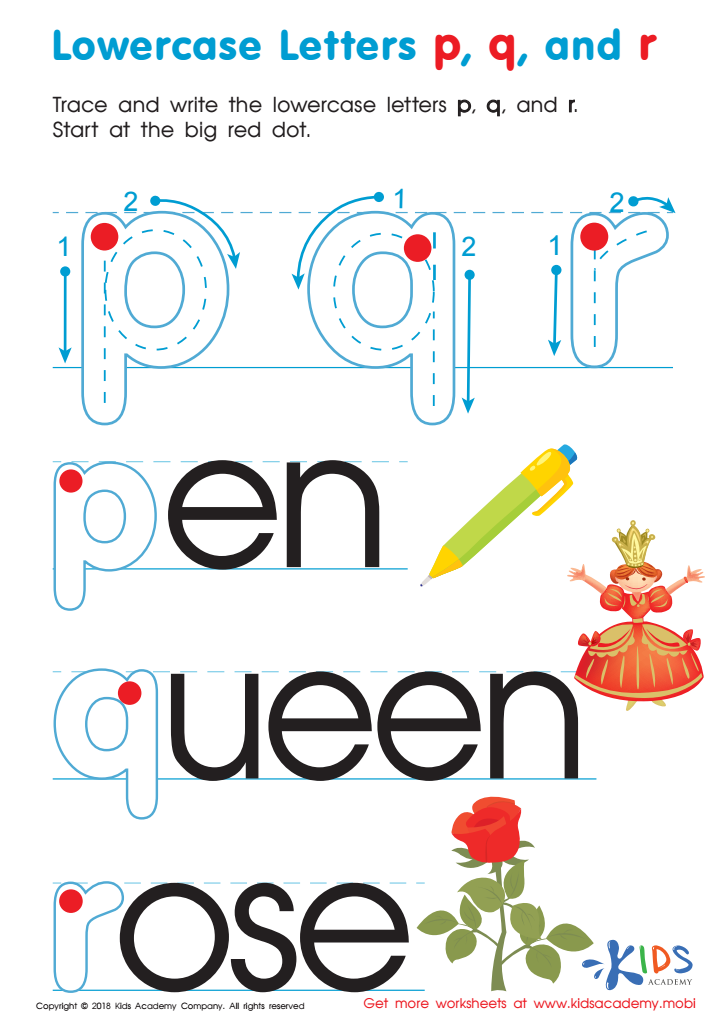
Lowercase Letters p q r Worksheet
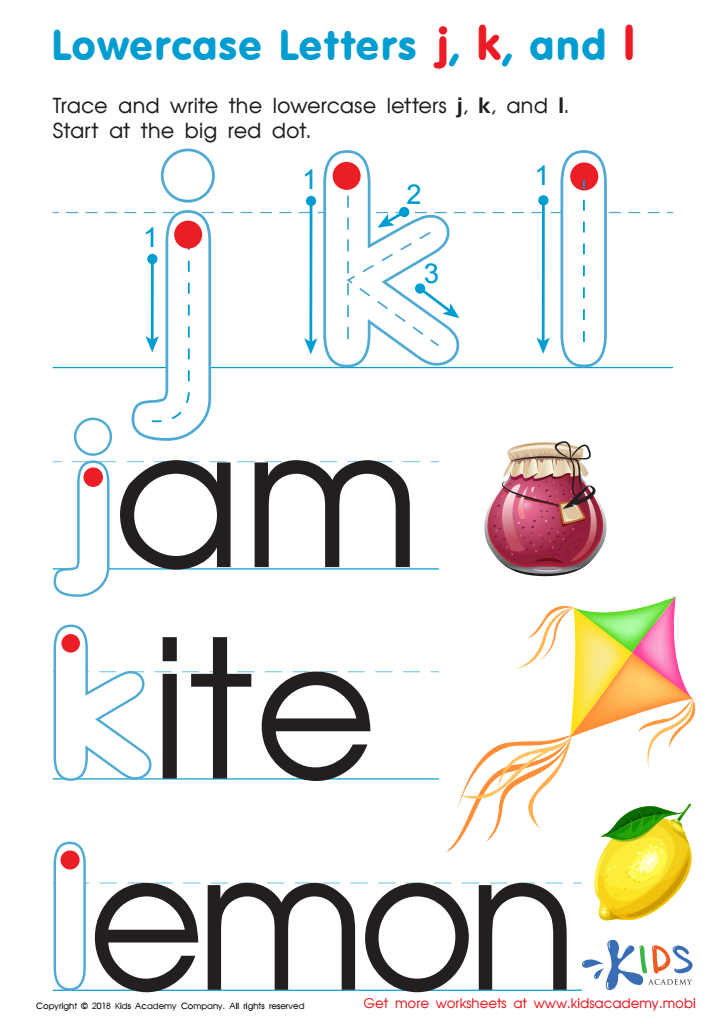
Lowercase Letters j k l Worksheet


Alphabet sequencing of lowercase letters is crucial for 6-year-olds as it lays the foundation for literacy skills essential for academic success. Understanding the correct order of the alphabet helps children engage in spelling, reading, and writing, which are pivotal in developing their communication skills. Mastery of lowercase letters fosters recognition and is vital, as most text encountered by young readers comprises lower-case letters.
Teachers and parents should also recognize that sequencing activities can enhance cognitive skills such as memory and critical thinking. These activities promote fine motor skills as children practice writing, thus integrating physical and mental development. Moreover, of ordinal knowledge can lead to a better grasp of phonics, aiding in decoding words during reading activities.
Engaging in alphabet sequencing can be implemented through fun and creative methods, such as songs, games, or interactive activities, which keeps children motivated and enhances their enthusiasm towards learning. Parents and teachers, as facilitators, play a key role in promoting these skills, guiding children to develop a strong literacy foundation. Ultimately, focusing on lowercase letter sequencing helps kids become confident learners and successful readers, preparing them for future educational challenges.