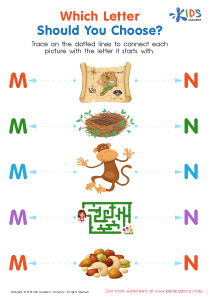
Lowercase letter writing Lowercase/Small Letters Worksheets for 6-Year-Olds
3 filtered results
-
From - To
Boost your child's writing skills with our meticulously crafted Lowercase/Small Letters Worksheets for 6-Year-Olds. These engaging and kid-friendly printables help young learners master lowercase letter formation, ensuring a smooth transition to fluent handwriting. Each worksheet is designed to make learning interactive and fun, featuring tracing exercises, practice lines, and playful illustrations. Ideal for home or classroom use, these worksheets support literacy development through repetition and visual cues, building confidence one letter at a time. Explore our collection to find the perfect resources to cultivate your child's writing abilities and inspire a lifelong love for learning.
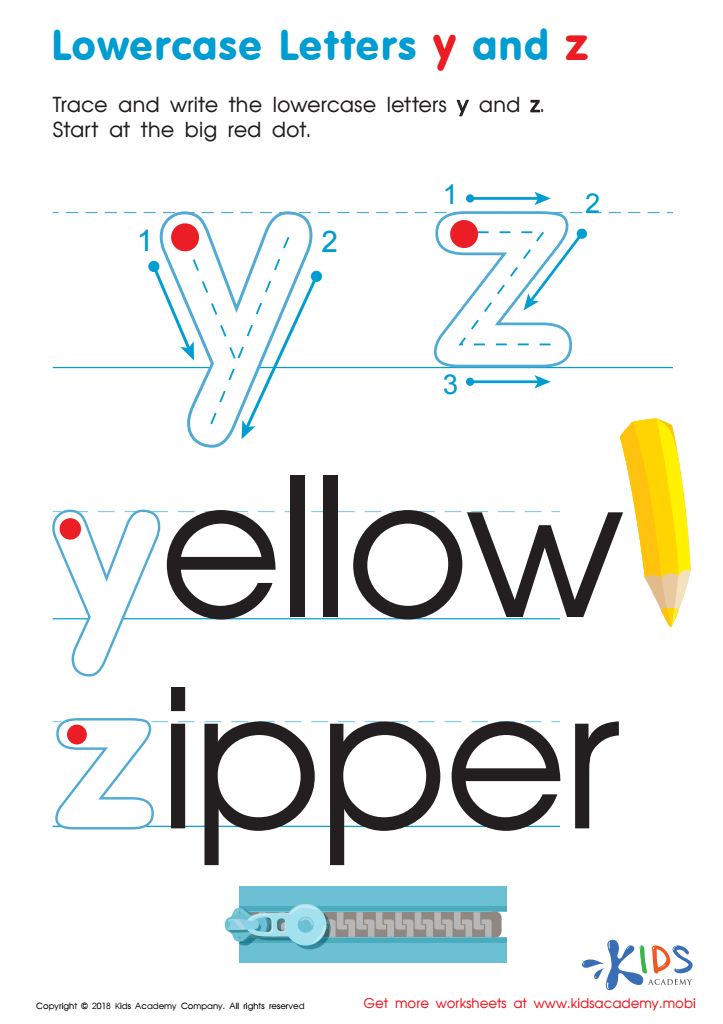
Lowercase Letters y z Worksheet
 Assign to My Students
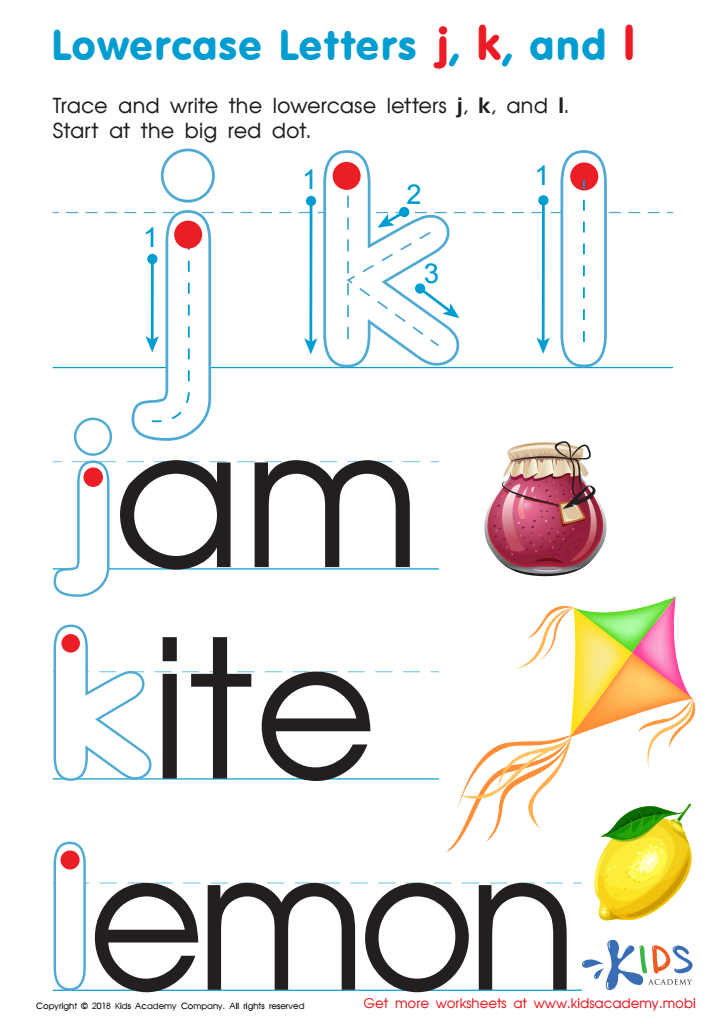
Lowercase Letters j k l Worksheet
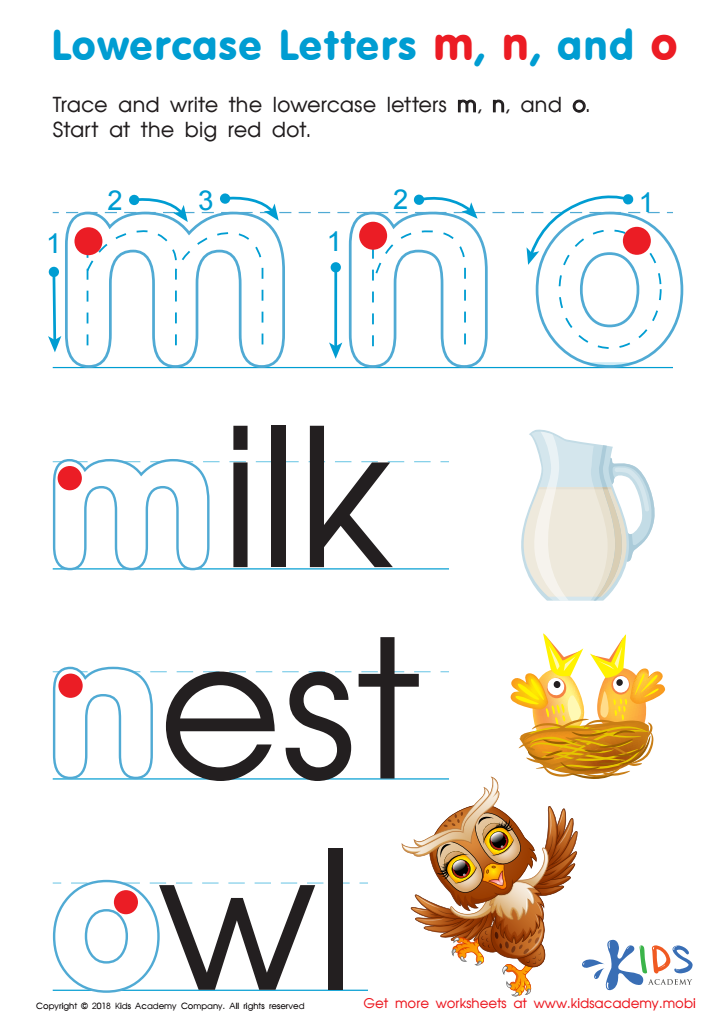
Lowercase Letters m n o Worksheet


Ensuring that 6-year-olds master lowercase letter writing is crucial for their early literacy development. At this age, children transition from recognizing and writing uppercase “block” letters to integrating lowercase letters, which dominate most print materials. Proficiency in lowercase writing boosts overall reading fluency since they will frequently encounter these forms in books and written instructions.
When youngsters can write lowercase letters fluidly, they develop stronger fine motor skills. This practice translates to better hand-eye coordination, further aiding their ability to engage in more complex activities requiring precision. It also enhances their spatial awareness, as they learn to proportion and align letters correctly, an essential foundation for future cursive writing and neat handwriting.
Additionally, mastery of lowercase letters fosters a sense of independence and self-confidence. Children who can write easily feel more capable during classroom activities and everyday tasks like writing their own names, making labels, or crafting simple sentences. This confidence and capability encourage a love for learning and self-expression, setting a positive tone for their educational journey.
Parents and teachers, as facilitators of early education, play key roles in guiding consistent practice, offering encouragement, and providing the appropriate materials, thereby nurturing essential skills critical for children's academic success and future accomplishments.