
Sight word recognition Three Letter Words Phonics Worksheets for 6-Year-Olds
3 filtered results
Difficulty Level
Grade
Age
-
From - To
Subject
Activity
Standards
Enhance your child's reading skills with our engaging Sight Word Recognition Three Letter Words Phonics Worksheets, designed specifically for 6-year-olds! These interactive worksheets focus on building essential phonics skills by introducing young learners to three-letter sight words that form the foundation of early literacy. With colorful illustrations and fun activities, children will develop their ability to recognize and read words confidently. These worksheets are perfect for homeschooling or supplementary learning, providing a structured approach to phonics that nurtures your child's love for reading. Discover a world of joyful learning with our thoughtfully crafted resources to boost your child's educational journey!
Favorites
With answer key
Interactive
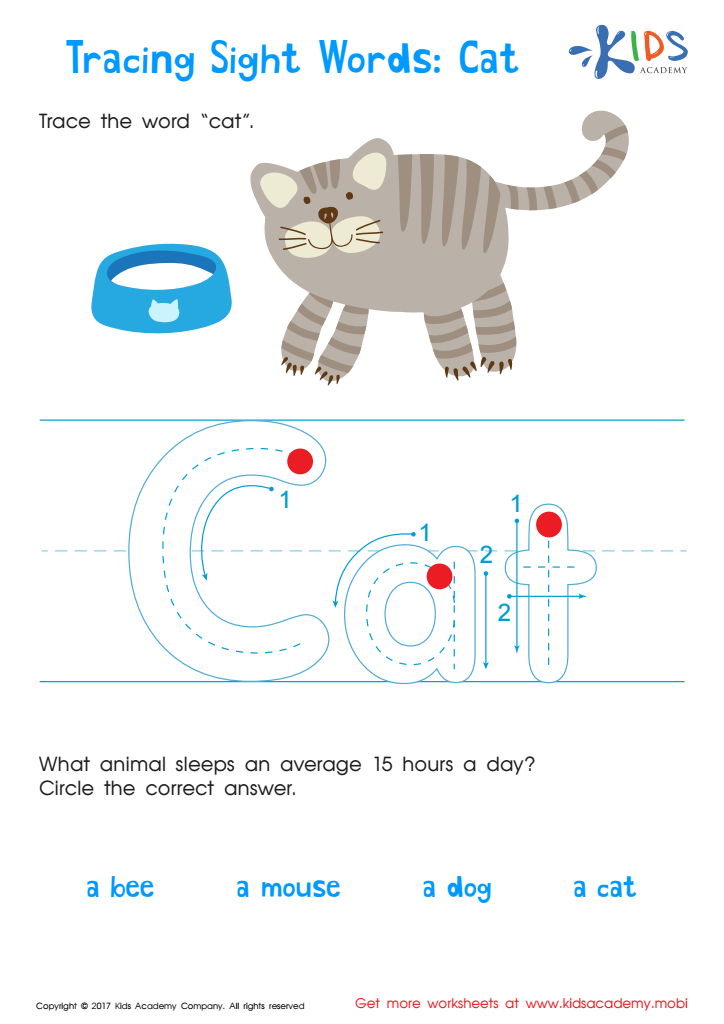
Cat Printable Sight Words Worksheet
Encourage your child's literacy with this fun sight words worksheet: cat PDF! It helps build a solid foundation for reading, featuring activities such as reading and tracing the word cat, and finding it amongst other sight words. With its cute cat, Kids Academy makes learning to read a delight!
Cat Printable Sight Words Worksheet
Worksheet
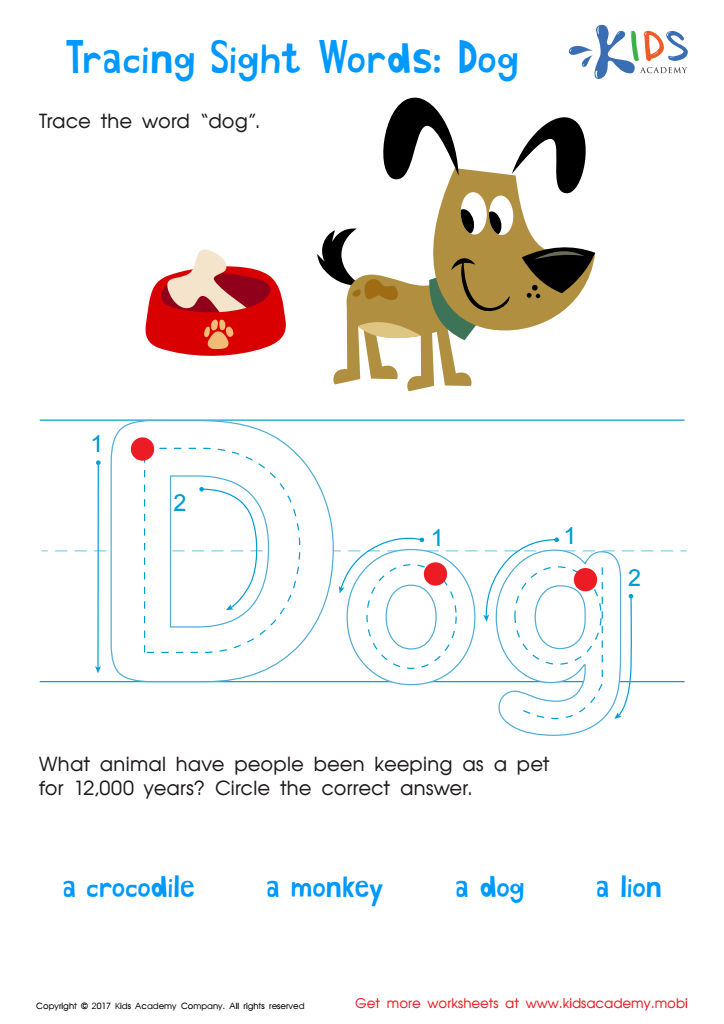
Dog Worksheet Sight Words Worksheet
Get your kids excited to read with our dog-themed sight words worksheet!
Excite your child to read with our sight words worksheet: dog edition! Featuring a lovable dog character to put a smile on any kid's face, this worksheet helps kids practice reading and writing the word "dog". Build a library of words they can read quickly and promote increasing literacy skills with early fluency! Get them ready for reading with our dog-themed sight words worksheet!
Dog Worksheet Sight Words Worksheet
Worksheet
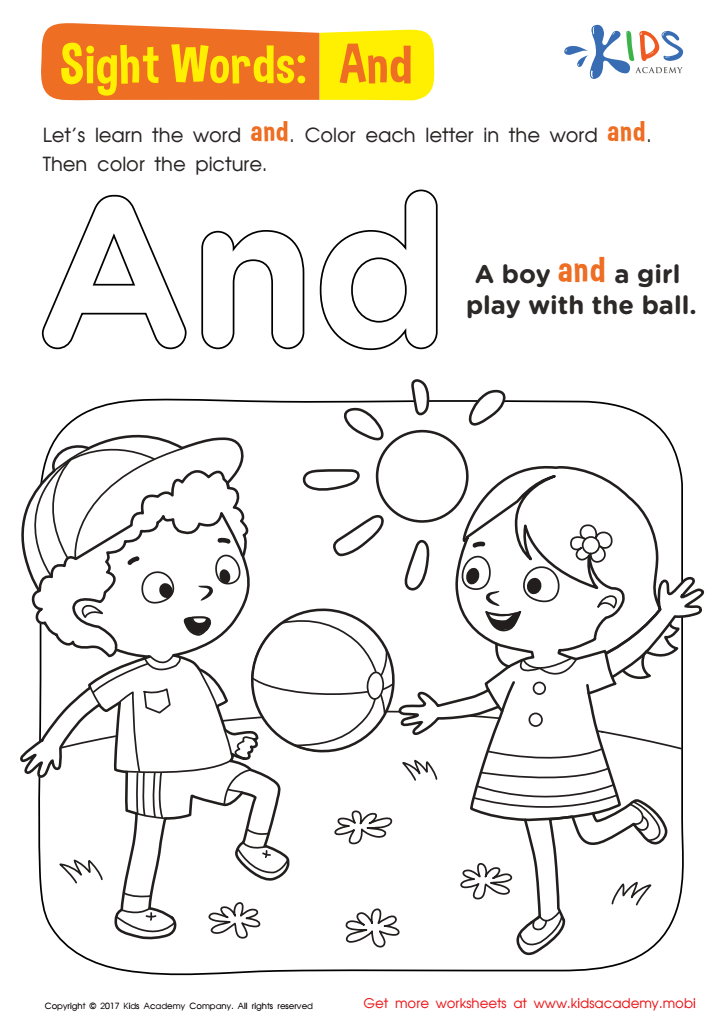
And Worksheet Sight Words Worksheet
Help your child get a jumpstart on reading with sight words! Print out this fun worksheet and get your child to read the sentence. Point out the word "and", then color the word and enjoy the rest of the scene! It's a great way to introduce sight words and get their early reading skills going!
Download (PDF)
 Assign to My Students
Assign to My Students
And Worksheet Sight Words Worksheet
Worksheet
Join Kids Academy for Free
Who is primarily going to use this learning content?




Sight word recognition and phonics are critical components of early literacy development, especially for 6-year-olds. For young learners, mastering sight words—common words recognized instantly—enhances reading fluency, allowing them to focus on comprehension rather than struggling with decoding. This is increasingly important as texts become more complex.
Three-letter words serve as the foundation for phonics instruction, teaching children the relationship between letters and sounds. Understanding that words like "cat," "mat," and "bat" consist of different initial sounds while sharing the same vowel and final consonant solidifies their phonetic skills. This helps build their confidence and competence as readers.
Moreover, recognizing sight words often correlates with overall academic success. Children who read more fluently are more likely to engage with texts independently, promoting a love for reading. Parents and teachers should cultivate this skill, as it empowers children not only in literacy but across all subjects, fostering development in critical thinking and overall academic achievement.
Encouraging regular practice of sight words and phonics activities creates a supportive learning environment, helping children thrive academically while forming positive associations with reading. Ultimately, promoting these skills leads to a strong foundation for lifelong learning.







