Uppercase identification Uppercase Letters Worksheets for 6-Year-Olds
5 filtered results
-
From - To
Explore our engaging Uppercase Letters Worksheets designed specifically for 6-year-olds to enhance uppercase letter identification. These interactive activities promote letter recognition through vibrant illustrations and fun exercises. Your child will practice distinguishing uppercase letters from lowercase letters while improving their handwriting skills. With a variety of worksheets, including tracing, matching, and coloring, learning becomes a delightful adventure. Perfect for classroom use or at-home enrichment, our resources cater to diverse learning styles. Foster a love for reading and writing as your child gains confidence in uppercase letter identification. Download our worksheets today and watch them thrive in their alphabet learning journey!
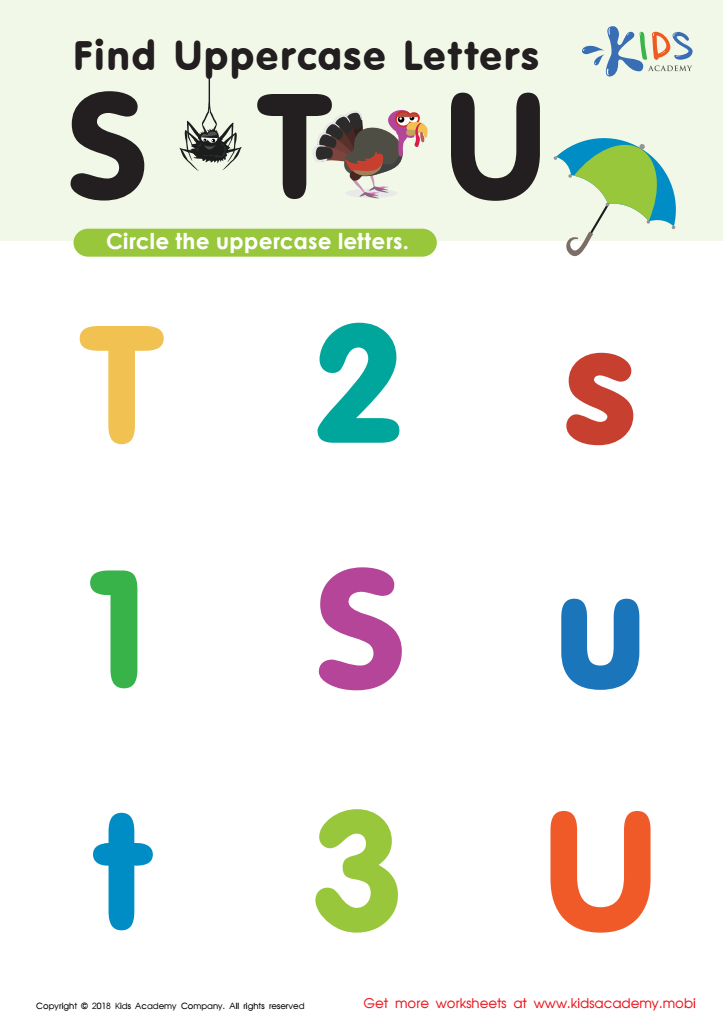
Find Uppercase Letters Worksheet
 Assign to My Students
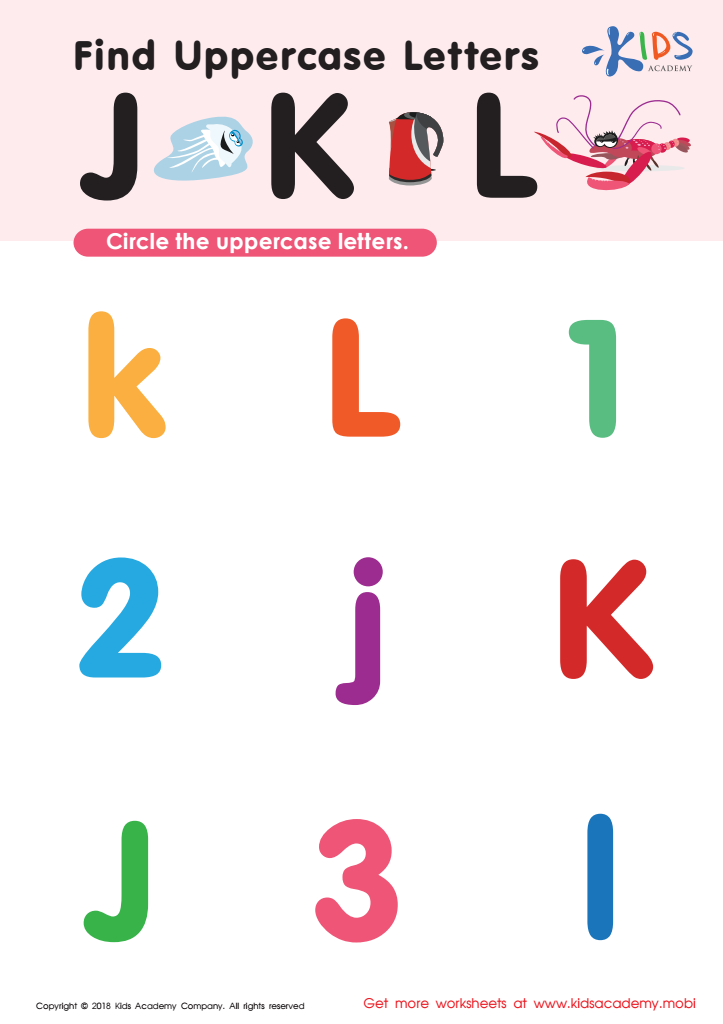
Find Uppercase Letters J, K, and L Worksheet
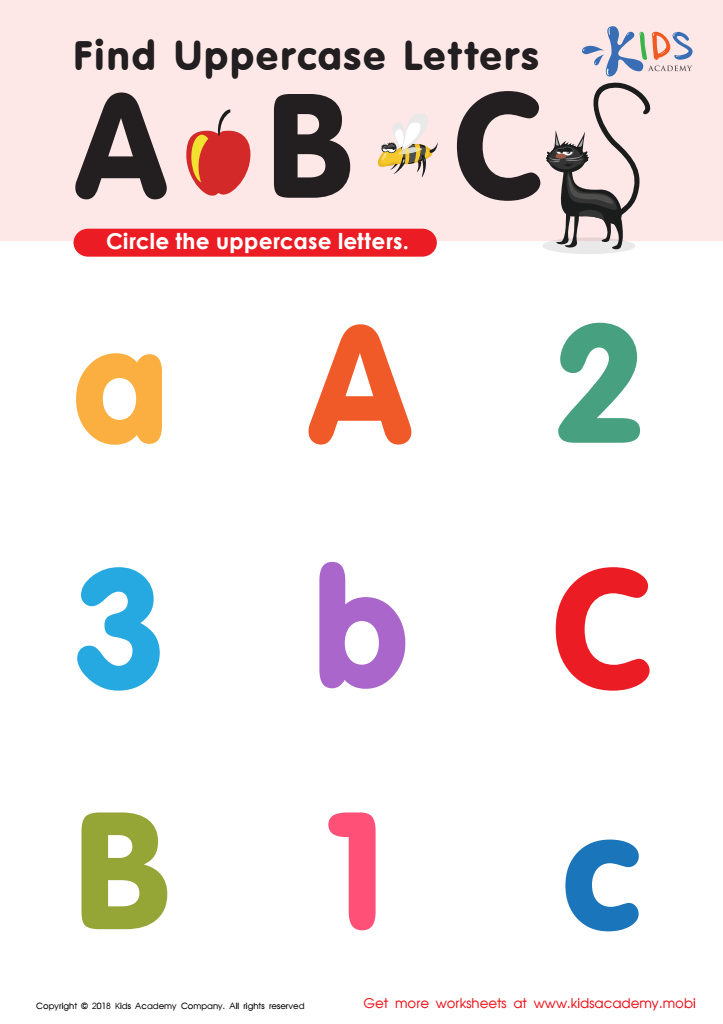
Find Uppercase Letters A, B, and C Worksheet

Find Uppercase Letters V, W, X Worksheet
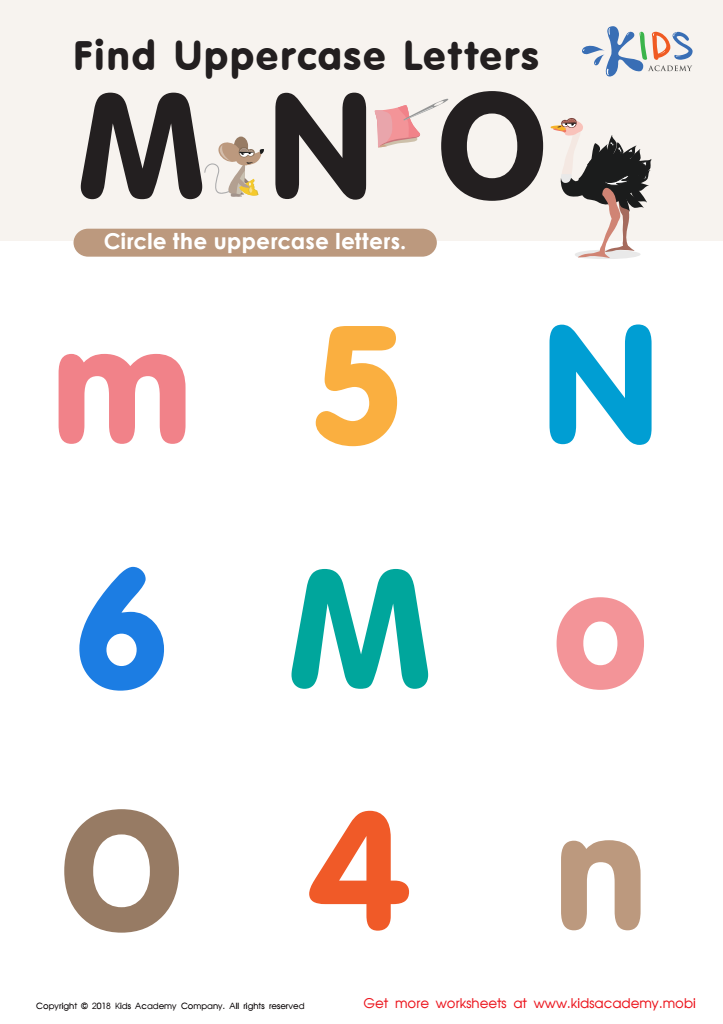
Find Uppercase Letters M, N, and O Worksheet








Uppercase letter identification is crucial for 6-year-olds as it lays the foundation for literacy development. At this age, children are often transitioning from recognizing letters to reading and writing them independently. Understanding uppercase letters helps children learn the alphabet more completely, facilitating letter-sound associations essential for phonics instruction, a cornerstone of early reading skills.
Teaching uppercase letters also enhances children's ability to identify proper nouns and the beginning of sentences, which encourages reading fluency and comprehension. Familiarity with uppercase letters can boost children's confidence as they recognize these letters in books, signs, and everyday contexts, ultimately making reading a more enjoyable experience.
Moreover, uppercase letters are frequently used in writing names and important words, strengthening vocabulary and encouraging writing practice. Parents and teachers should prioritize uppercase identification not only for its academic significance but also to cultivate a child’s love for letters and words. Engaging in fun and interactive activities that involve uppercase letters can make learning enjoyable, fostering a positive attitude towards education.
In summary, fostering uppercase letter recognition skills provides essential building blocks for reading, writing, and overall literacy, making it a priority for parents and teachers alike.