Spelling practice Vowels and Consonants Worksheets for 6-Year-Olds
5 filtered results
-
From - To
Welcome to our Spelling Practice Vowels and Consonants Worksheets page, designed specifically for 6-year-olds! These engaging worksheets help young learners build a solid foundation in spelling by focusing on distinguishing between vowels and consonants. With colorful illustrations and fun exercises, children will enhance their letter recognition, phonetic awareness, and spelling skills. Our carefully crafted activities incorporate games and puzzles that keep learning lively and interactive. Perfect for at-home practice or supplementary classroom activities, these worksheets will instill confidence in young spellers. Dive in and empower your child's literacy journey today!
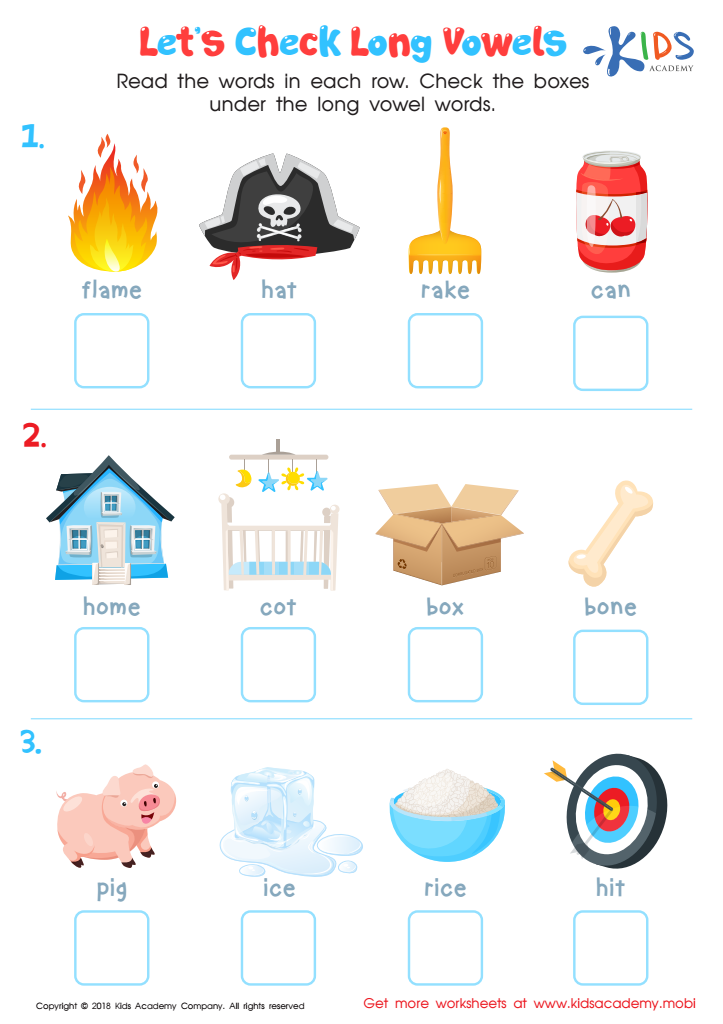
Let's Check Long Vowels: Assessment Worksheet
 Assign to My Students
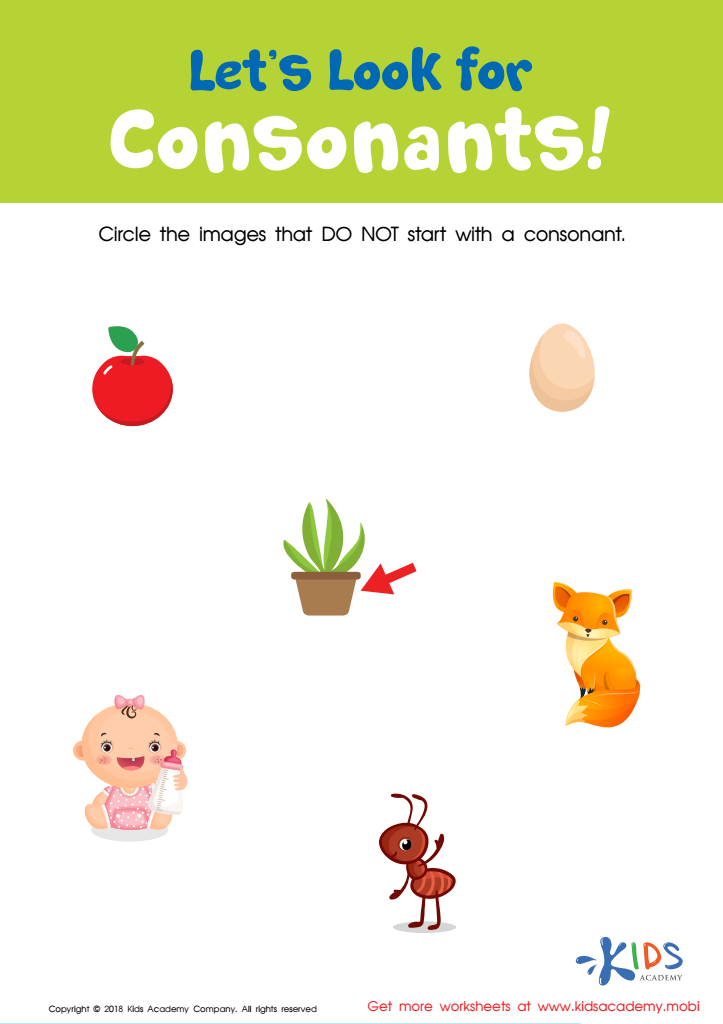
Let's Look for Consonants Worksheet
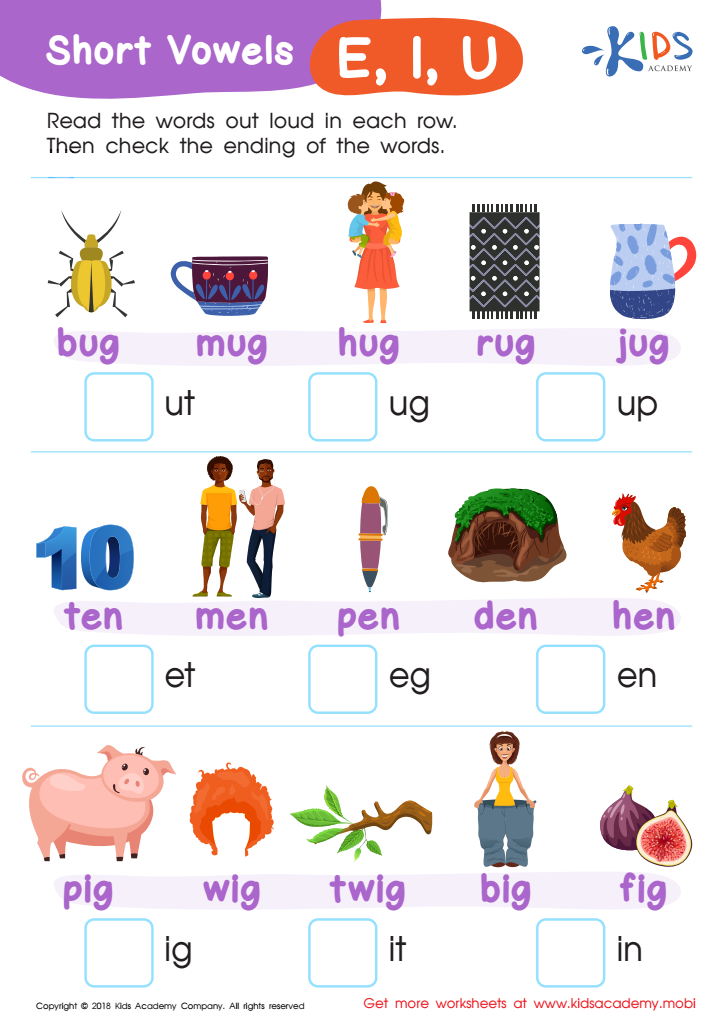
Short Vowels /e/, /i/, and /u/ Worksheet
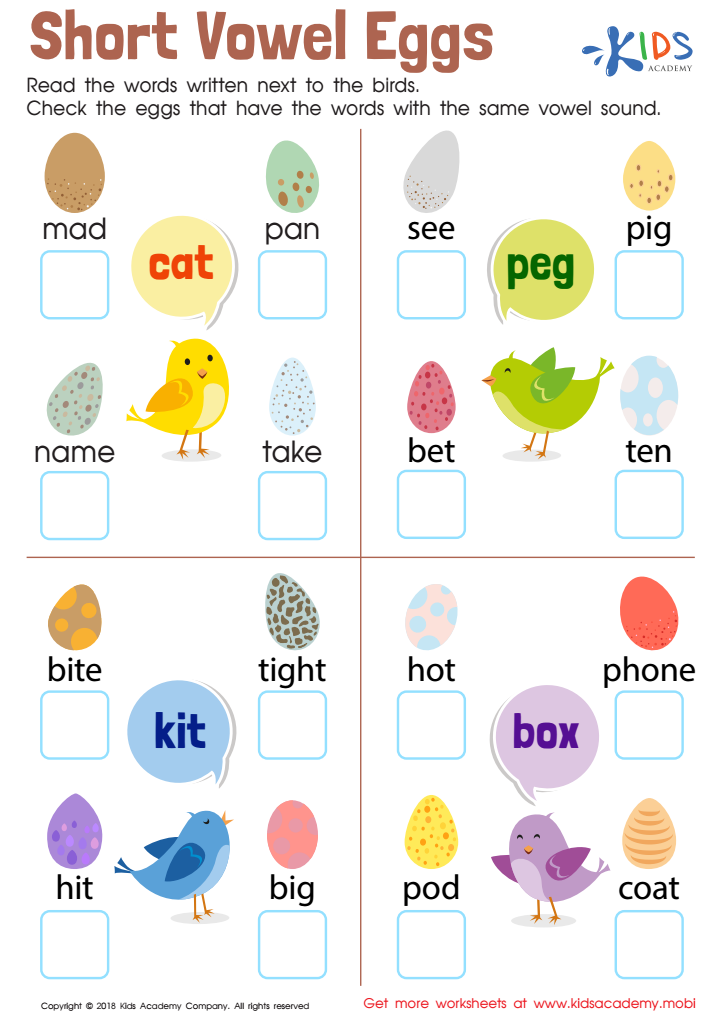
Short Vowel Eggs Worksheet
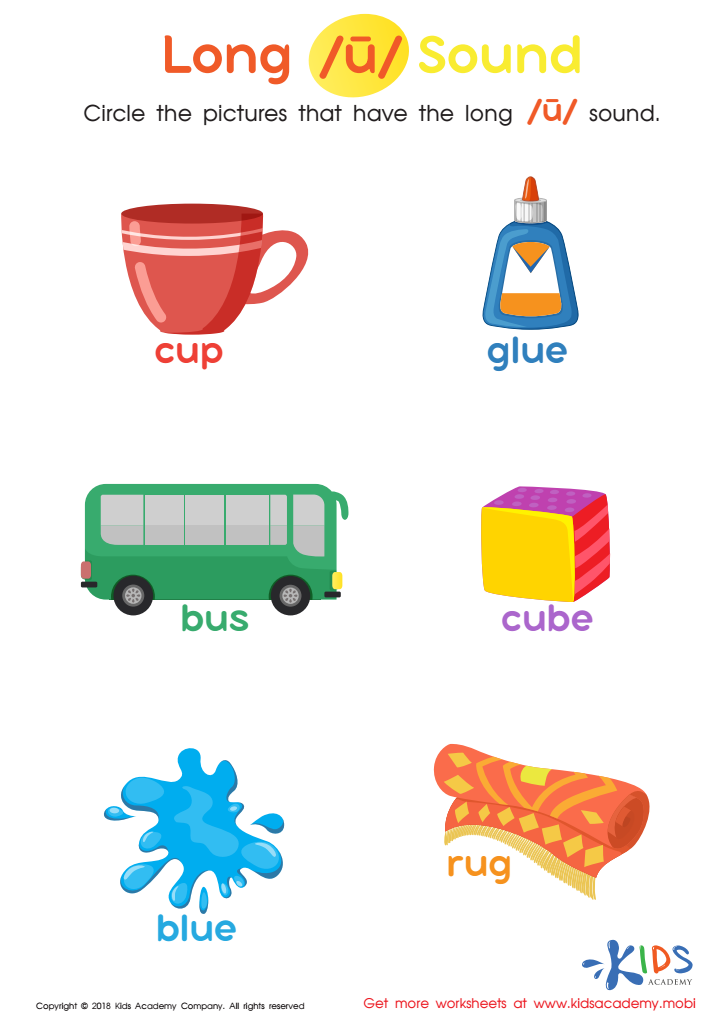
Long «u» Sound Worksheet



Spelling practice, particularly focusing on vowels and consonants, is essential for 6-year-olds as it lays the foundation for proficient reading and writing skills. At this young age, children are beginning to recognize the importance of letters in forming words, and understanding how to utilize vowels and consonants is crucial in this developmental phase.
Parental and teacher involvement in spelling practice enhances vocabulary acquisition, phonemic awareness, and overall language development. By regularly practicing spelling, children become more aware of the sounds that letters produce and how they can be combined to create words, supporting both theoretical knowledge and practical application. This awareness helps nurture reading fluency and writing abilities that will benefit them in their academic journey and beyond.
Moreover, mastering spelling through focusing on vowels and consonants instills confidence in children, empowering them to express their thoughts in writing and engage more actively in classroom discussions. Additionally, regular spelling practice encourages cognitive skills like memorization and logical thinking, essential for problem-solving in various subjects.
Ultimately, both parents and teachers play a pivotal role in making spelling practice a fun and engaging activity. This collaborative effort cultivates lifelong learners with a strong foundation in literacy.







