Logical thinking improvement Chess Worksheets for 6-Year-Olds
3 filtered results
-
From - To
Enhance your 6-year-old's logical thinking skills with our engaging chess worksheets! Designed specifically for young learners, these worksheets introduce basic chess concepts while promoting critical thinking and problem-solving skills. Children will enjoy solving puzzles, matching pieces, and learning about the game’s strategies, all while having fun. Each activity is tailored to develop cognitive abilities and encourage a love for chess, fostering not only gaming skills but also essential life skills. Perfect for home or classroom use, our worksheets provide a comprehensive approach to learning through play. Download now and watch your child gain confidence and improve their logical reasoning!
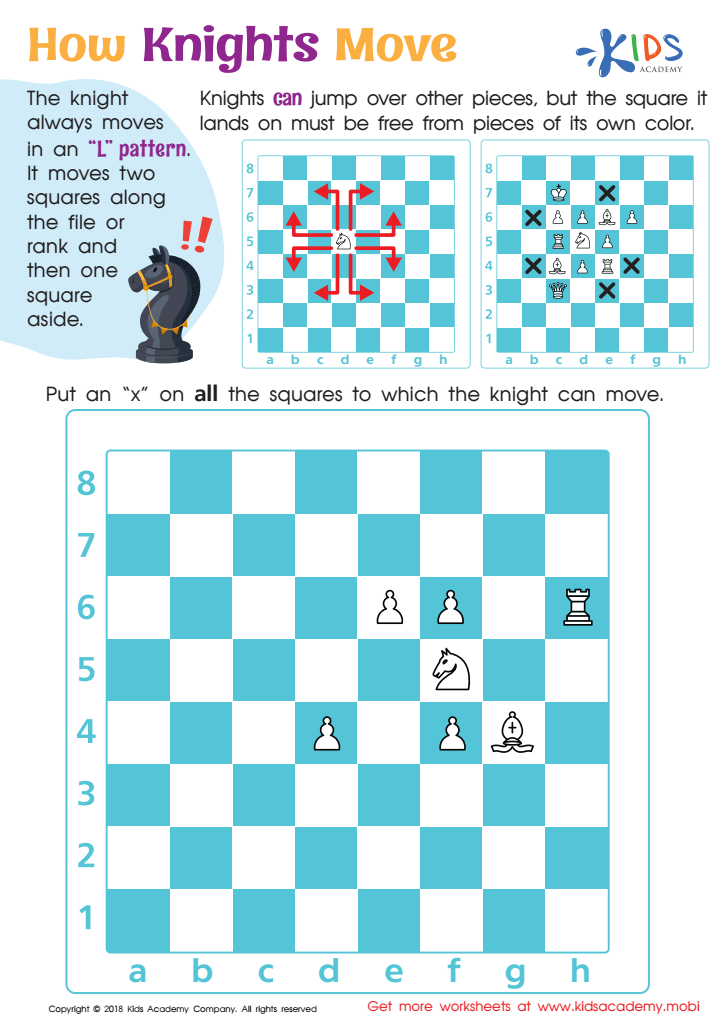
How Knights Move Worksheet
 Assign to My Students
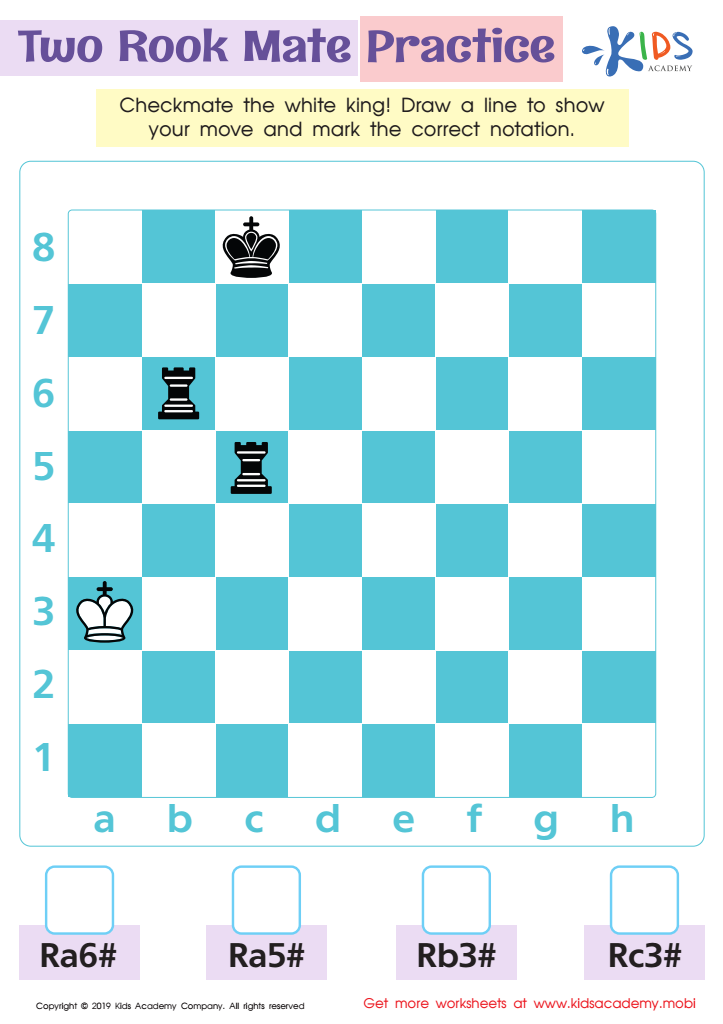
Two Rook Mate Practice Worksheet
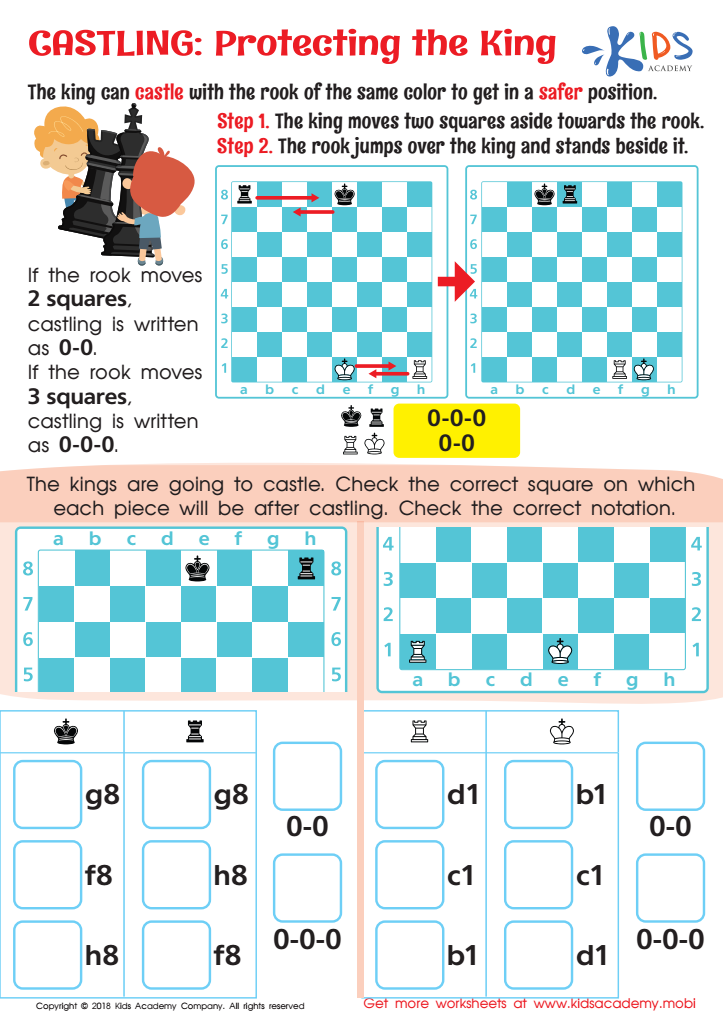
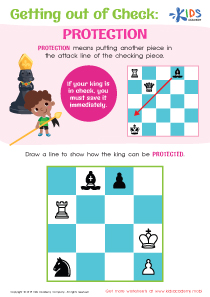
Castling: Protecting the King Worksheet







Logical thinking is a crucial skill for children, and chess is an excellent tool to help develop this ability, especially in 6-year-olds. Teaching young children how to play chess introduces them to structured thinking and problem-solving. Each move in chess serves as a puzzle, challenging children to anticipate consequences and evaluate multiple outcomes. This kind of critical thinking promotes mental discipline and enhances cognitive flexibility, allowing kids to think several steps ahead—a skill that translates to other areas such as math, reading, and everyday decision-making.
Additionally, chess fosters emotional and social skills. It encourages patience, resilience, and the ability to deal with wins and losses constructively. As young players engage in friendly competition, they learn important lessons about respect, sportsmanship, and fair play.
For parents and teachers, fostering logical thinking through chess can enhance a child’s academic performance, improving focus and concentration. It also promotes creativity, as players devise strategies and explore new ideas. Investing time in teaching chess not only equips children with a fun and engaging pastime but lays a strong foundation for lifelong learning and critical thinking skills that will serve them well beyond the classroom.