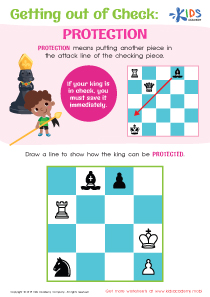
Spatial awareness Chess Worksheets for 6-Year-Olds
3 filtered results
-
From - To
Boost your child's spatial awareness with our engaging Spatial Awareness Chess Worksheets for 6-Year-Olds! Designed to make learning fun and interactive, these worksheets will help young learners develop crucial cognitive skills through the game of chess. Kids will explore concepts such as angles, directions, and positions as they solve puzzles, practice piece movements, and learn strategic thinking. Our user-friendly printables support early development in a playful manner, ensuring that children stay motivated while enhancing their critical thinking and problem-solving abilities. Perfect for home or classroom use, these worksheets create a solid foundation for future learning and an appreciation for the game of chess!
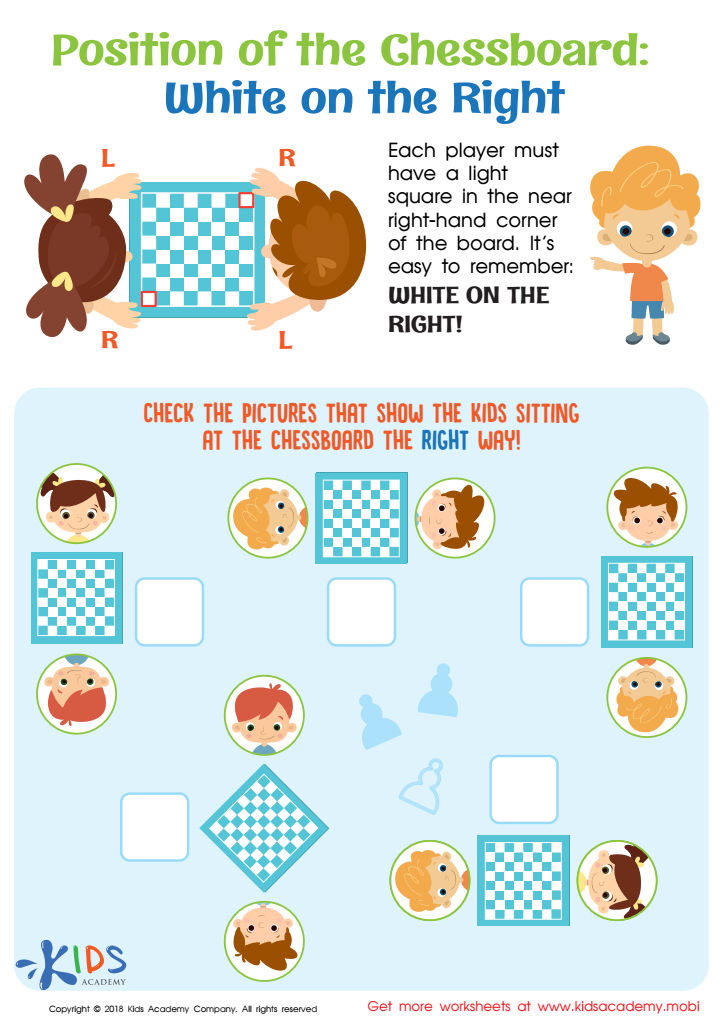
Position of the Chessboard: White on the Right Worksheet
 Assign to My Students
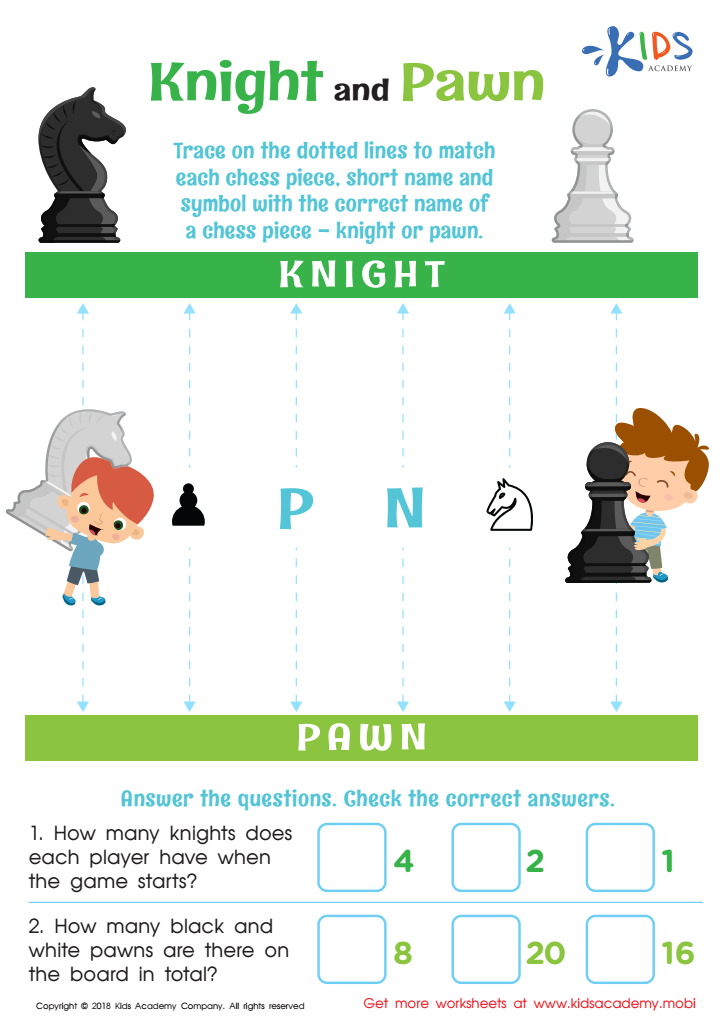
Knight and Pawn Worksheet
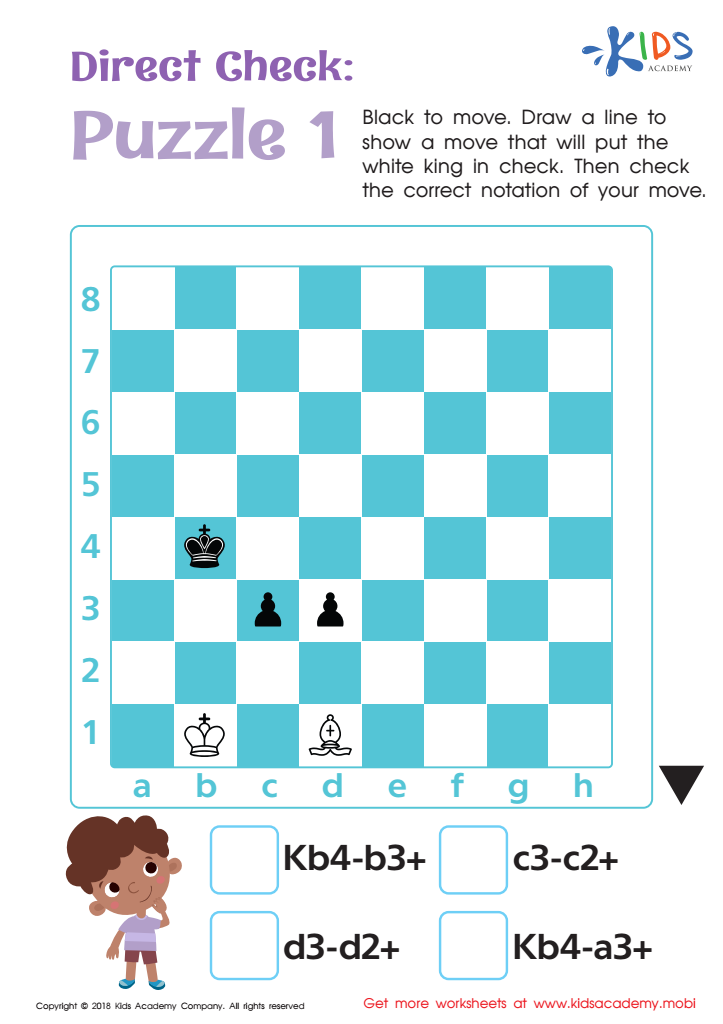
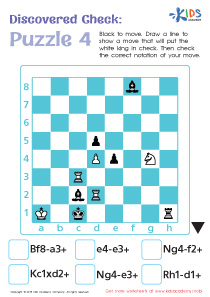
Direct Check: Puzzle 1 Worksheet


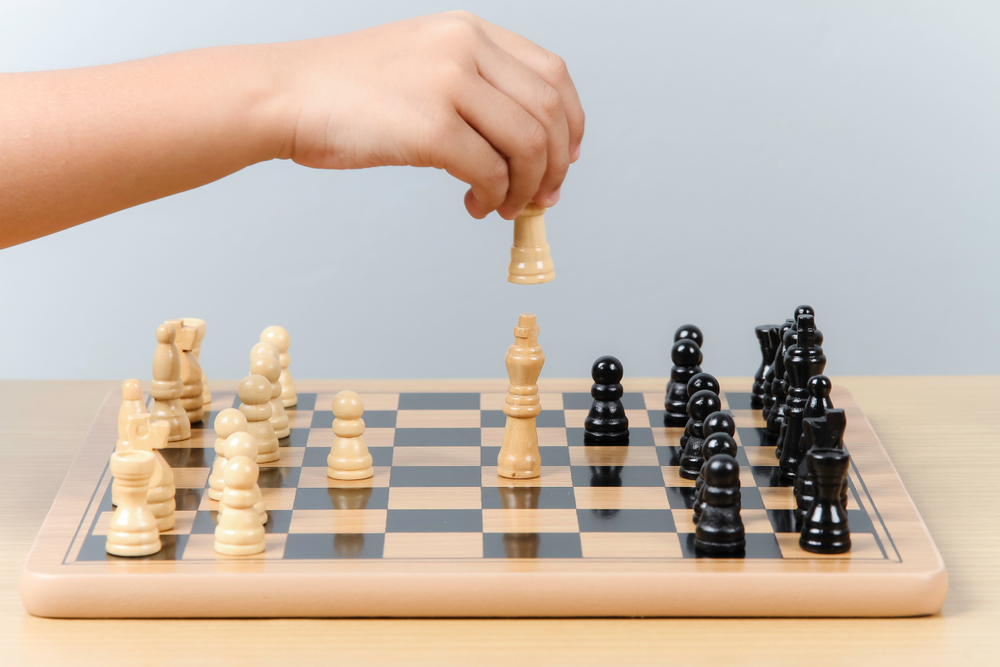



Spatial awareness is a crucial cognitive skill that allows children to understand and navigate the space around them. When it comes to chess for 6-year-olds, this game encourages spatial awareness in several meaningful ways. Through the movement of chess pieces on the board, children learn to visualize how different pieces interact and occupy space, developing their ability to think critically about positioning and strategy.
Engaging in chess also enhances other essential skills, like problem-solving, concentration, and patience. As children learn to anticipate their opponent's moves, they sharpen their planning abilities and develop foresight. This helps them in not only other game-related activities but also in real-life situations where strategic thinking is necessary.
Additionally, playing chess is an excellent way for parents and teachers to bond with children, promoting communication and shared learning experiences. It fosters a positive atmosphere for exploring challenges and can be an excellent avenue for children to express themselves creatively.
By prioritizing spatial awareness through chess, parents and teachers lay the groundwork for lifelong learning and cognitive development, helping children improve both academically and socially. Ultimately, these skills shape future responsible decision-makers in various fields, making chess a valuable educational tool.