
Basic geometry Worksheets for 6-Year-Olds
3 filtered results
Difficulty Level
Grade
Age
-
From - To
Subject
Activity
Standards
Discover our engaging Basic Geometry Worksheets designed specifically for 6-year-olds! These fun and educational worksheets introduce young learners to fundamental geometric concepts, such as shapes, sizes, patterns, and spatial understanding. Packed with vibrant illustrations and interactive activities, our worksheets turn math into an exciting adventure, perfect for kindergarten and first-grade students. Enhance your child's skills in a step-by-step approach that fosters confidence and academic growth. Whether at home or in the classroom, our Basic Geometry Worksheets are a valuable resource for building a strong math foundation in your young mathematician. Explore and download to kickstart learning today!
Favorites
With answer key
Interactive
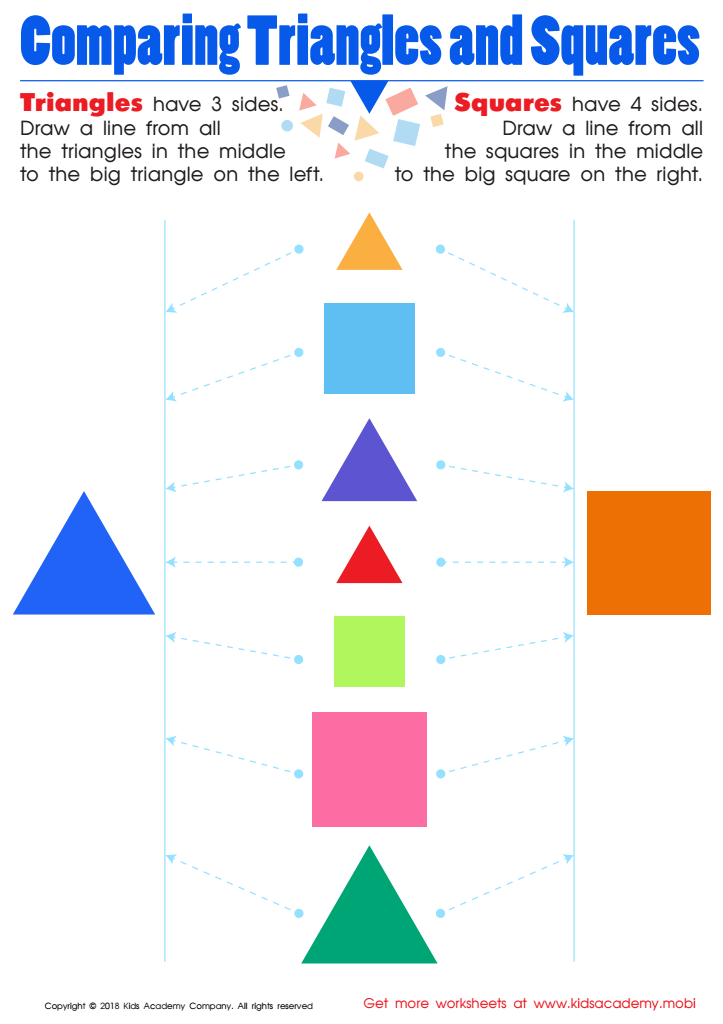
Comparing Triangles Squares Worksheet
Squares and triangles are different in the number of sides they have. Challenge kids to compare them with this fun worksheet! Read the descriptions at the top, then use the left and right shapes to match up the middle ones. Go down the page, joining the middle shapes to the side using the dotted lines!
 Assign to My Students
Comparing Triangles Squares Worksheet
Worksheet
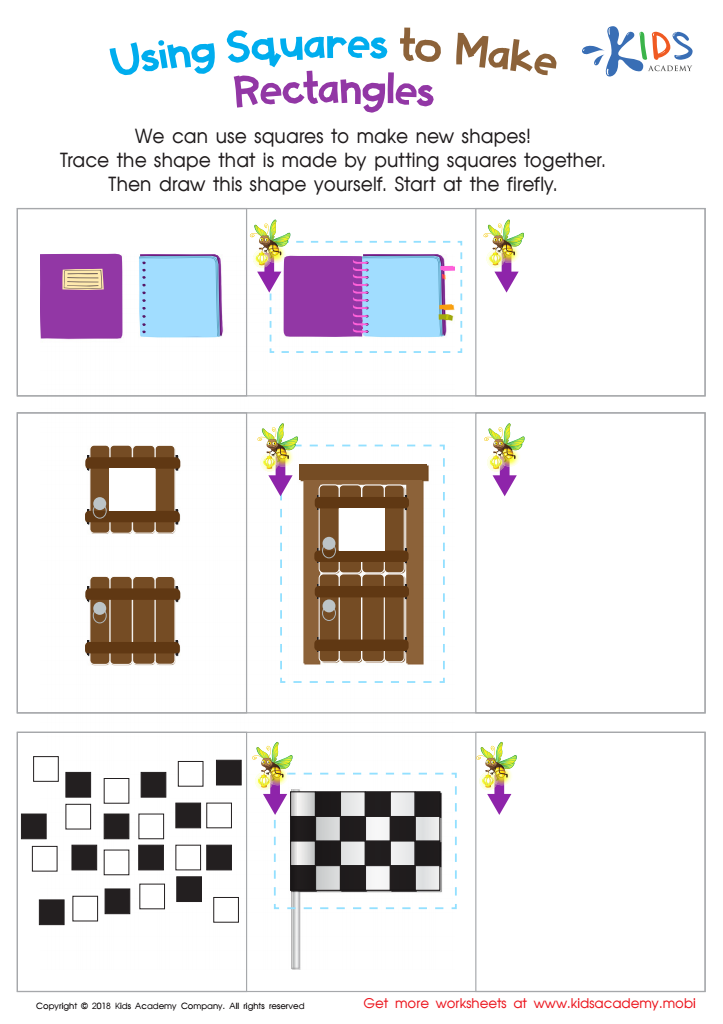
Using Squares to Make Rectangles Worksheet
Creating shapes from other shapes (composing shapes) develops spatial skills, an essential geometry standard for young students. This worksheet introduces familiar square objects, then demonstrates how they create rectangles. Students practice tracing and then drawing the shape independently. Download this free math resource for the classroom today! (80 words)
Using Squares to Make Rectangles Worksheet
Worksheet
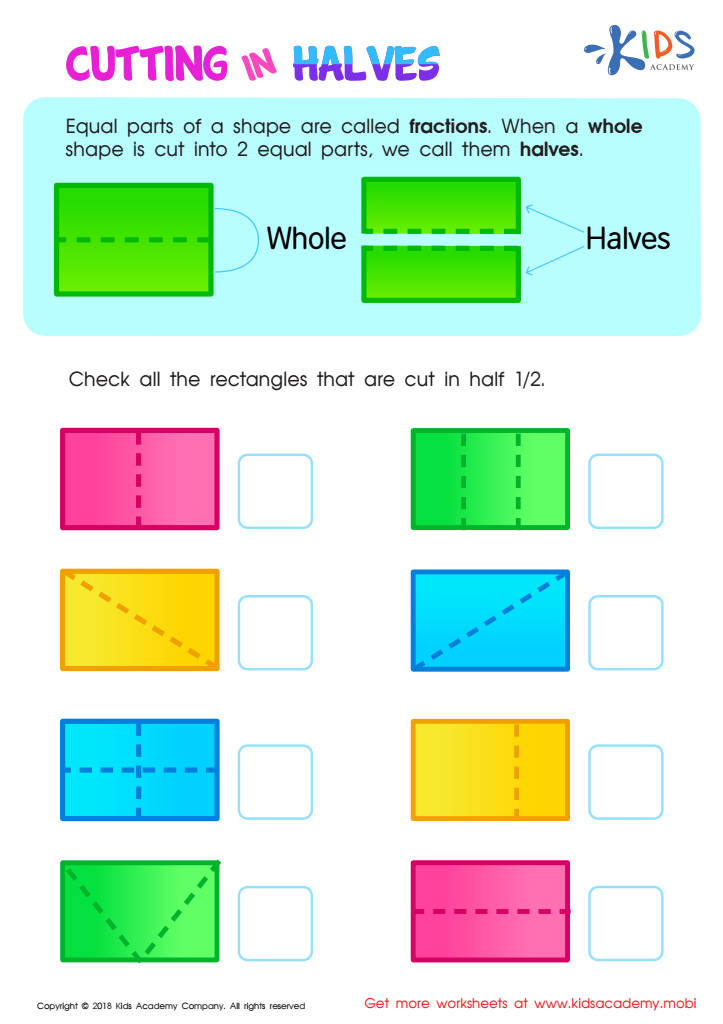
Cutting in Halves Worksheet
Show your child how to divide a whole shape, like a square, into smaller pieces to become fractions. Point out when a shape is divided into two equal parts, it's called a half. Look at the worksheet together, and identify all rectangles that are cut in half (½).
Cutting in Halves Worksheet
Worksheet
Join Kids Academy for Free
Who is primarily going to use this learning content?


.jpg)





Basic geometry is a fundamental component of early mathematics that significantly influences a child’s cognitive development and academic growth. For 6-year-olds, learning shapes, patterns, and spatial reasoning becomes more than just a math lesson; it serves as a cornerstone for problem-solving and critical thinking skills. When parents and teachers emphasize geometry, they foster a child's ability to understand and organize their environment visually and physically. Recognizing shapes and understanding spatial relationships helps children with practical tasks like reading maps, assembling puzzles, and even navigating their surroundings.
Moreover, early exposure to geometry promotes numerical literacy. Handling geometric shapes helps solidify concepts of counting, symmetry, and measurement, which are crucial for higher-level math. It also makes abstract concepts more tangible; a child might find it easier to understand fractions through dividing shapes like pizzas or pie charts.
Additionally, the inclusion of geometry in early education enhances creativity and artistic skills. Children learn to appreciate aesthetics through patterns and design, encouraging them to explore art and nature. Thus, parents and teachers should care deeply about engaging 6-year-olds in basic geometry to cultivate a well-rounded educational foundation, ensure smoother transitions into advanced math, and nurture versatile life skills.








