Comparing lengths Worksheets for 6-Year-Olds
9 filtered results
-
From - To
Explore our engaging "Comparing Lengths Worksheets for 6-Year-Olds," designed to make learning fun and interactive! These colorful worksheets provide young learners with ample opportunities to master the concept of length through hands-on activities, comparisons, and exciting exercises. Help your child identify different lengths, compare objects, and develop essential measurement skills while enjoying creative challenges. Ideal for classroom or home use, our worksheets cater to diverse learning styles, ensuring every child can participate and thrive. Empower your young mathematicians as they discover the world of lengths in a playful, supportive environment. Download the worksheets today and watch their confidence grow!
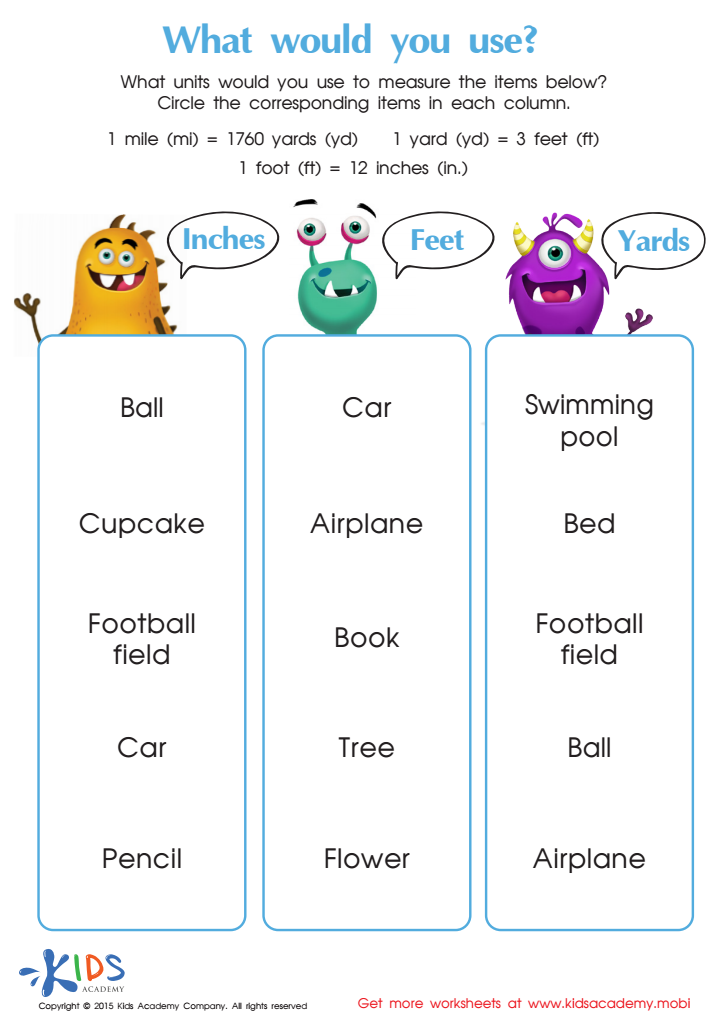
Learning about measuring objects in inches, feet and yards Worksheet
 Assign to My Students
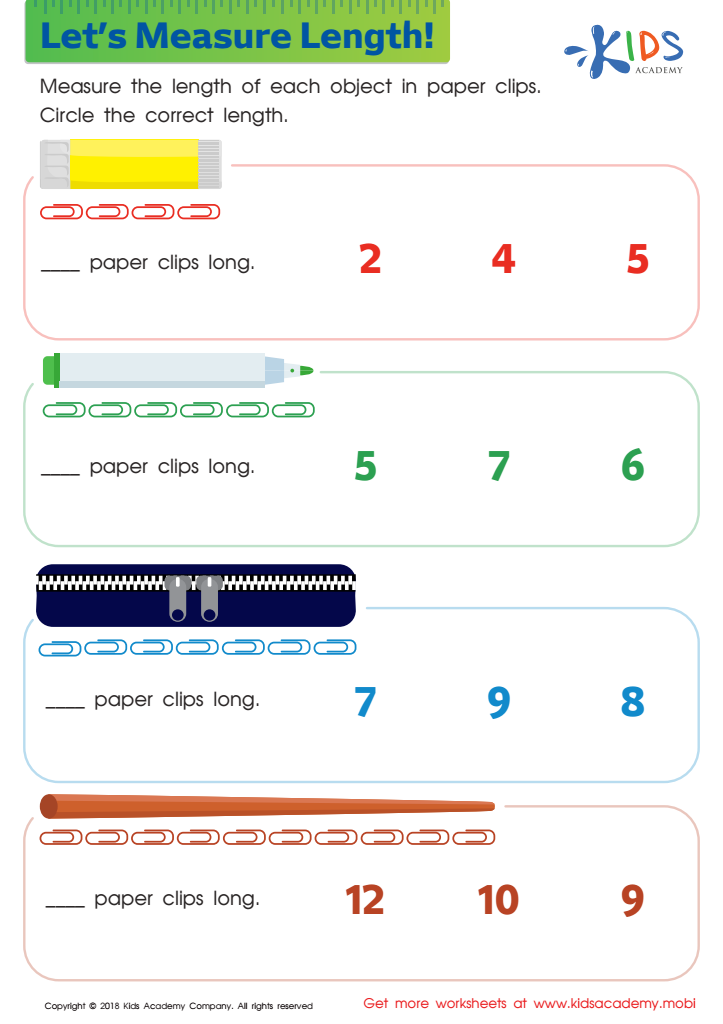
Lets Measure Length Worksheet
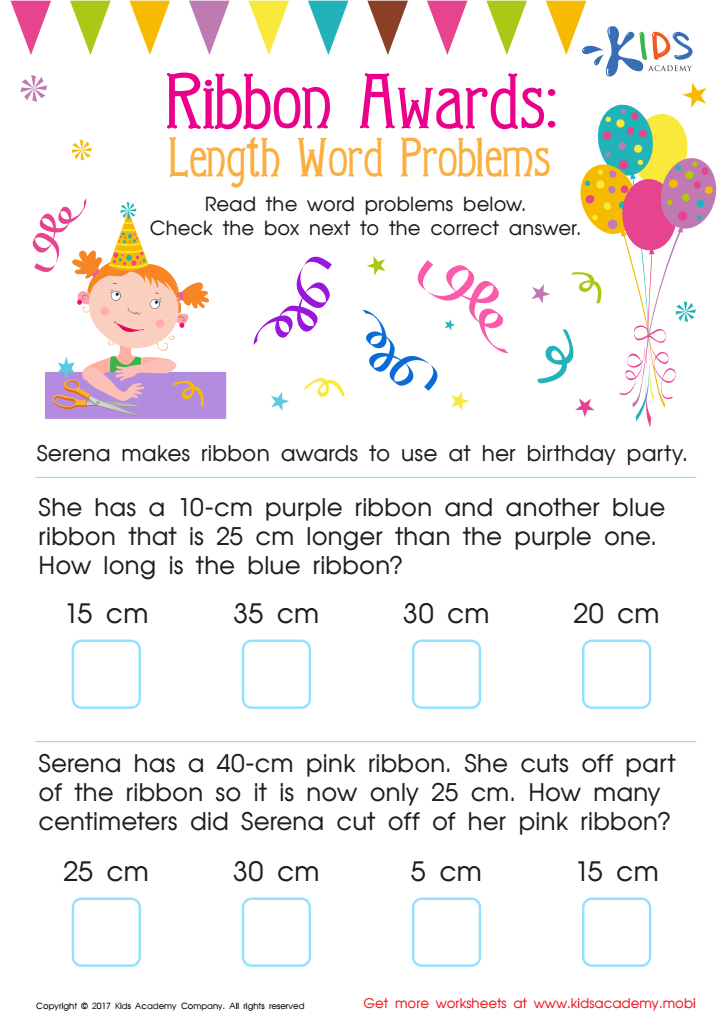
Length Word Problems Worksheet
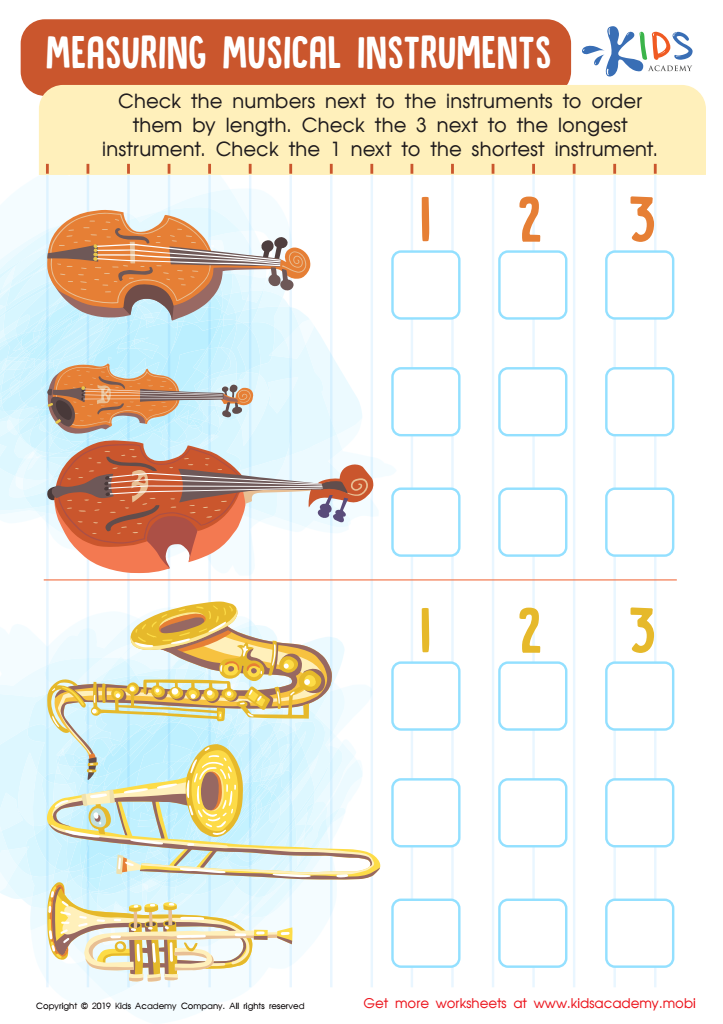
Measuring Musical Instruments Worksheet
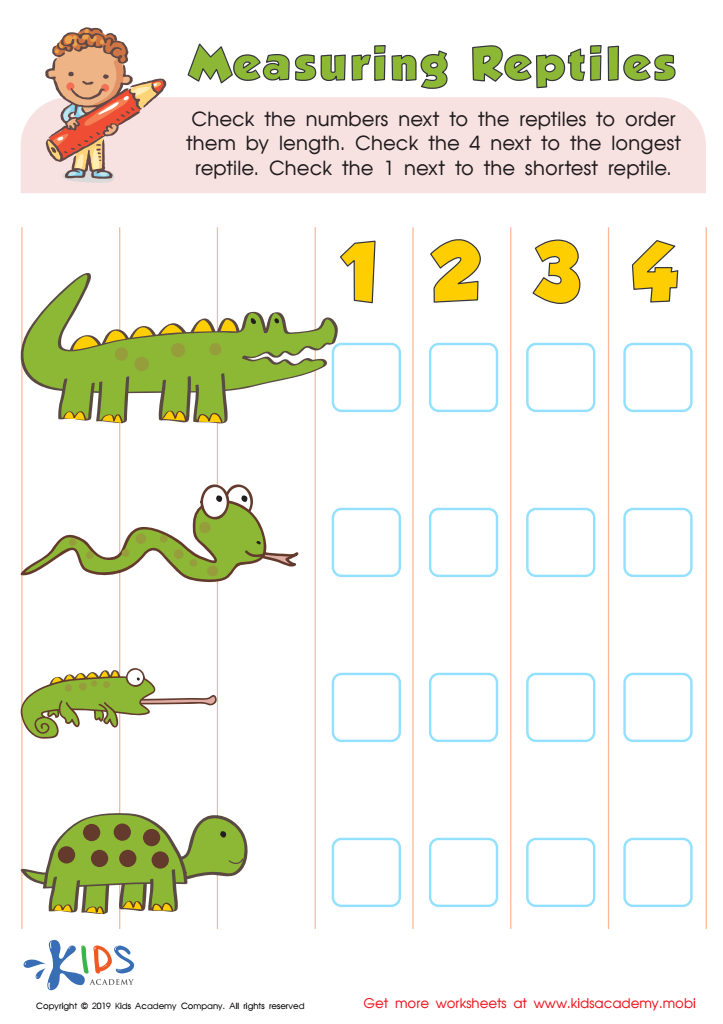
Measuring Reptiles Worksheet
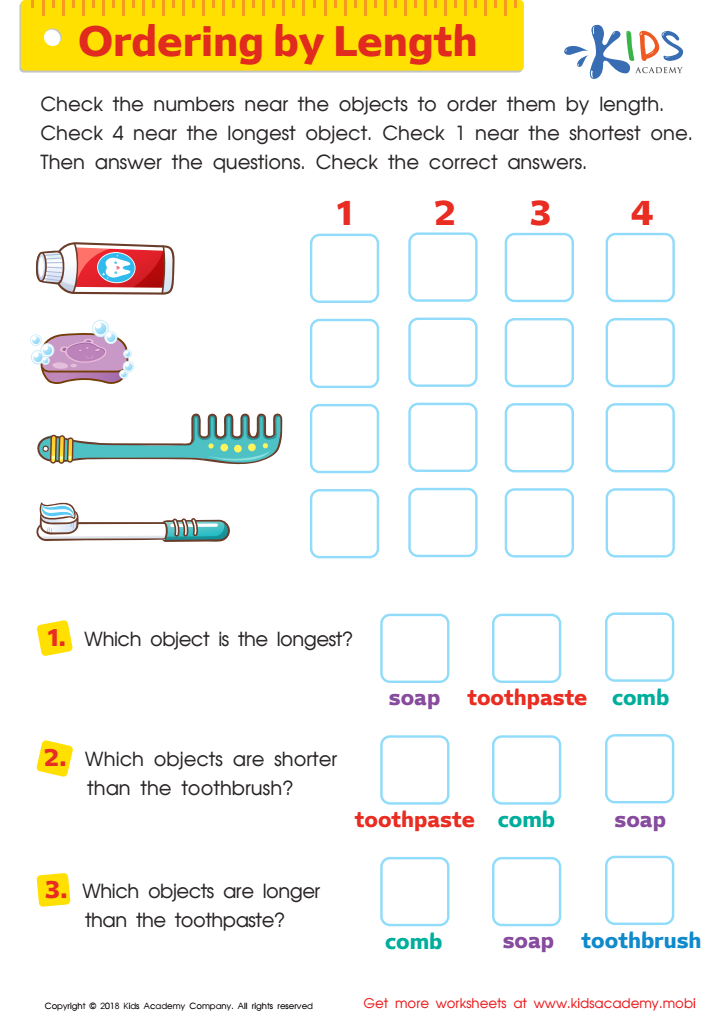
Ordering by Length Worksheet
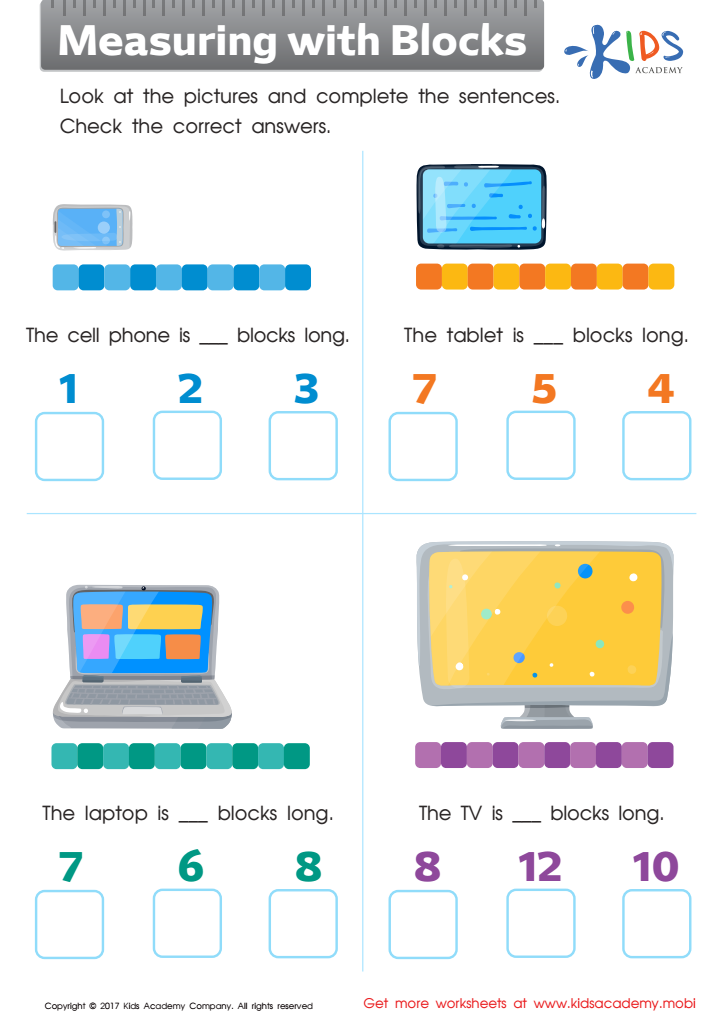
Measuring with Blocks Worksheet
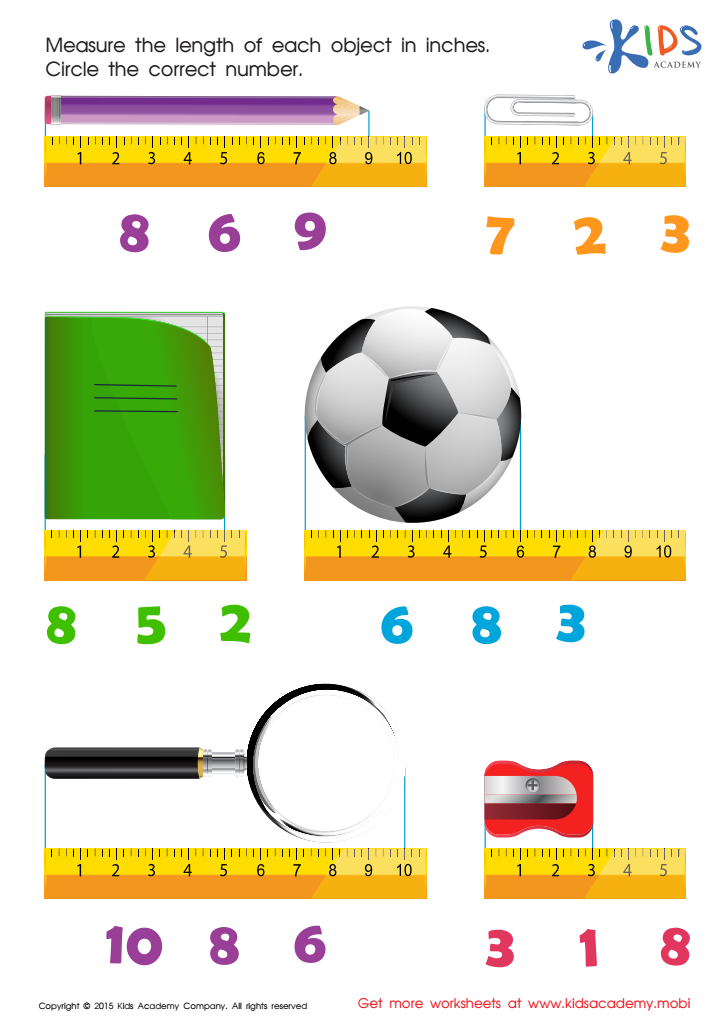
Learning measuring objects in inches Worksheet






Comparing lengths is a foundational skill in early mathematics that helps six-year-olds develop critical thinking and problem-solving abilities. When children compare lengths—by measuring objects or observing their sizes—they reinforce their understanding of measurement concepts and numerical relationships. This activity cultivates observational skills, enhances vocabulary (wide, long, short), and promotes a deeper understanding of the world around them.
Moreover, comparing lengths aligns with important developmental milestones. At this age, children engage in hands-on learning, and measuring objects makes abstract concepts concrete. It fosters spatial awareness, which is essential for various academic subjects later on, such as science and geometry.
For parents and teachers, encouraging this skill can also facilitate engaging family activities and group learning experiences. Simple tasks like measuring household items or comparing playground equipment can create opportunities for discussion, curiosity, and exploration.
Additionally, comparing lengths fosters collaboration and communication skills when children work together to measure or sort objects. Ultimately, nurturing this skill not only supports academic growth but also ignites a child's innate curiosity, setting a positive tone for lifelong learning habits. This makes understanding and caring about the comparison of lengths essential for early development.








