Counting skills improvement Worksheets for 6-Year-Olds
3 filtered results
-
From - To
Unlock your child's potential with our Counting Skills Improvement Worksheets designed for 6-year-olds. These engaging and interactive resources help develop essential counting abilities through fun activities that reinforce number recognition, addition, and sequencing. Each worksheet is crafted to cater to various learning styles, encouraging kids to practice at their own pace while building confidence in their math skills. Perfect for independent learning or extra practice at home, these worksheets make counting enjoyable and educational. Help your child master foundational math concepts and set the stage for future academic success with our thoughtfully designed counting worksheets. Explore and watch their skills soar!
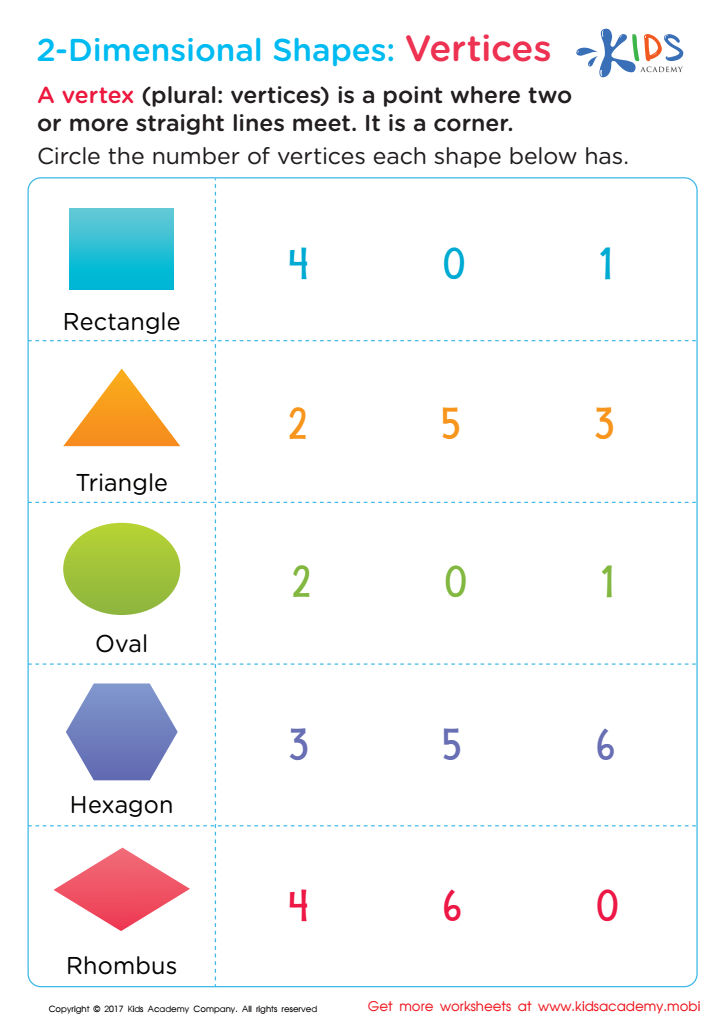
Two–Dimensional Shapes: Vertices Printable
 Assign to My Students
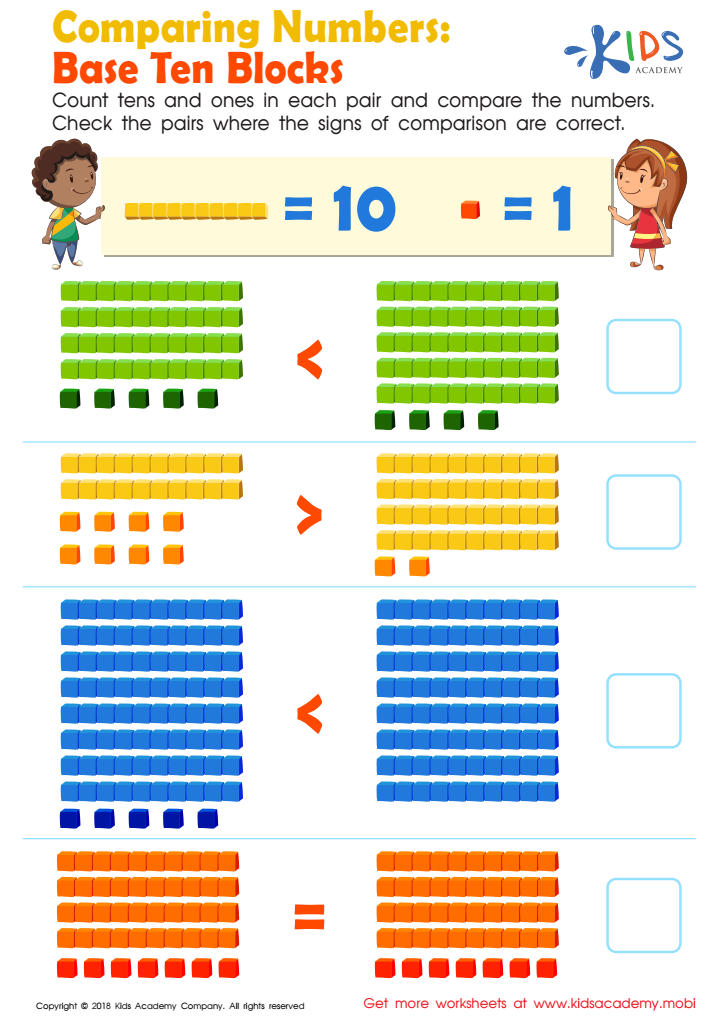
Comparing Numbers: Base Ten Blocks Worksheet
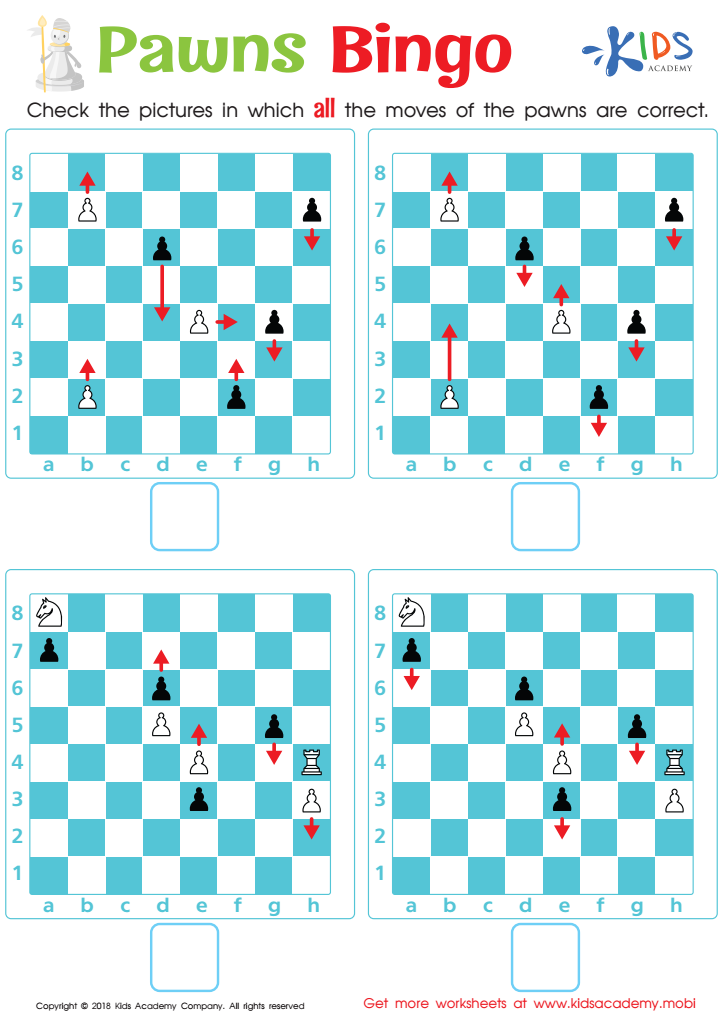
Pawns Bingo Worksheet



.jpg)



Counting skills are foundational for a child's mathematical development and can significantly influence their overall academic success. For 6-year-olds, these skills not only involve understanding numbers but also the ability to use them in practical contexts. Parents and teachers should care about improving counting skills because they lay the groundwork for more complex mathematical concepts such as addition, subtraction, and even problem-solving. When children are proficient in counting, they gain confidence in their abilities, leading to a positive attitude towards math that can last throughout their schooling.
Additionally, counting helps develop critical cognitive skills, including memory, attention, and logical reasoning. Engaging with numbers enhances children's ability to recognize patterns and sequences, fostering their analytical skills. Parents can incorporate counting activities into daily routines, and teachers can create fun classroom exercises that promote counting through games and interactive lessons, ensuring learning is enjoyable.
Moreover, improved counting skills can also help children in real-life situations, such as managing money, understanding time, or following directions. Overall, nurturing counting skills at this early age not only benefits children academically but also equips them with essential life skills, making it a priority for both parents and educators.








