History knowledge Worksheets for 6-Year-Olds
4 filtered results
-
From - To
Explore our engaging History Knowledge Worksheets designed specifically for 6-year-olds! Perfect for young learners, these worksheets introduce children to important historical concepts, figures, and events in a fun and accessible manner. With vibrant illustrations and age-appropriate activities, these resources foster curiosity for the past and help develop critical thinking skills. From learning about significant historical events to understanding timelines, our worksheets are ideal for homeschooling or classroom use. Encourage your child's love for history while enhancing their comprehension and vocabulary. Dive into the world of history with our thoughtfully crafted worksheets that make learning an enjoyable adventure!
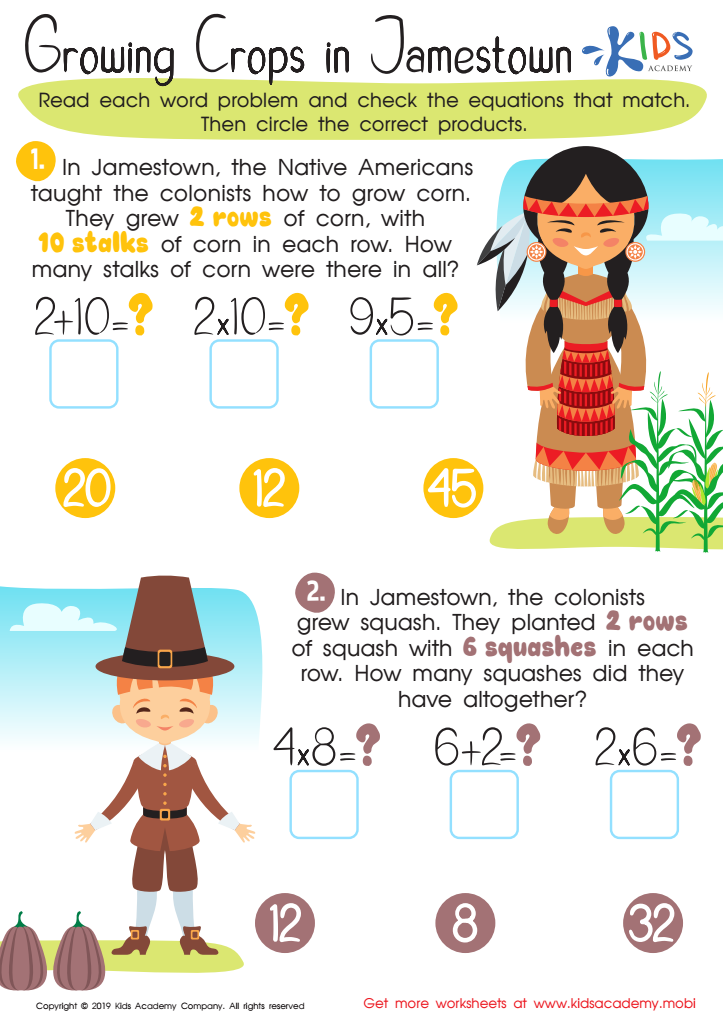
Growing Jamestown Worksheet
 Assign to My Students






Caring about history knowledge for 6-year-olds is critical for several reasons. At this age, children are naturally curious about the world around them. Introducing them to history helps satisfy that curiosity by providing context about where we come from and how societies develop. History shapes our identity, encouraging children to understand their own backgrounds and the diverse narratives that coexist in our communities.
Engaging young learners with stories from the past fosters critical thinking skills. They begin to identify cause and effect, recognizing how historical events influence current situations and their personal lives. This foundational understanding cultivates informed citizens who can actively participate in society.
Additionally, teaching history promotes empathy and multicultural awareness. When children learn about different cultures, figures, and events, they develop a broader perspective of humanity. This can reduce prejudice and build a sense of shared responsibility towards creating a better future.
Lastly, a love for storytelling in history can make learning enjoyable and relatable. By integrating engaging activities—like storytelling, art, or role-play—teachers and parents can create meaningful experiences that will stimulate a lifelong interest in learning and understanding the world. Thus, fostering history knowledge in young children is essential for their holistic development.








