Identifying shapes Worksheets for 6-Year-Olds
11 filtered results
-
From - To
Unlock your child’s potential with our "Identifying Shapes Worksheets for 6-Year-Olds." Tailored for young learners, these engaging activities help children recognize and name basic shapes like circles, squares, triangles, and rectangles. Each worksheet is designed to blend fun with learning, featuring colorful illustrations and easy-to-follow instructions. Perfect for both classroom settings and at-home practice, these worksheets enhance spatial awareness and critical thinking skills. Encourage your 6-year-old to explore the exciting world of shapes while building a solid foundation for future geometry lessons. Visit Kids Academy today to download and print our expertly crafted worksheets.
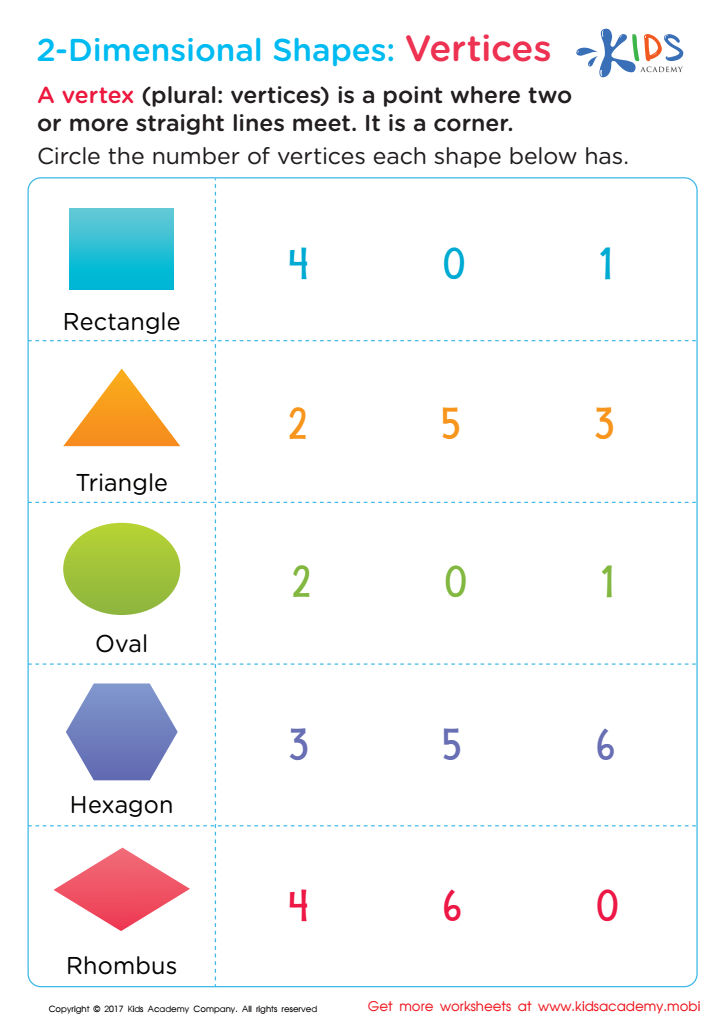
Two–Dimensional Shapes: Vertices Printable
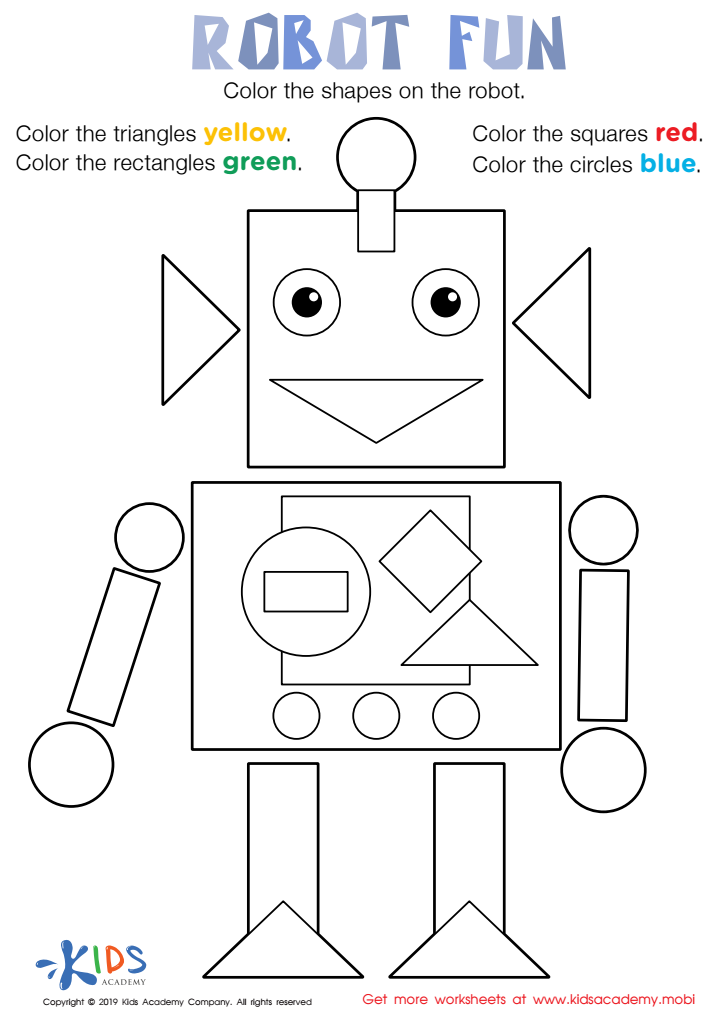
Robot Fun Worksheet
 Assign to My Students
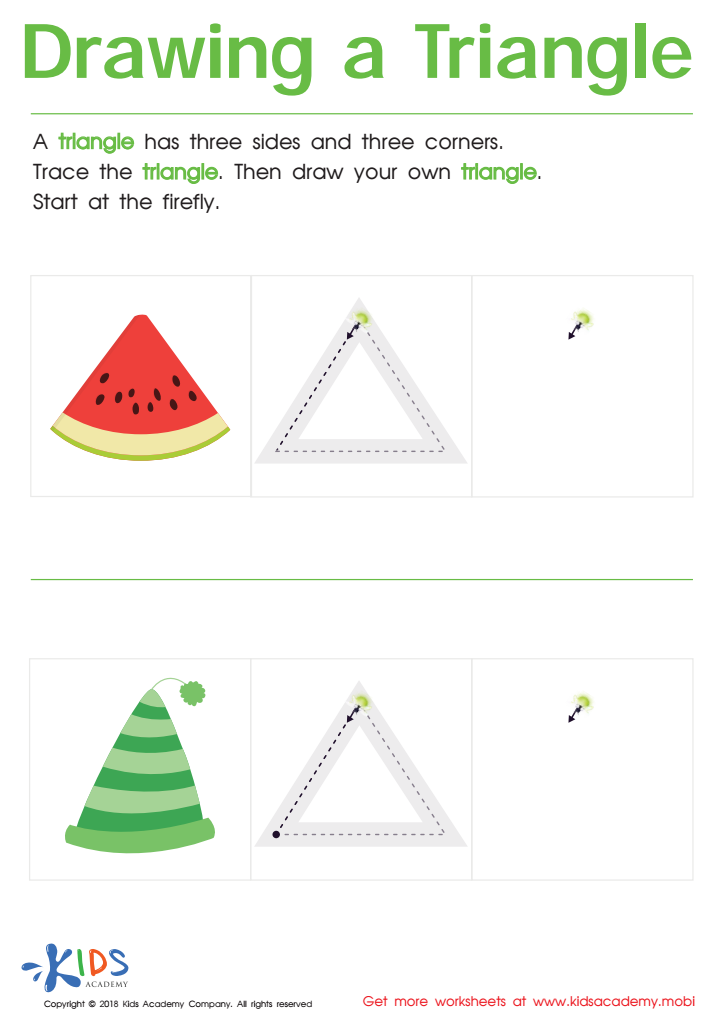
Drawing a Triangle Worksheet
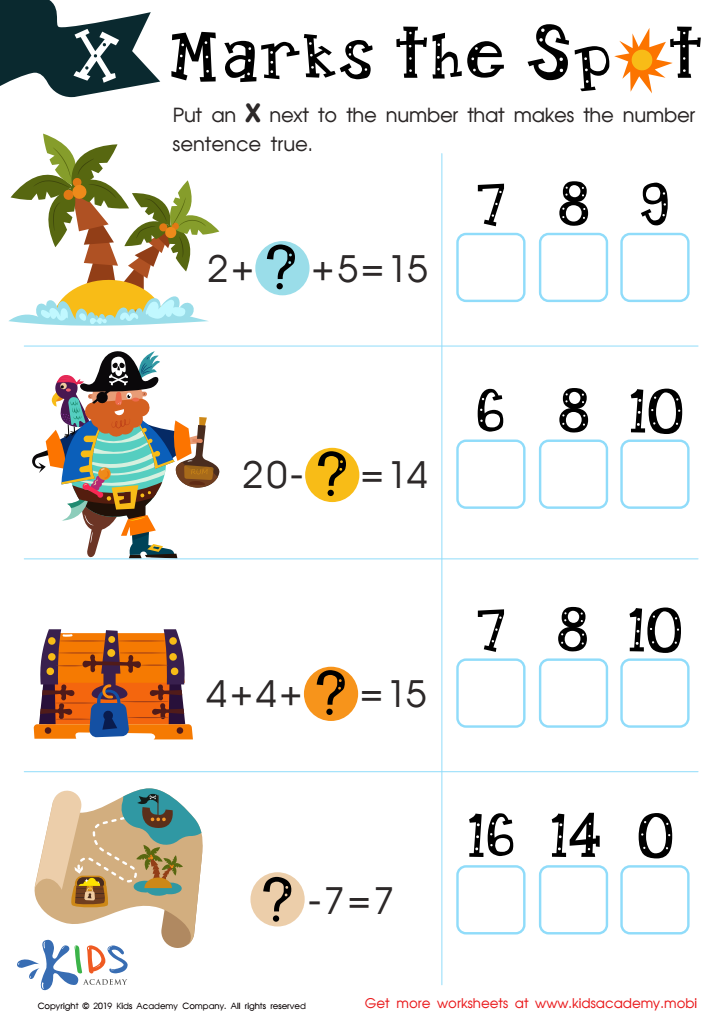
X Marks the Spot Worksheet
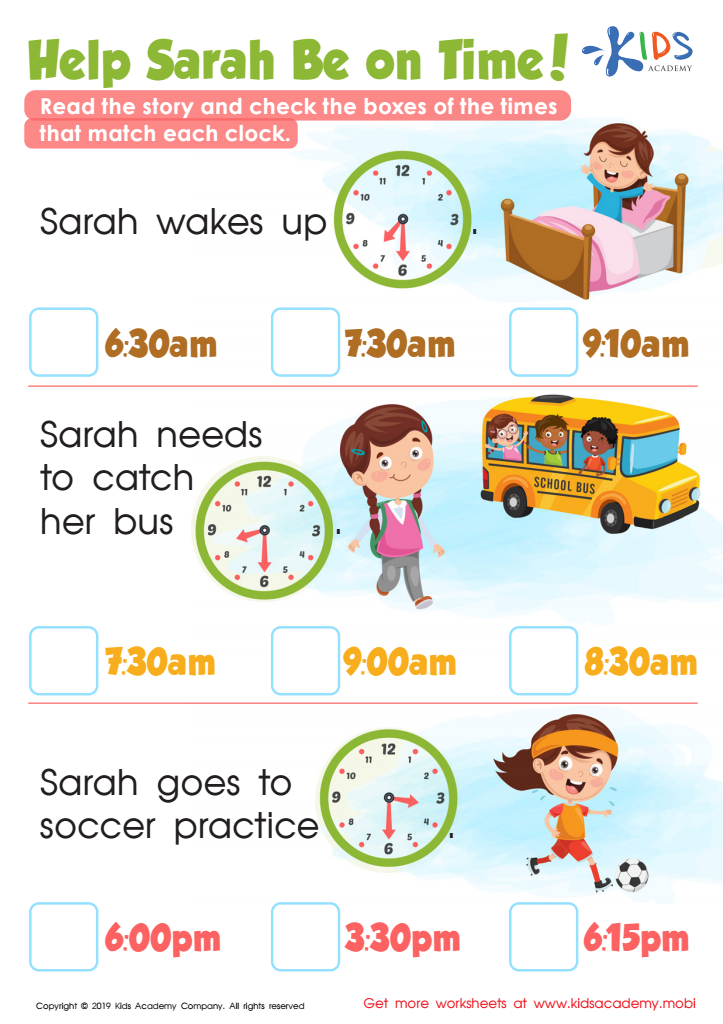
Help Sarah Be on Time! Worksheet
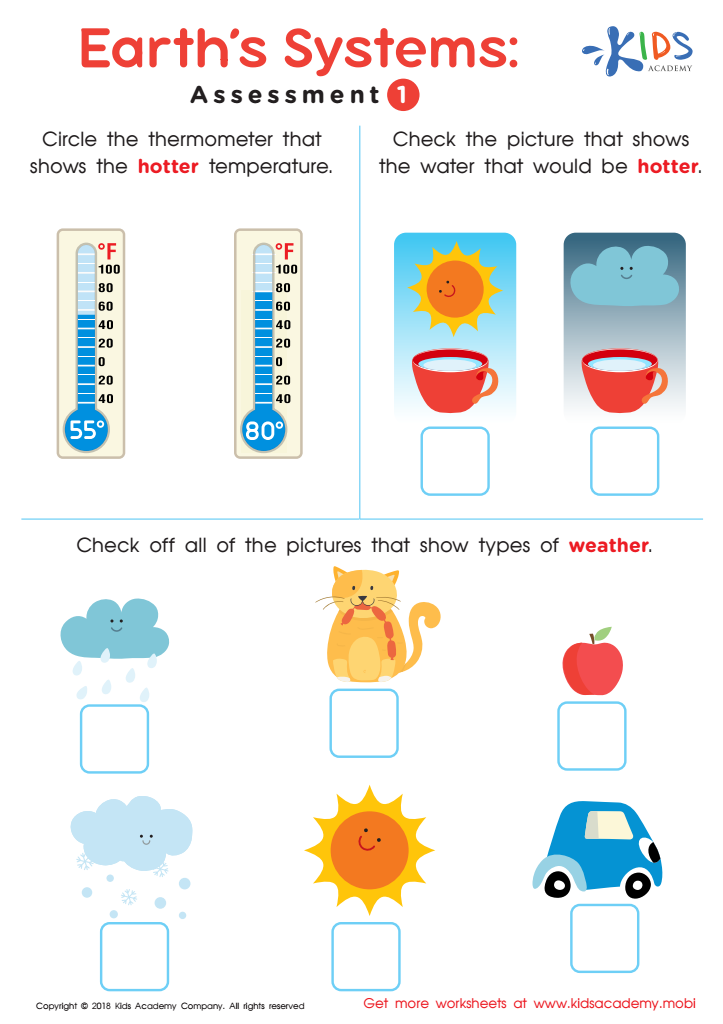
Earth's Systems: Assessment 1








Identifying shapes is a fundamental skill for 6-year-olds, forming a critical part of their cognitive development and academic foundation. Parents and teachers should prioritize this skill for several compelling reasons.
First, recognizing shapes enhances mathematical understanding. Shapes are the building blocks of geometry, and early familiarity with them paves the way for grasping more complex concepts such as area, perimeter, and spatial reasoning. Identifying shapes also sharpens visualization skills, vital for problem-solving in math and everyday contexts.
Second, shape recognition bolsters language development. As children learn to describe shapes, they expand their vocabulary and enhance their communication skills. Phrases like “sides,” “corners,” and “curves” deepen their descriptive language capacity.
Furthermore, distinguishing shapes improves attention to detail. This skill requires children to observe and compare attributes like size, edges, and symmetry, fostering mindfulness and precision. It's an early exercise in categorization, boosting overall cognitive skills and logical thinking.
Lastly, identifying shapes is integral to art and creativity. It fuels imagination, as children recognize and play with these forms in their drawings, crafts, and block-building activities.
In summary, shape recognition is a multifaceted educational imperative, contributing to mathematical prowess, language development, cognitive precision, and creative expression. Investing time in this area sets a robust foundation for a child's future learning endeavors.








