
Understanding plant growth Worksheets for 6-Year-Olds
3 filtered results
Difficulty Level
Grade
Age
-
From - To
Subject
Activity
Standards
Explore our "Understanding Plant Growth Worksheets" designed specifically for 6-year-olds! These engaging worksheets introduce young learners to the fascinating life cycle of plants. Filled with colorful visuals and fun activities, children will discover the importance of sunlight, water, and soil in plant development. Our worksheets promote critical thinking, enhance vocabulary, and encourage connection with nature. Perfect for classroom use or home learning, these resources make complex concepts accessible and enjoyable for young minds. Help your child cultivate a love for learning about plants and the environment with our free, printable worksheets. Start their journey into science today!
Favorites
With answer key
Interactive
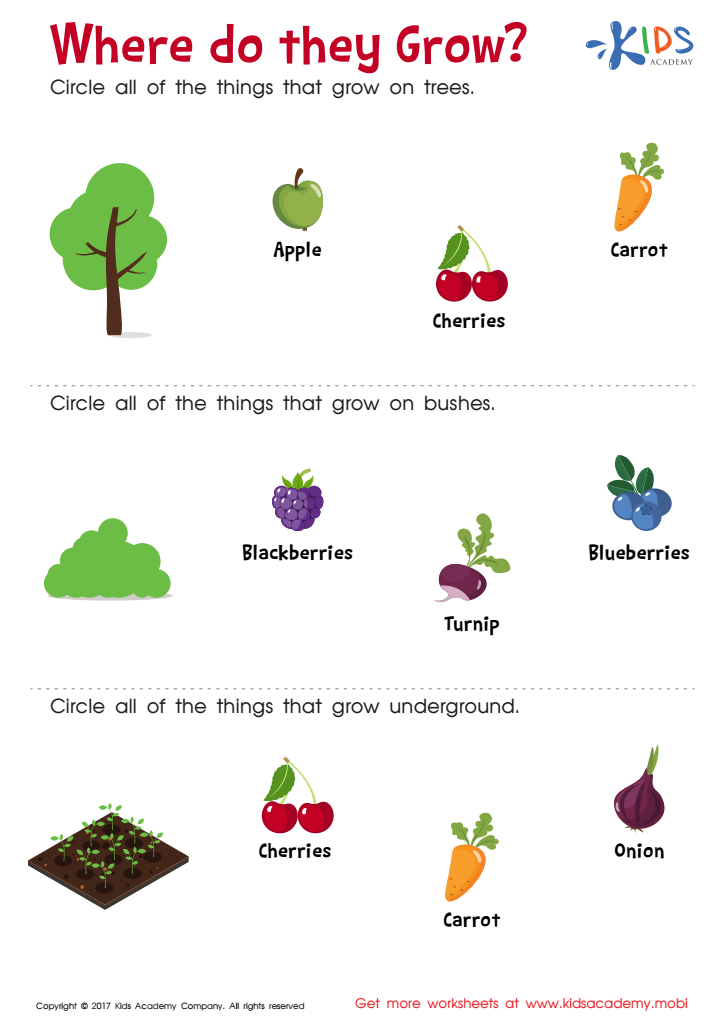
Where Do They Grow Worksheet
With this worksheet, your child can learn about apples, cherries, and blueberries and gain important science skills.
 Assign to My Students
Where Do They Grow Worksheet
Worksheet
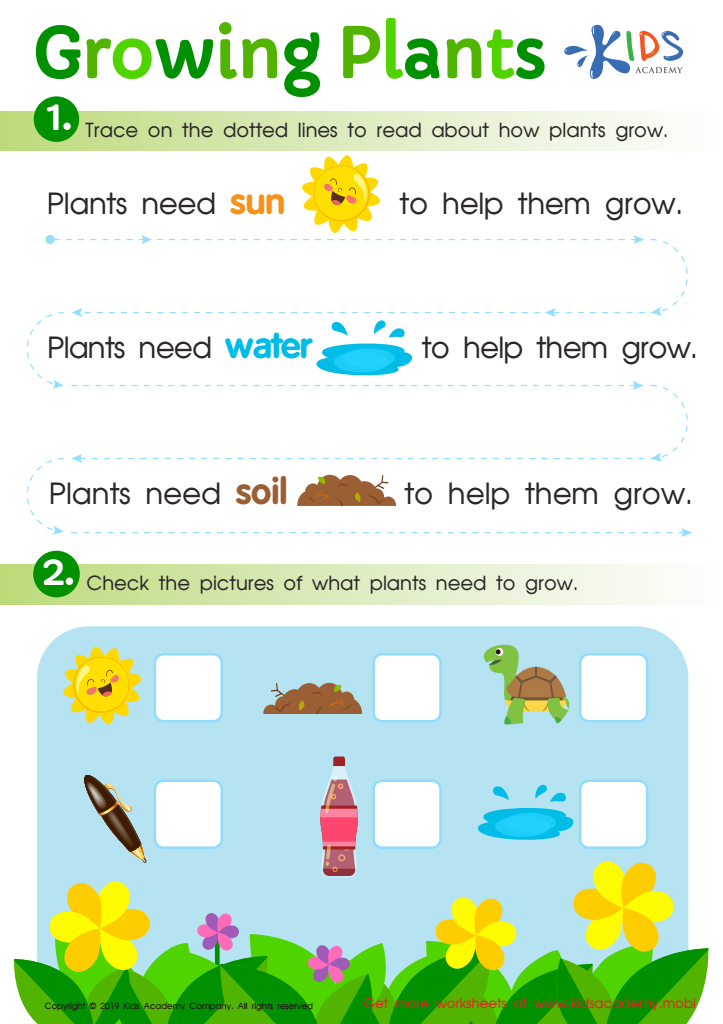
Growing Plants Worksheet
Young gardeners and scientists can learn about what helps plants grow with this fun PDF worksheet. Kids will trace lines to practice left-to-right patterning and use pictures from the rebus story to guide them. Learn that plants need sunshine, water and soil, then check off pictures of what each plant needs. It's an engaging and educational way to help their plants become big and strong.
Growing Plants Worksheet
Worksheet
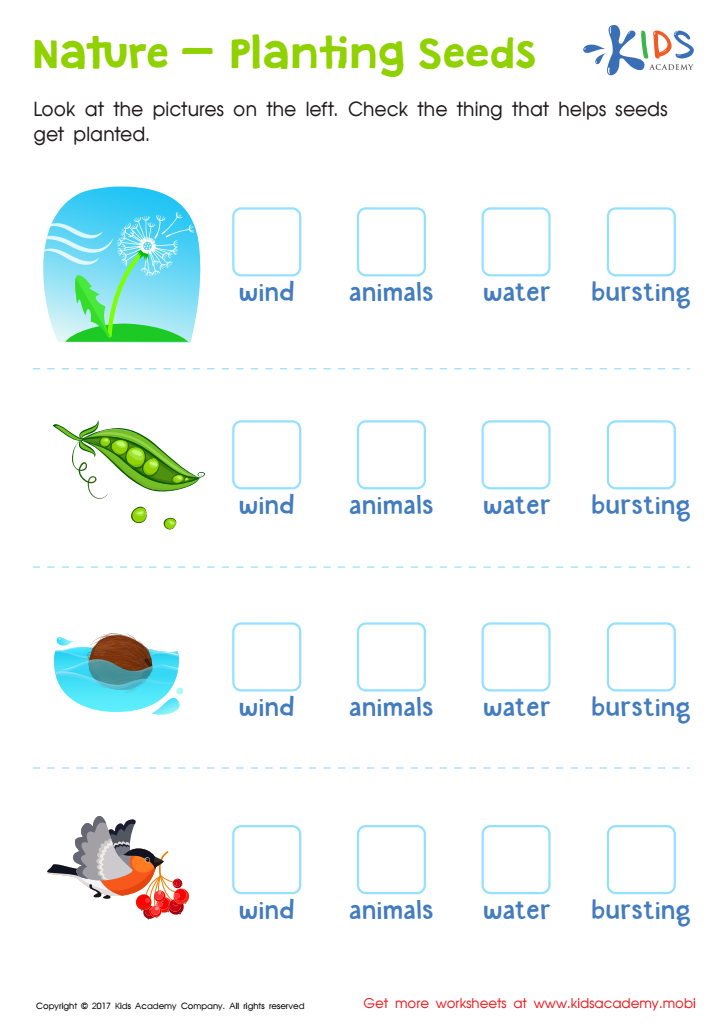
Nature Planting Seeds Worksheet
Help your child explore the fascinating cycle of plants and seeds with this worksheet. They'll learn how plants grow and how seeds travel to the ground. Challenge them to identify the right way each seed gets planted!
Nature Planting Seeds Worksheet
Worksheet
Join Kids Academy for Free
Who is primarily going to use this learning content?







Understanding plant growth is essential for both parents and teachers when engaging with 6-year-olds. At this age, children's curiosity about the world is at a peak, and introducing them to the concept of plant growth fosters inquiry and exploration. Learning about plants allows children to connect with nature, encouraging a sense of responsibility and nurturing.
By studying how plants grow, children can grasp fundamental biological concepts such as life cycles, habitats, and ecosystems. This early exposure cultivates a foundation for future learning in science, technology, engineering, and mathematics (STEM). Moreover, it provides opportunities for hands-on activities, such as planting seeds or caring for a classroom garden, which enhance fine motor skills and foster teamwork.
Additionally, understanding plant growth can impart valuable lessons about healthy eating. As children learn how fruits and vegetables grow, they become more inclined to try these foods, promoting better eating habits and a healthier lifestyle.
Parents and teachers can also use discussions about plants to model observation, inquiry, and critical thinking, skills that are vital for cognitive development. In conclusion, recognizing the importance of plant growth can enrich children's education, promoting a lifelong love of learning and respect for nature.








