Understanding shapes Worksheets for 6-Year-Olds
5 filtered results
-
From - To
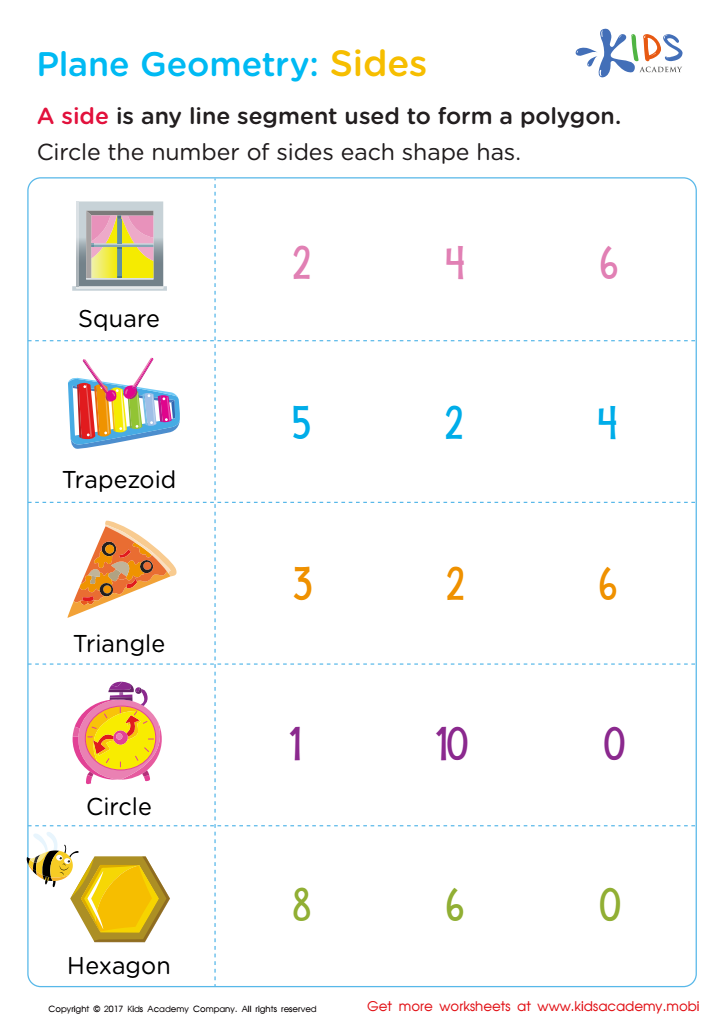
Explore our engaging "Understanding Shapes Worksheets for 6-Year-Olds," designed to make learning about shapes fun and interactive! These worksheets are tailored to help young learners identify, differentiate, and apply various shapes in everyday contexts. From circles and squares to triangles and rectangles, each activity fosters critical thinking skills and enhances visual recognition. Ideal for classroom or home use, our resources promote creativity while reinforcing core mathematical concepts. With colorful illustrations and friendly activities, your children will gain confidence in their shape knowledge and enjoy every step of the learning process. Start their shape adventure today and watch their skills grow!
 Assign to My Students
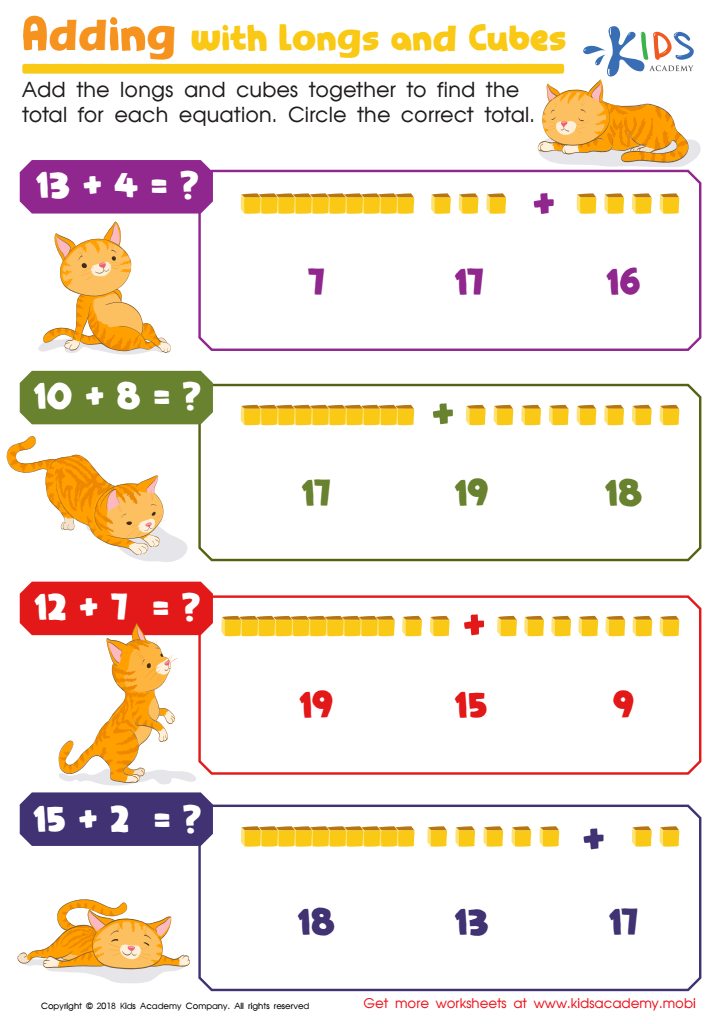
Adding With Longs and Cubes Worksheet
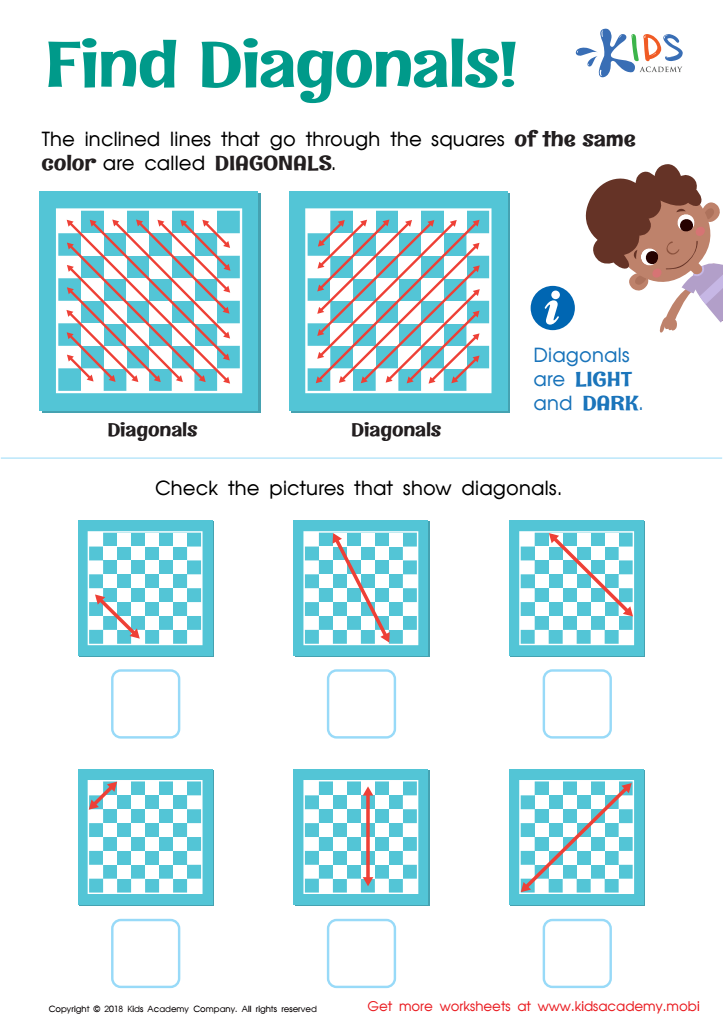
Find Diagonals Worksheet
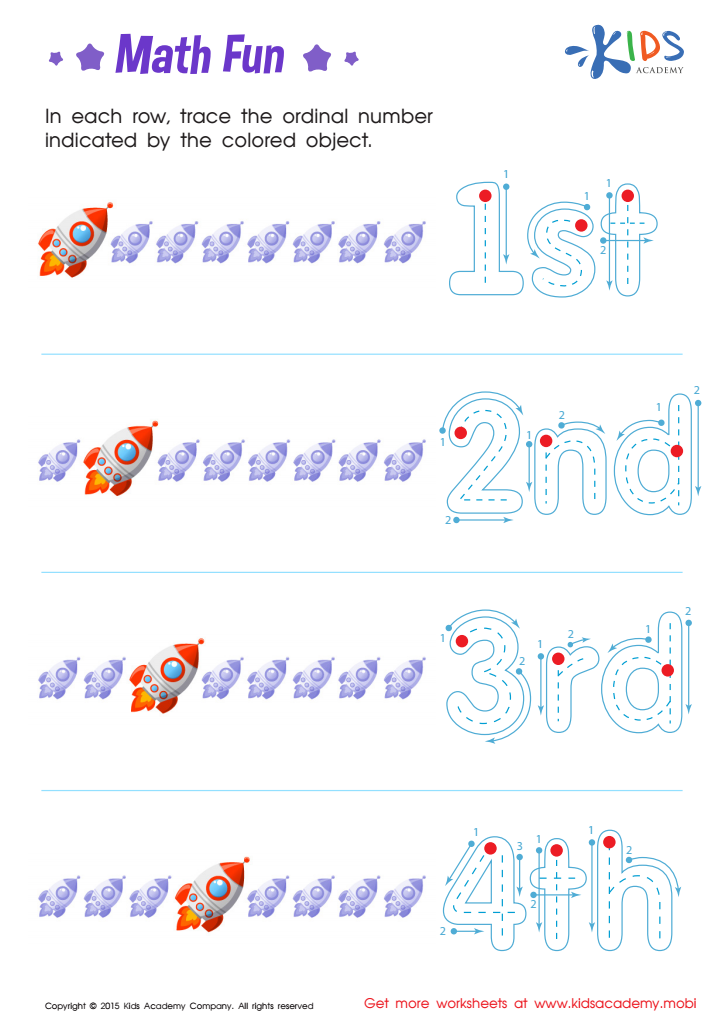
Ordinal Numbers: Math Fun Worksheet
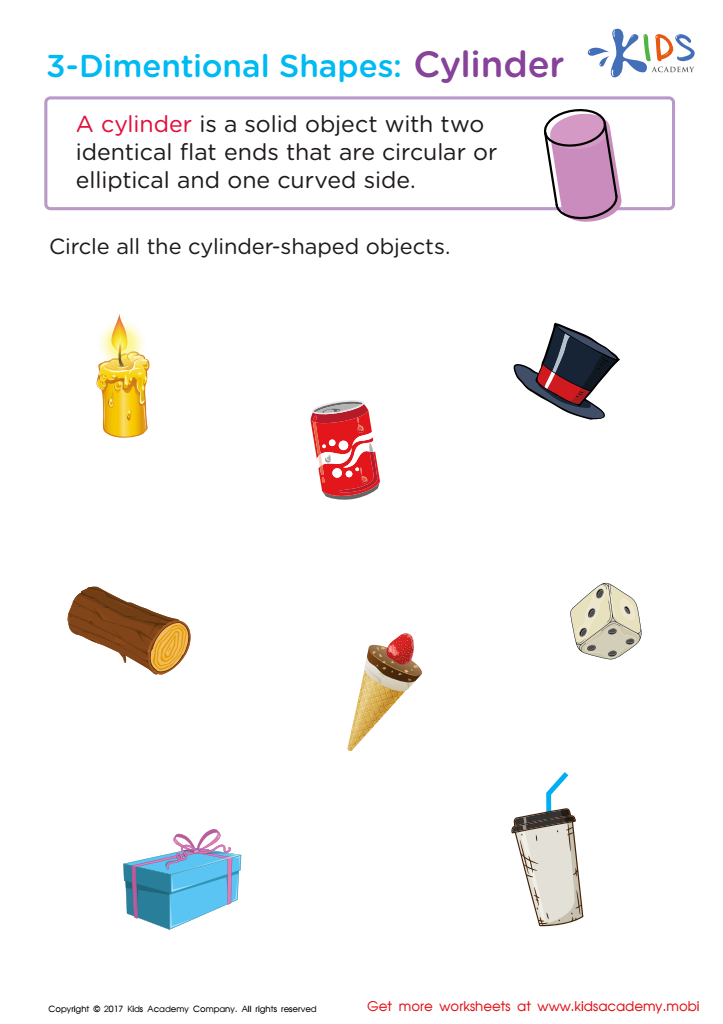
Three–Dimensional Shapes: Cylinder Worksheet







Understanding shapes is crucial for 6-year-olds as it lays the foundation for essential mathematical and spatial skills. At this age, children begin to recognize and classify shapes, which enhances their problem-solving abilities and cognitive development. Shapes are not just abstract concepts; they are part of children’s everyday experiences, from toys and buildings to nature. Familiarity with shapes can help children develop logic and reasoning skills as they learn to identify similarities and differences.
Additionally, understanding shapes is closely linked to developing fine motor skills. Activities like drawing shapes or constructing with blocks help children refine their hand-eye coordination. This foundation is essential for later skills such as writing and artistic expression.
Moreover, shape recognition supports language development, as children learn to articulate their thoughts using terms related to geometry. Engaging with shapes also paves the way for more complex mathematics in the future, particularly in geometry.
For parents and teachers, emphasizing shapes in early education not only makes learning fun through hands-on activities and games but also prepares children for future academic success. Cultivating a solid grasp of shapes encourages a love for learning, critical thinking, and creativity that can benefit children throughout their lives.








