Shape Recognition Fractions of Shapes Worksheets for 6-Year-Olds
4 filtered results
-
From - To
Explore our engaging "Shape Recognition Fractions of Shapes Worksheets" designed for 6-year-olds! These interactive worksheets help young learners identify and classify various shapes while introducing the concept of fractions. Children will enhance their understanding of shapes like circles, triangles, and squares by visually representing parts and wholes. Ideal for both home and classroom use, these worksheets promote critical thinking and spark curiosity in math through fun exercises. Watch your child's confidence grow as they practice recognizing fractions of different shapes, setting a strong foundation for future mathematical concepts. Start their learning journey today with our easy-to-use and printable resources!
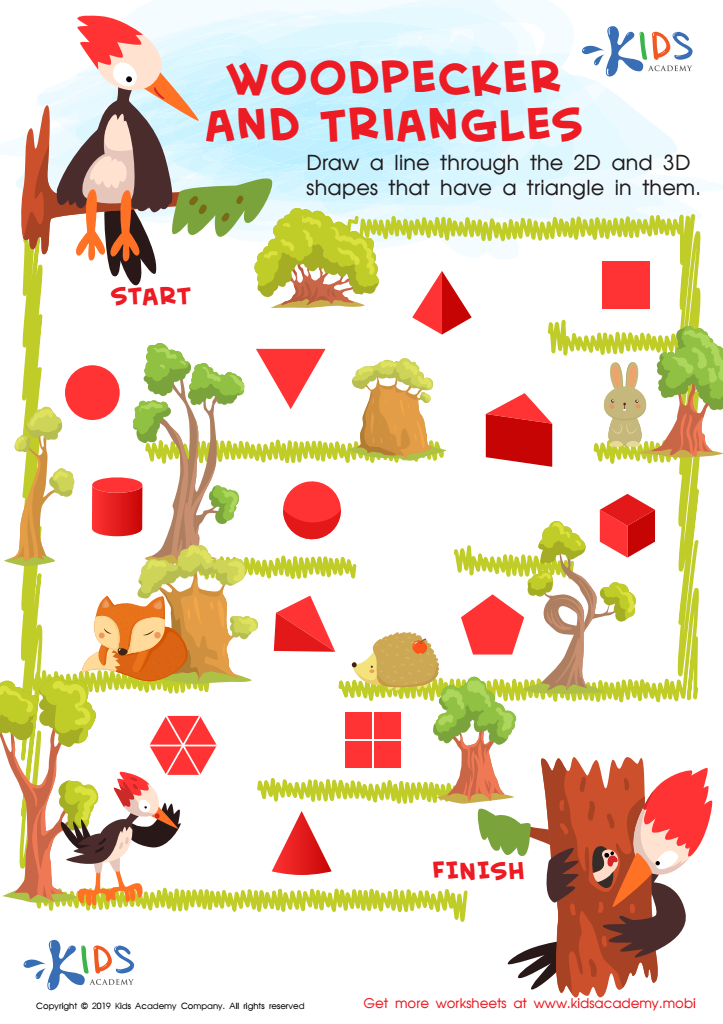
Woodpecker and Triangles Worksheet
 Assign to My Students
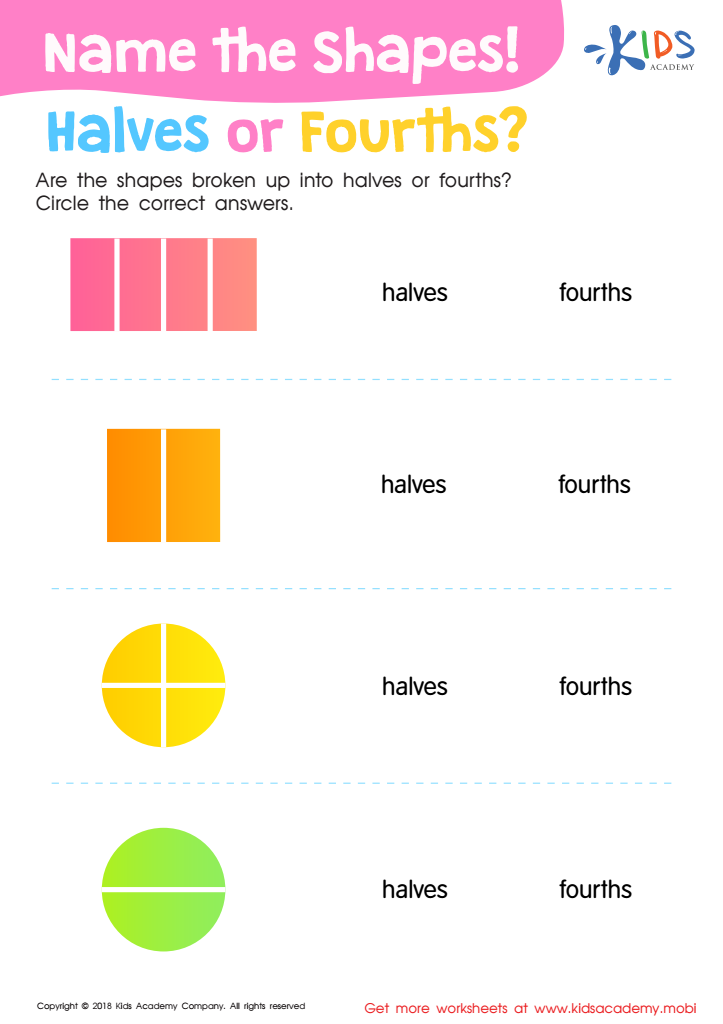
Name the Shapes Halves or Fourths? Worksheet
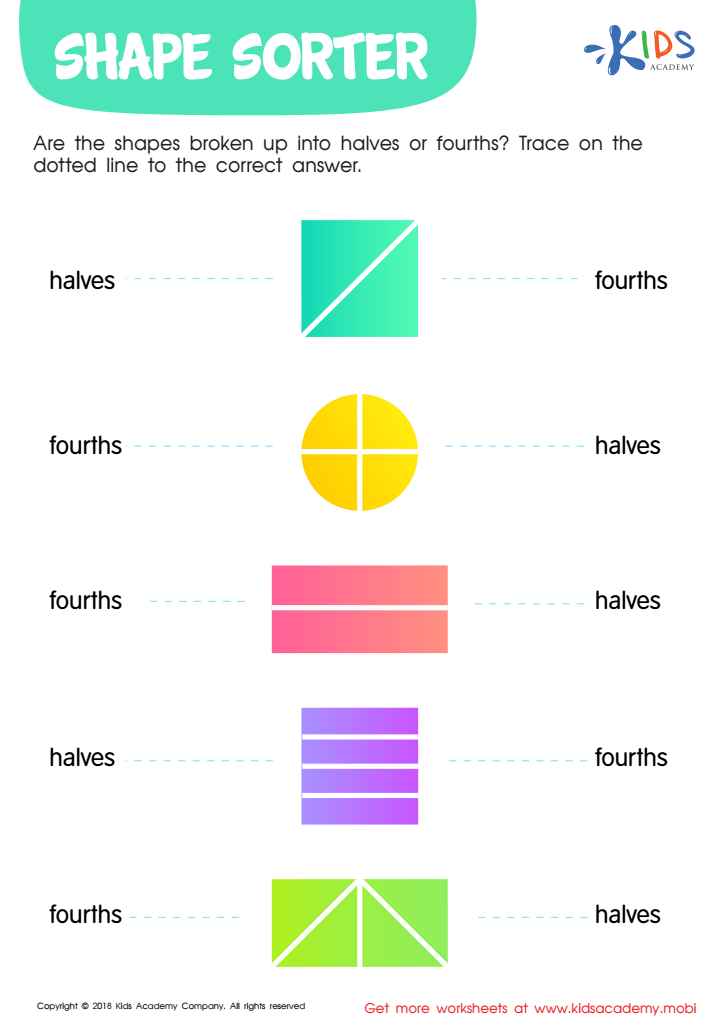
Shape Sorter Worksheet
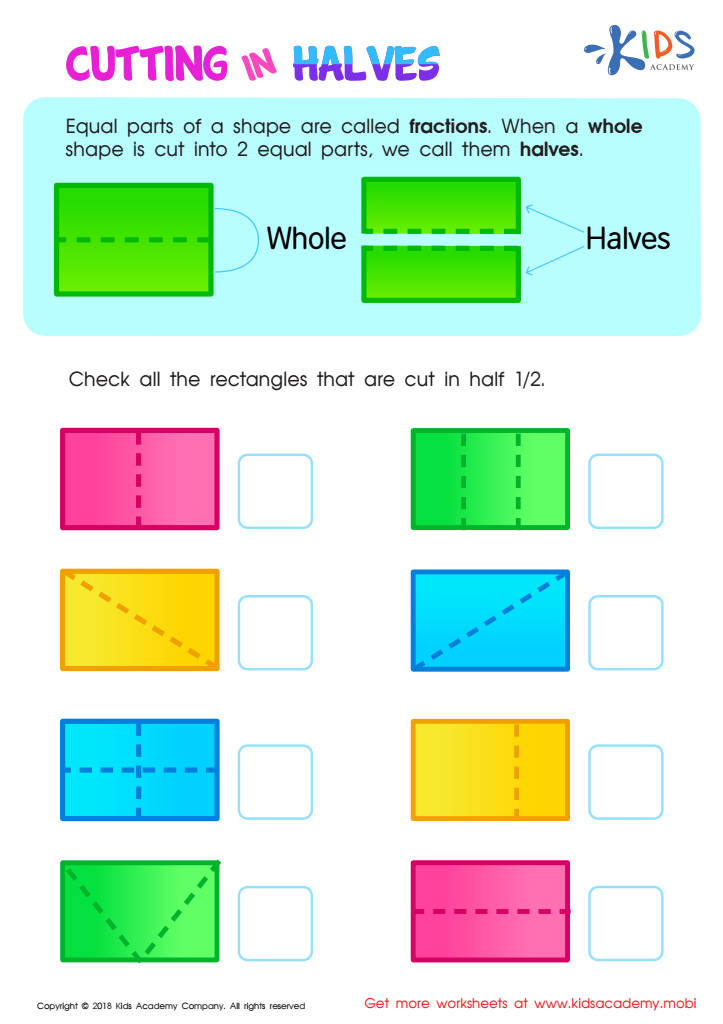
Cutting in Halves Worksheet








Shape recognition and understanding fractions of shapes are fundamental concepts that greatly benefit 6-year-olds’ cognitive and mathematical development. At this age, children are naturally curious and eager to explore their surroundings. Teaching them about shapes helps enhance their spatial awareness and critical thinking skills, which are vital in everyday problem-solving.
Shape recognition provides the foundation for future geometry lessons and helps children categorize objects in their environment. When they can identify shapes, they become better equipped to understand dimensions, patterns, and symmetry, which are crucial for STEM learning.
Moreover, introducing fractions of shapes aids in developing early numeracy skills. Understanding that a shape can be divided into parts fosters a sense of proportion and comparison, helping children grasp the concept of “whole” versus “part.” This foundational knowledge is necessary as they encounter more complex math concepts in later grades.
Parents and teachers who prioritize shape recognition and fractions not only support academic growth but also encourage creativity and innovation. Activities like cutting shapes into halves or quarters can be engaging and fun, instilling a love for learning. Ultimately, nurturing these skills lays the groundwork for confident math learners and helps children apply their knowledge in real-world scenarios.