Basic geometry knowledge Math Worksheets for 6-Year-Olds
3 filtered results
-
From - To
Discover our engaging Basic Geometry Knowledge Math Worksheets designed specifically for 6-year-olds! These interactive resources help young learners explore fundamental geometric concepts through fun activities. Each worksheet is crafted to enhance skills such as shape recognition, spatial awareness, and basic measurements. Kids will enjoy exciting exercises that promote critical thinking and problem-solving in a playful manner. Perfect for reinforcing classroom learning or supplemental home education, our geometry worksheets make mastering shapes enjoyable and accessible. Download now and watch your child's confidence grow in math as they delve into the colorful world of geometry! Ideal for parents and teachers alike.
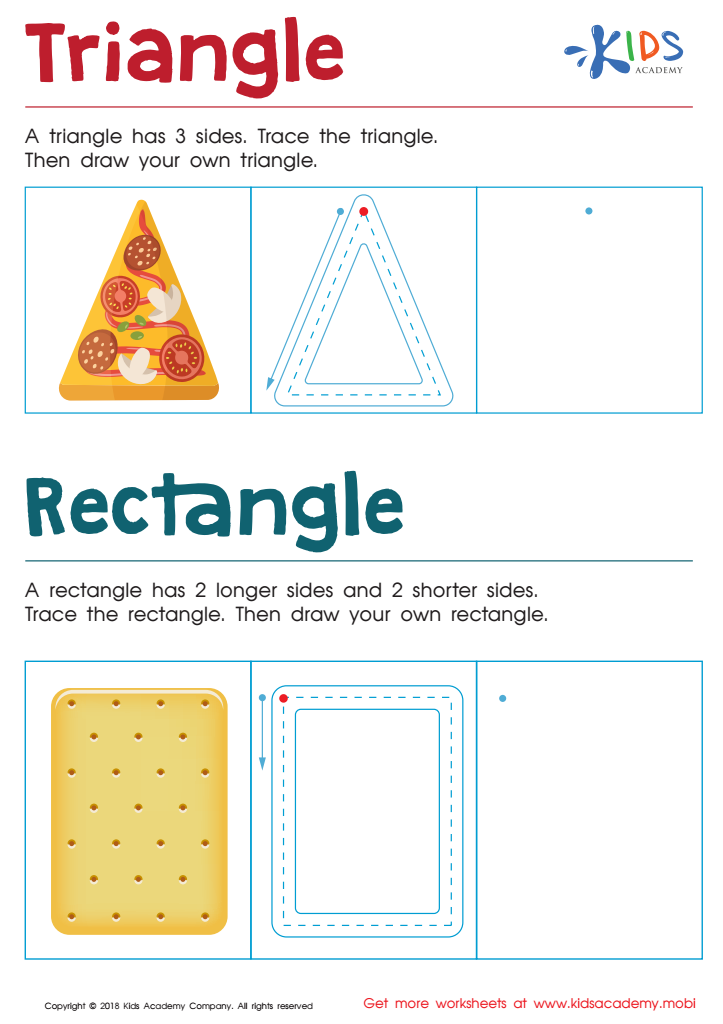
Triangle Rectangle Worksheet
 Assign to My Students
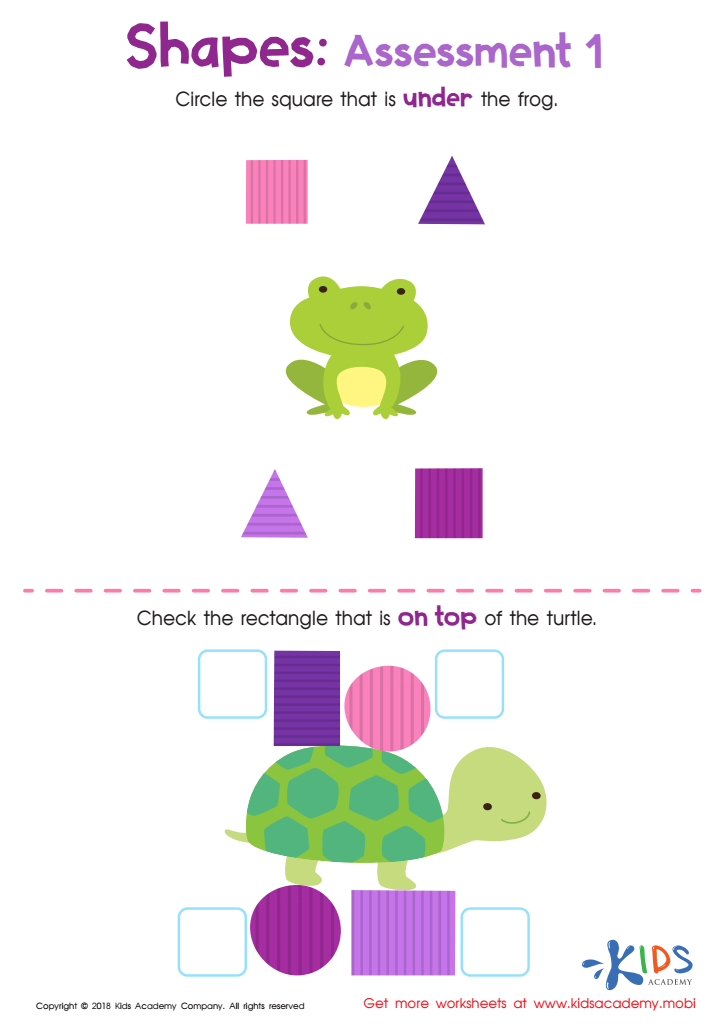
Geometry – Assessment 1 Worksheet
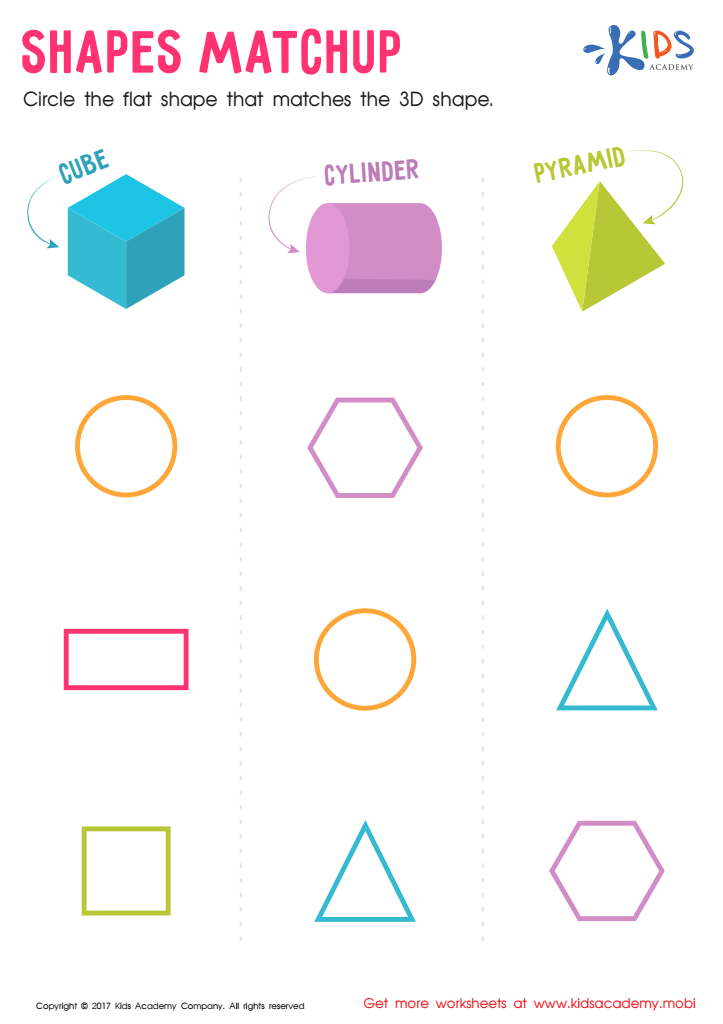
Shapes Matchup Worksheet







Basic geometry knowledge is essential for 6-year-olds as it lays the foundation for critical mathematical skills and cognitive development. At this age, children are naturally curious about shapes, sizes, and spatial relationships. Understanding basic geometric concepts helps enhance their problem-solving abilities, encouraging them to classify, compare, and manipulate objects around them.
Geometry also fosters visual-spatial awareness, which is crucial for everyday tasks and more advanced math in later years. It equips children with the skills to navigate their environment and approach challenges logically. Moreover, geometric concepts appear frequently in art, architecture, and nature, making them relevant and engaging for young learners.
Parents and teachers play a crucial role in nurturing this knowledge by incorporating geometric learning into play, crafts, and even storytelling. When children explore shapes through hands-on activities and real-world applications, they develop a positive attitude towards math and boost their confidence.
Beyond academics, basic geometry literacy enhances creativity and critical thinking, laying the groundwork for future learning. By caring about geometry, parents and teachers are not only fostering early math skills but are also enriching their children's overall cognitive development and preparing them for lifelong learning experiences.








