Differentiating shapes Math Worksheets for 6-Year-Olds
3 filtered results
-
From - To
Welcome to our Differentiating Shapes Math Worksheets designed specifically for 6-year-olds! These engaging and interactive worksheets help young learners identify, compare, and classify various shapes, fostering essential math skills while having fun. Each worksheet includes vibrant illustrations and entertaining activities, making shape recognition enjoyable. Kids will practice distinguishing between shapes like circles, squares, triangles, and more, enhancing their critical thinking and problem-solving abilities. Ideal for classroom or home use, our worksheets provide a solid foundation for early math concepts. Encourage your child's love for learning and shape exploration with these easy-to-use, printable resources! Begin their shape adventure today!
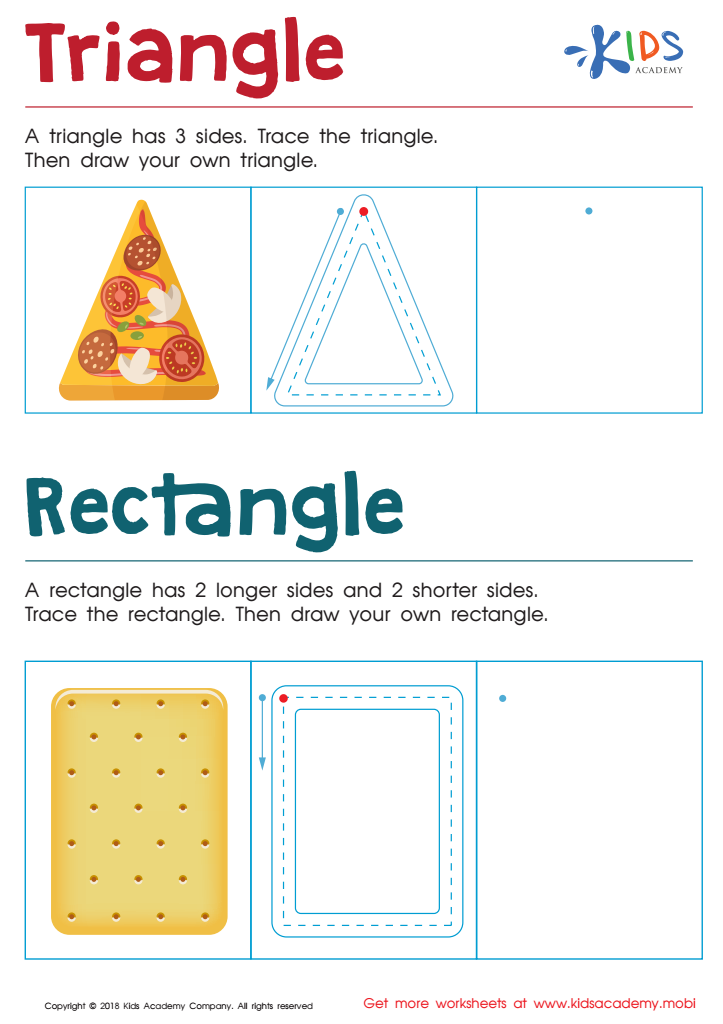
Triangle Rectangle Worksheet
 Assign to My Students
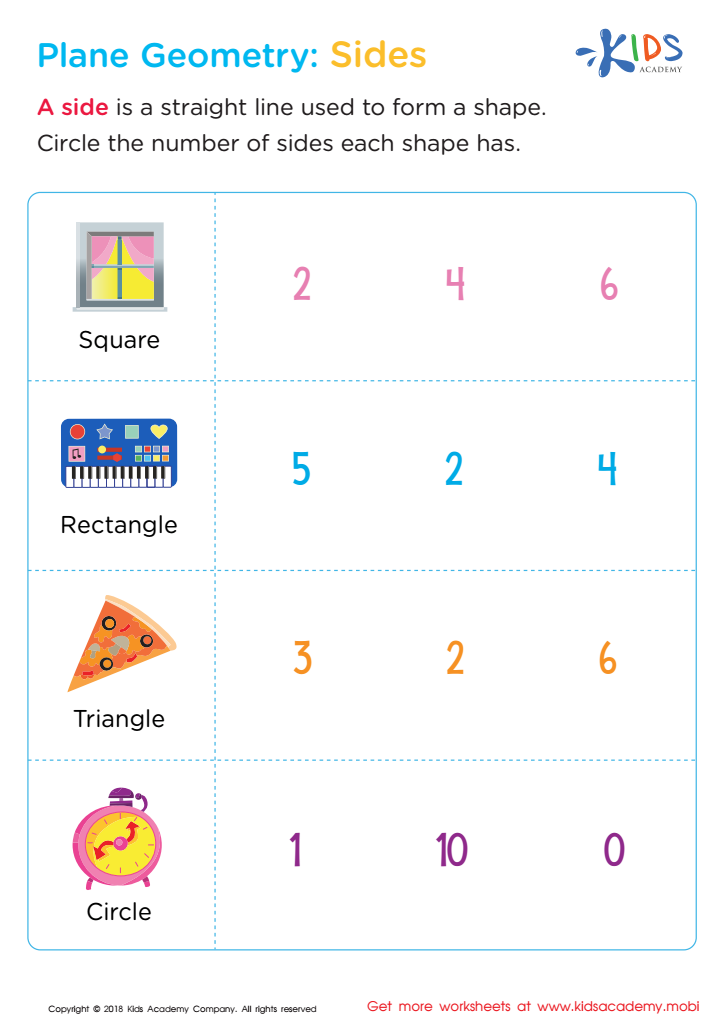
Plane Geometry: Sides Worksheet
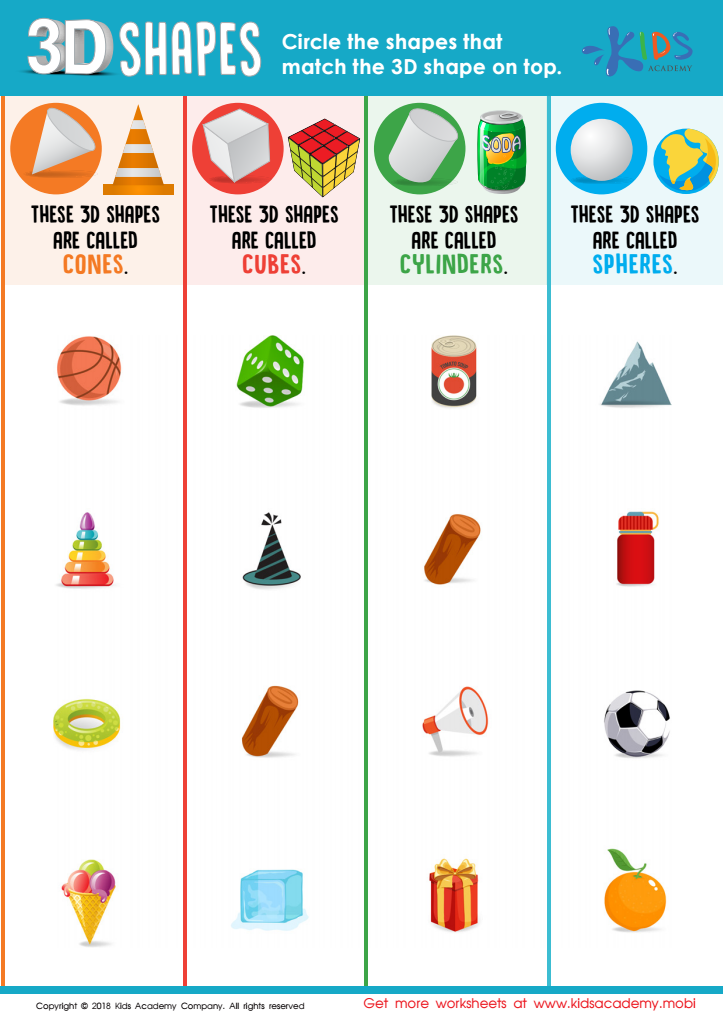
3D Shapes Worksheet








Differentiating shapes in mathematics for 6-year-olds is crucial as it lays a foundation for future learning in both math and critical thinking skills. At this age, children are developing their cognitive abilities, and engaging with shapes enhances spatial awareness and understanding of their environment. Recognizing various shapes and their properties fosters creativity and problem-solving, enabling children to contribute to group activities and discussions confidently.
Incorporating differentiated shape activities caters to the diverse learning styles and paces of children. Some may grasp concepts quickly, while others might need additional support or different methods of instruction. By providing varied approaches—such as hands-on activities, visual aids, and interactive games—teachers and parents can ensure that all children remain engaged and challenged.
Additionally, early shape differentiation is linked to future competencies in geometry, measurement, and even physics. A solid grasp of shapes also influences a child's ability to explain their reasoning and understand logical relationships, which are vital skills in later academic stages. Overall, parents and teachers should prioritize shape differentiation to foster a rich learning environment, encourage curiosity, and prepare children for a successful trajectory in their education.








