Understanding symmetry Math Worksheets for 6-Year-Olds
5 filtered results
-
From - To
Explore our engaging "Understanding Symmetry Math Worksheets" designed specifically for 6-year-olds! These worksheets introduce young learners to the concept of symmetry through fun and interactive activities. Children will enhance their visual skills by identifying symmetric shapes, completing patterns, and drawing symmetrical figures. Our resources ensure that kids comprehend symmetry in both two-dimensional and three-dimensional forms while fostering creativity. Perfect for home or classroom use, these worksheets promote essential math skills in a playful way. With colorful illustrations and age-appropriate challenges, young learners will develop a solid foundation in symmetry while enjoying math! Start your journey into the world of symmetry today!
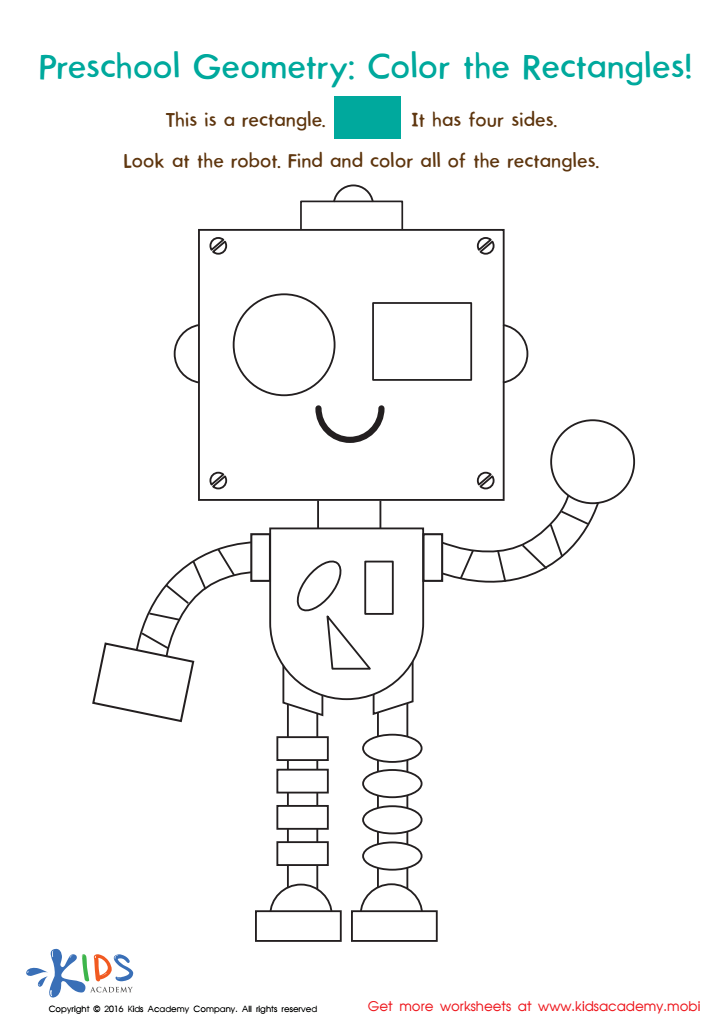
Geometry Worksheet
 Assign to My Students
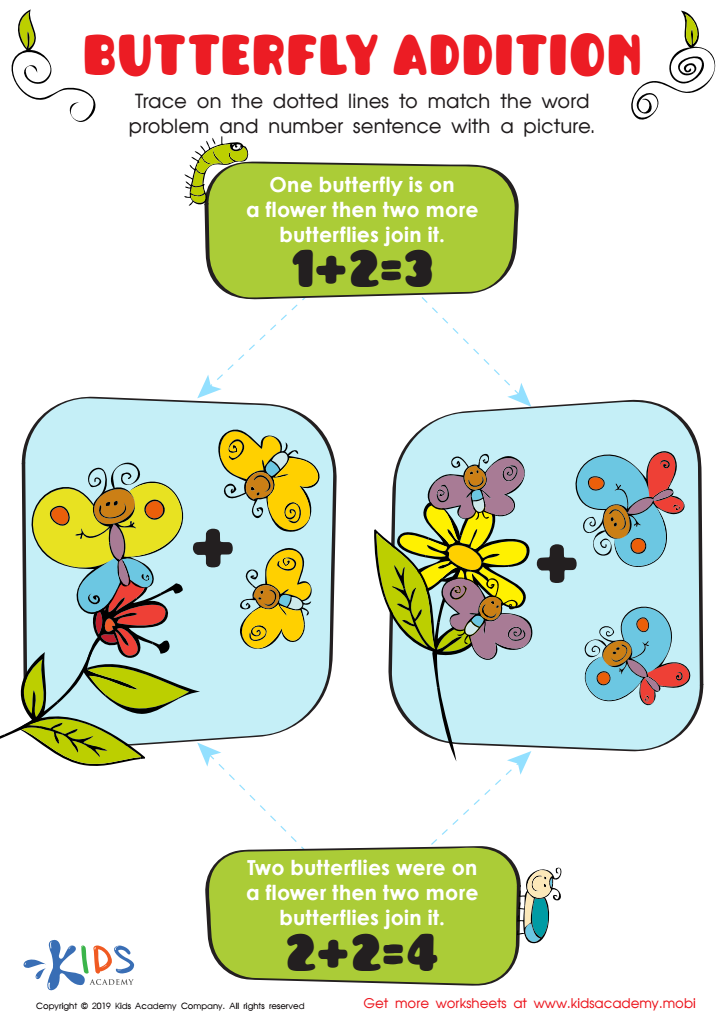
Butterfly Addition Worksheet
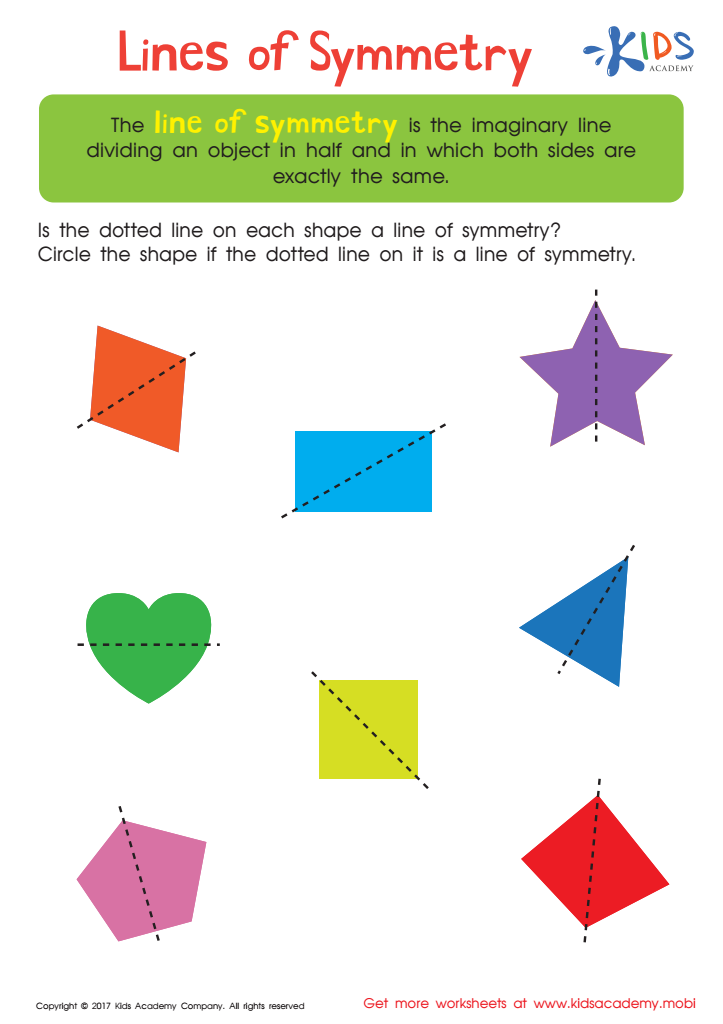
Lines of Symmetry Printable
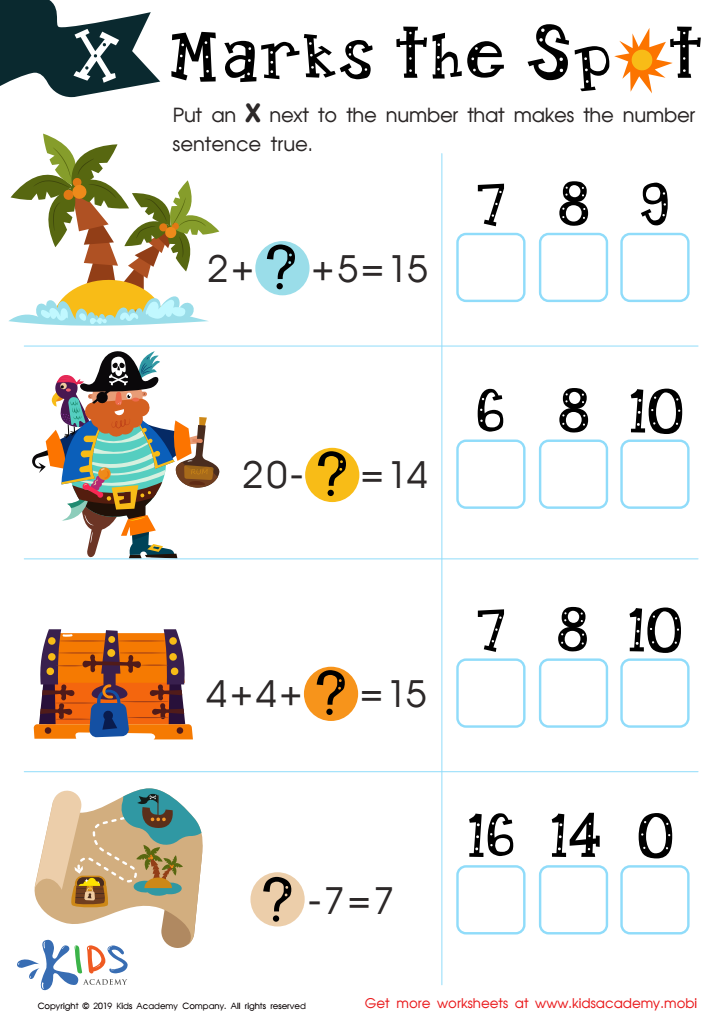
X Marks the Spot Worksheet
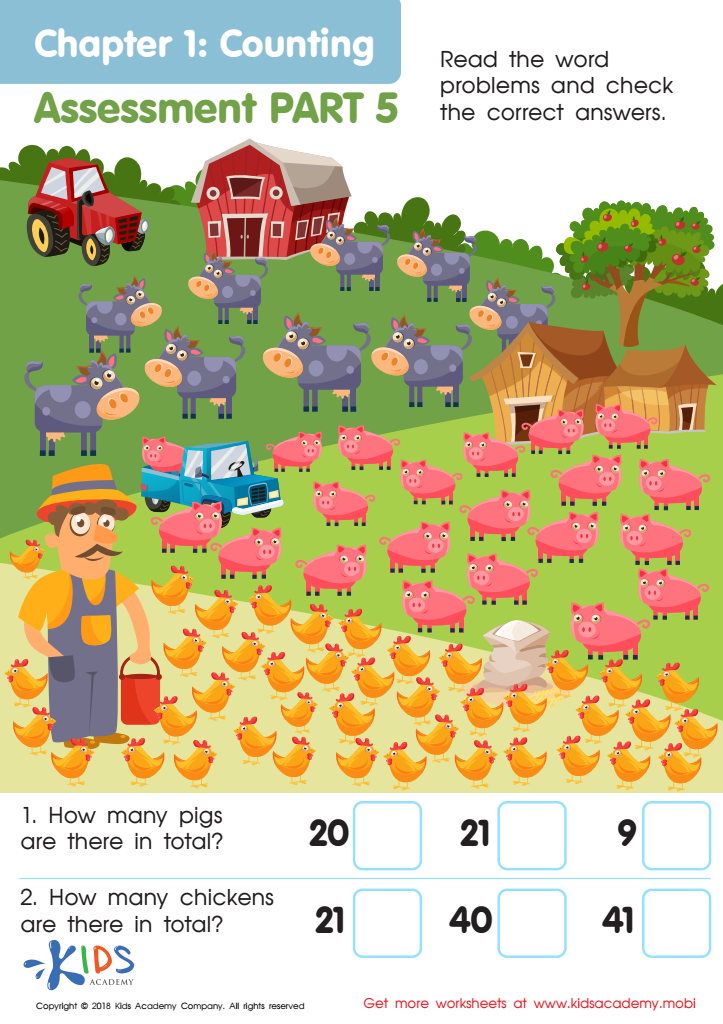
Counting: Assessment 5 Worksheet




.jpg)


Understanding symmetry is crucial for 6-year-olds as it lays the foundation for more advanced mathematical concepts and enhances cognitive development. At this age, children are naturally curious and often explore the world around them through visual and spatial means. Teaching symmetry helps them recognize patterns, shapes, and relationships, fostering critical thinking skills. When children learn about symmetry, they not only experience joy in creating and recognizing symmetrical objects but also develop an appreciation for art and nature, enhancing their creativity.
Furthermore, symmetry introduces basic mathematical principles such as equality and balance, which are essential for problem-solving skills in later grades. It encourages children to explore and ask questions, promoting a growth mindset. Incorporating symmetry into everyday activities, such as folding paper, creating art, or even observing nature, can make learning engaging and fun.
For parents and teachers, understanding symmetry emphasizes the connection between math and real-world experiences, showcasing its relevance. This knowledge instills confidence in children, making them more willing to tackle complex mathematical concepts in the future. Ultimately, grasping symmetry cultivates a love for mathematics, laying the groundwork for lifelong learning and problem-solving abilities.








