Animal knowledge Reading Non-Fiction Worksheets for 6-Year-Olds
3 filtered results
-
From - To
Discover an engaging collection of Animal Knowledge Reading Non-Fiction Worksheets designed specifically for 6-year-olds! These interactive activities aim to spark curiosity about the animal kingdom while enhancing reading comprehension skills. Through captivating texts and informative visuals, children will explore various animal habitats, behaviors, and characteristics. Each worksheet encourages critical thinking and promotes vocabulary development, making learning fun and effective. Perfect for home or classroom use, these materials support early literacy and foster a love for reading non-fiction. Dive into the fascinating world of animals with our exciting worksheets, and watch your child's knowledge and confidence soar!
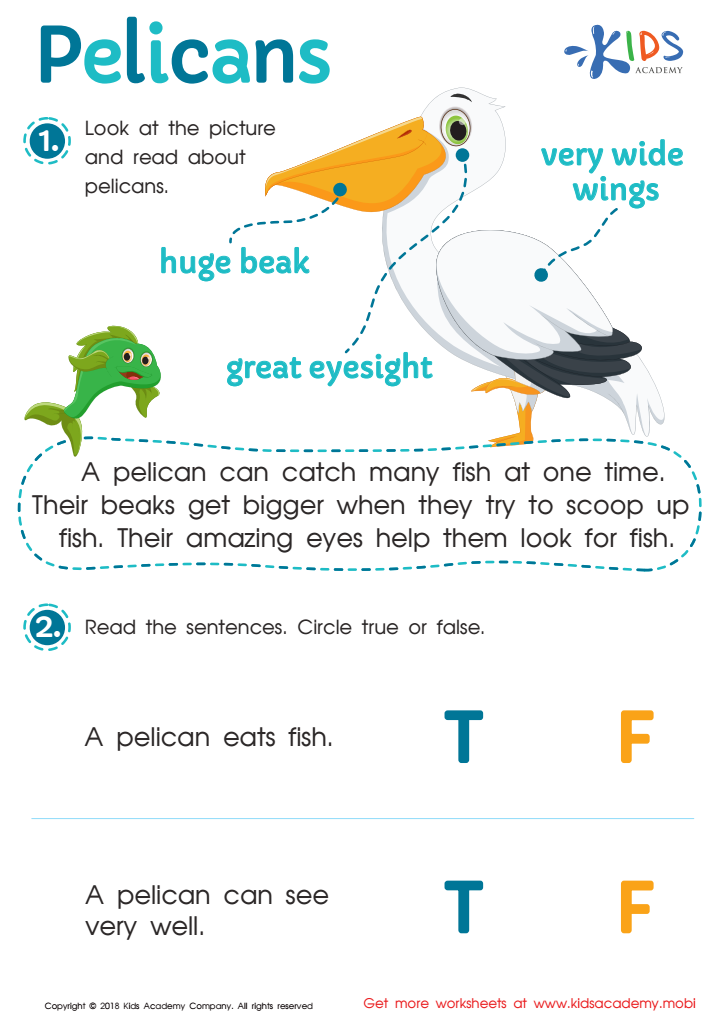
Pelicans Worksheet
 Assign to My Students
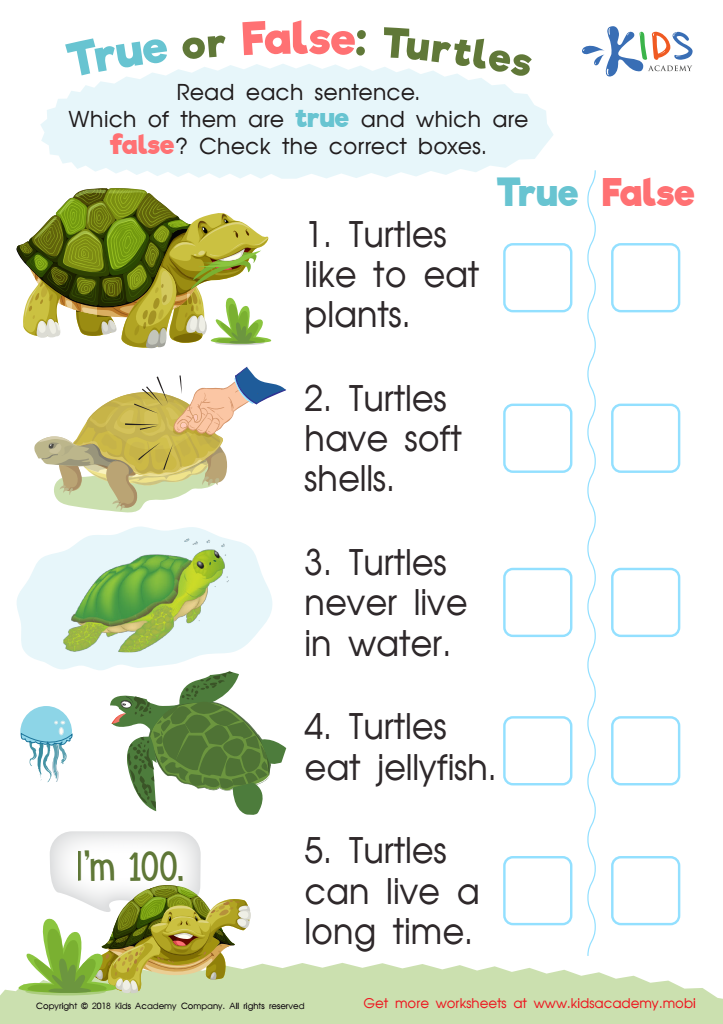
True or False: Turtles Worksheet
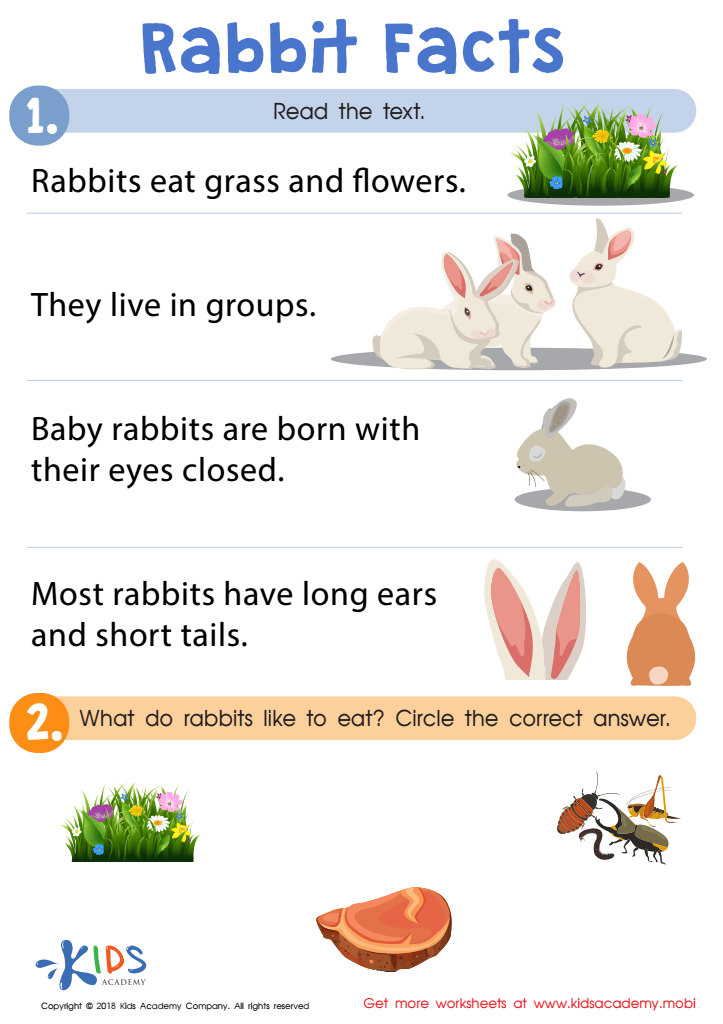
Rabbit Facts Worksheet








Understanding animal knowledge through non-fiction reading is crucial for 6-year-olds, and here’s why parents and teachers should actively promote it.
First, non-fiction animal books stimulate curiosity. Children are naturally fascinated by animals, and engaging with factual texts can provide them with insights into the diverse life forms that share our planet. This not only emphasizes the importance of wildlife and ecosystems but also fosters a sense of responsibility towards nature and conservation.
Second, reading non-fiction enhances critical thinking skills. As children learn about different species, their habitats, behaviors, and characteristics, they begin to ask questions and form connections, laying the foundation for scientific inquiry. This exploration encourages them to analyze information and differentiate between fact and fiction.
Moreover, integrating animal knowledge reading into their routine supports language development. Rich vocabulary related to biology and environment is introduced, which enhances comprehension and communication skills.
Additionally, instilling a love for reading at an early age builds literacy skills crucial for school success. Non-fiction texts provide relatable and engaging content, making reading enjoyable.
Finally, learning about animals can foster empathy and compassion in young learners, as they begin to understand and appreciate the complexities of life around them. This holistic approach creates well-rounded, environmentally conscious individuals.








