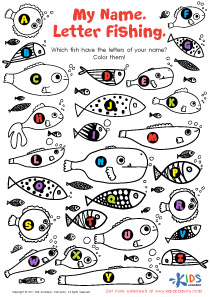
Alphabet understanding ABC Order Worksheets for Ages 7-8
3 filtered results
-
From - To
Boost your child's alphabet skills with our "Alphabet Understanding ABC Order Worksheets" designed for kids ages 7-8. These engaging and educational worksheets help young learners master alphabetical order, an essential step in language development. Tailored to improve sorting and sequencing skills, these exercises make learning fun with interactive, age-appropriate activities. Our expertly crafted worksheets are a valuable resource for both parents and teachers, ensuring children enhance their reading and writing abilities efficiently. Visit us today at Kids Academy to explore our printable collection that supports your child's journey to becoming proficient in alphabet understanding and alphabetical order.
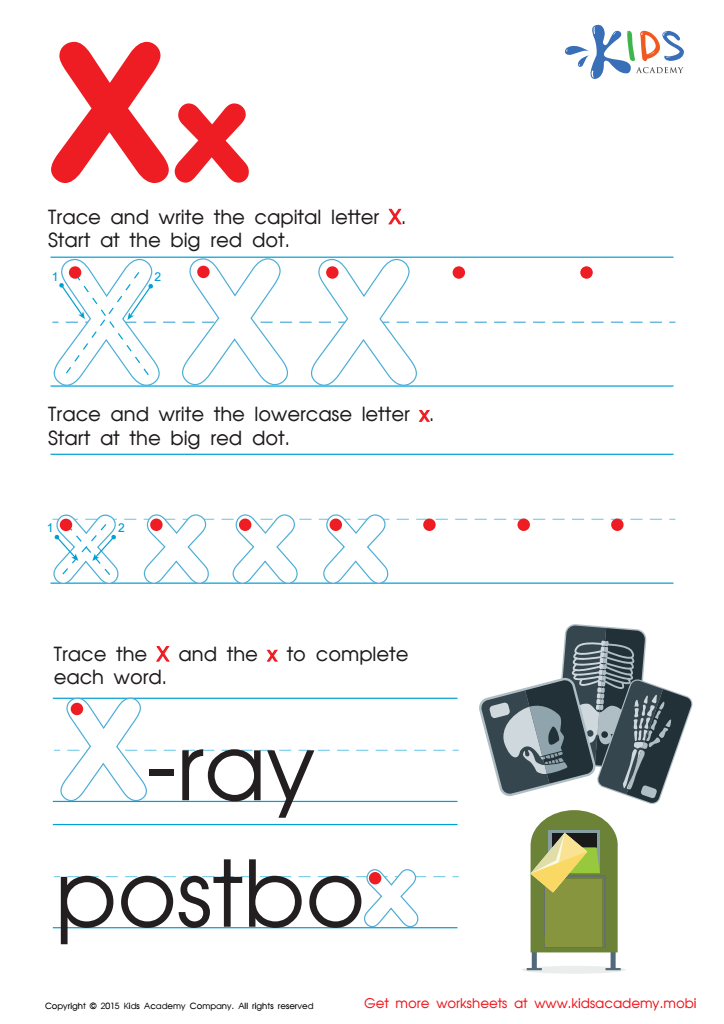
Letter X Tracing Page
 Assign to My Students

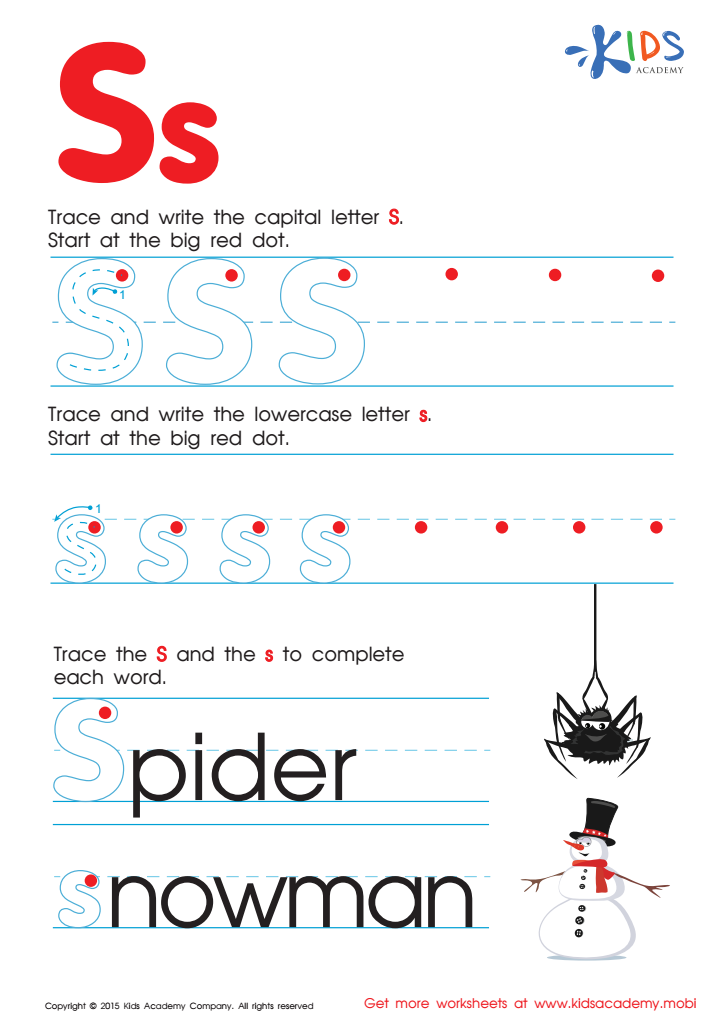
Letter S Tracing Page
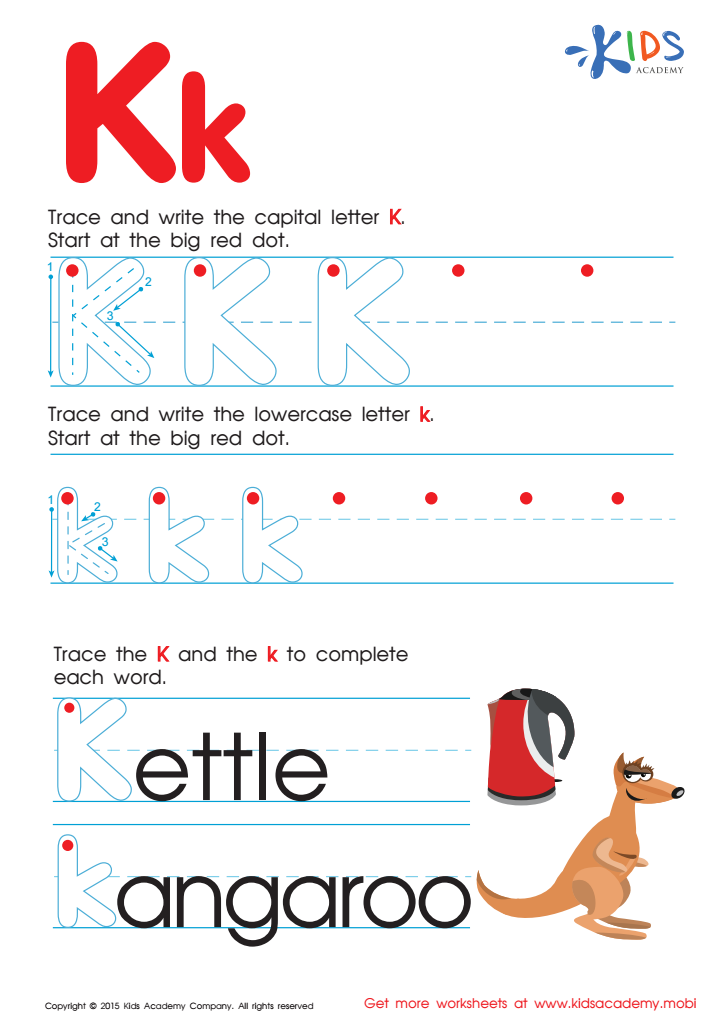
Letter K Tracing Page







Understanding the alphabet and ABC order is foundational for children aged 7-8, marking a critical stage in their literacy development. For parents and teachers, nurturing this understanding is essential for several reasons. Firstly, alphabetic knowledge underpins reading skills. Familiarity with letter shapes, sounds, and sequences helps children decode words efficiently. This improves their reading fluency and lays the groundwork for comprehension.
Secondly, knowledge of ABC order is crucial for developing organizational skills. Children learn how to organize thoughts, ideas, and materials systematically. This skill extrapolates to various academic tasks, such as writing summaries, classifying information, and using reference tools like dictionaries and encyclopedias.
Moreover, mastering the alphabet boosts a child's confidence and enthusiasm for learning. Successful experiences in grasping these early concepts encourage a positive attitude towards school and further education.
Finally, in an increasingly digital world, knowing the alphabet fosters essential skills like keyboarding and navigating technology, where finding and organizing information often hinges on alphabetical order.
By prioritizing alphabet understanding, parents and teachers are supporting not just immediate literacy skills but also long-term academic success and effective life-long learning.