Handwriting improvement ABC Letters Worksheets for Ages 7-8
3 filtered results
-
From - To
Enhance your child's handwriting skills with our engaging ABC Letters Worksheets, specially designed for ages 7-8. These worksheets provide a fun and interactive way for young learners to practice letter formation, improve their motor skills, and develop a neat, legible handwriting style. Each worksheet features a variety of activities, from tracing to free writing, promoting confidence and mastery of both uppercase and lowercase letters. Ideal for home or classroom use, our handwriting worksheets encourage creativity while reinforcing essential literacy skills. Support your child's educational journey and witness their handwriting flourish with our thoughtfully crafted resources!
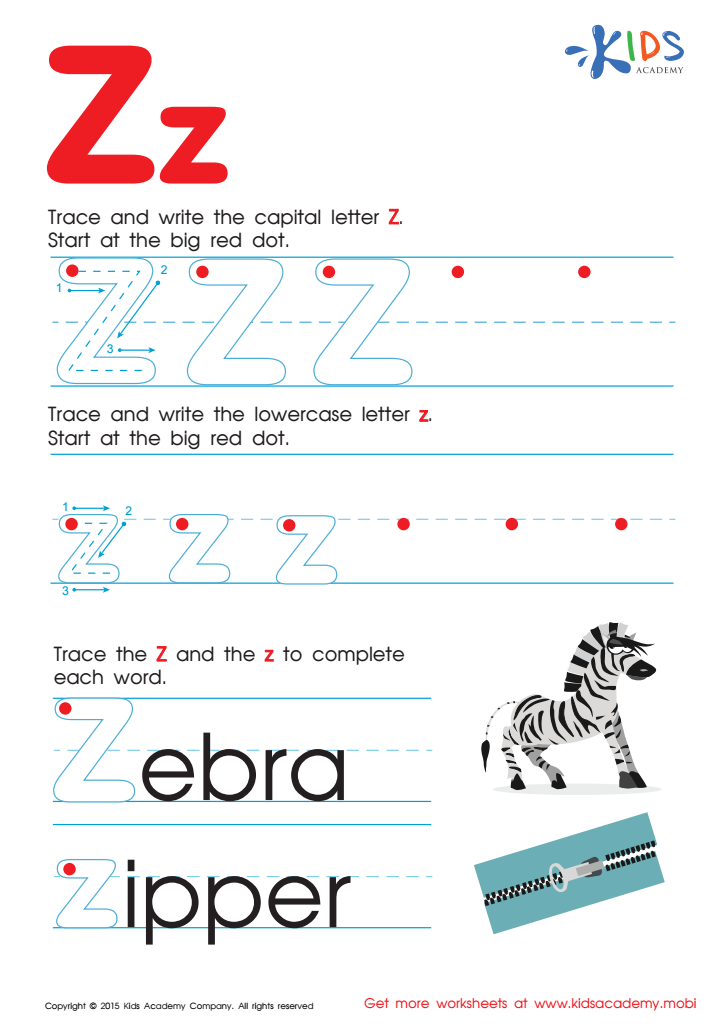
Letter Z Tracing Page
 Assign to My Students









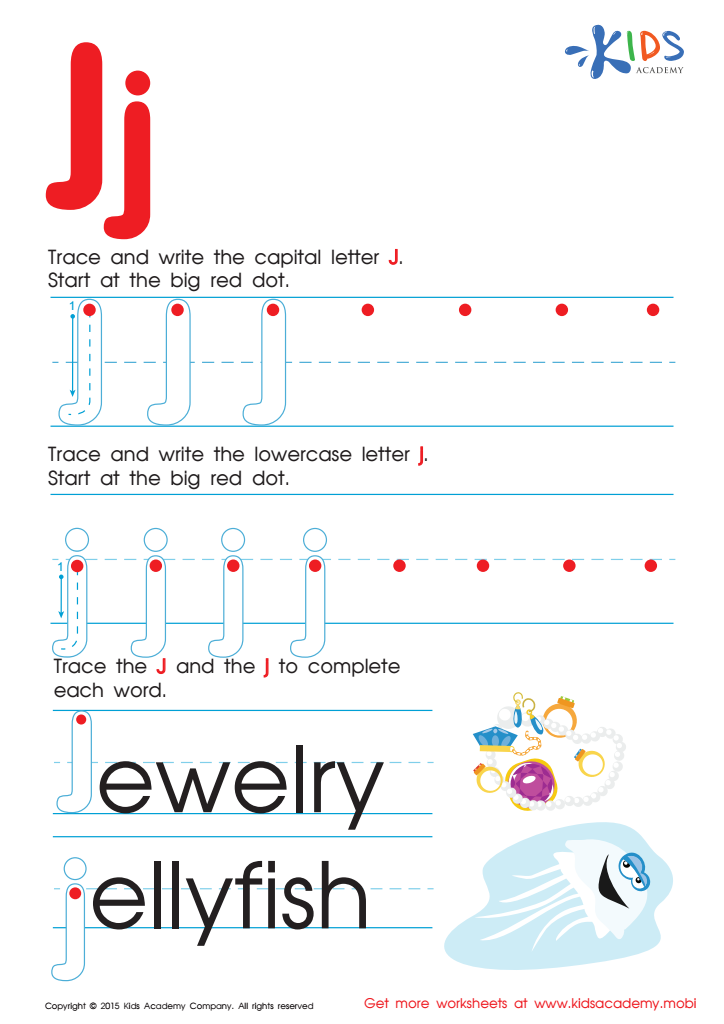
Letter J Tracing Page
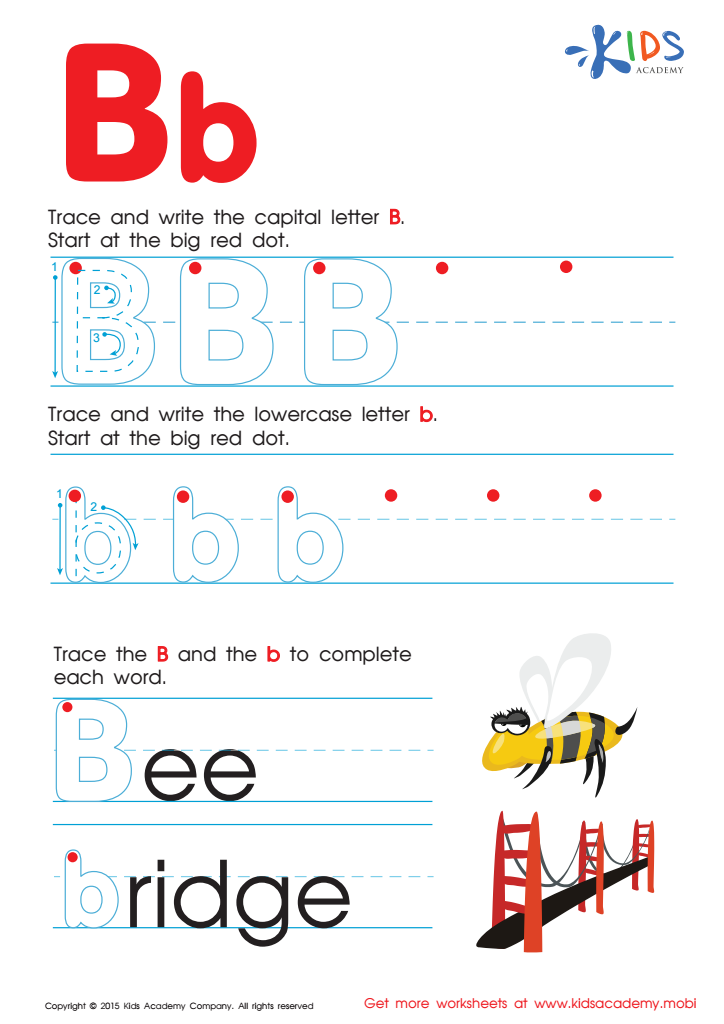
Letter B Tracing Page







Handwriting improvement for children aged 7-8 is crucial for several reasons. At this developmental stage, kids are refining their motor skills and enhancing their cognitive abilities. Improving handwriting aids in the development of fine motor skills, which are essential for a range of everyday tasks. Clear, legible handwriting fosters effective communication, enabling children to express their thoughts and ideas more confidently in written form.
Moreover, handwriting is linked to academic success. The ability to write neatly can influence a child's performance in school settings, as teachers often assess written assignments based on clarity and presentation. Children who struggle with penmanship may feel frustrated, leading to decreased motivation and self-esteem.
Additionally, handwriting practice supports cognitive development by encouraging critical thinking and organization. It reinforces letter recognition and spelling skills, which are foundational for literacy. In this digital age, where typing often overshadows handwriting, fostering a strong writing foundation is essential for maintaining creativity and personal expression.
Incorporating handwriting improvement activities into daily routines can make learning fun and engaging, ultimately fostering a lifelong love for writing and learning. Parents and teachers should prioritize handwriting improvement to equip children with the tools necessary for effective communication and overall academic success.







