Letter recognition Letter Q Worksheets for Ages 7-8
3 filtered results
Difficulty Level
Grade
Age
-
From - To
Subject
Activity
Standards
Boost your child's letter recognition skills with our engaging Letter Q Worksheets tailored for ages 7-8. These expertly designed worksheets combine fun activities with effective learning techniques to help children master the alphabet. Each sheet includes tracing, writing exercises, and creatively themed Q-related illustrations to make learning enjoyable. With a strong focus on the letter Q, your child will build confidence and improve their literacy skills, all while exploring new words and concepts. Perfect for classroom or home use, these worksheets are a valuable resource for guiding young learners toward reading success.
Favorites
With answer key
Interactive
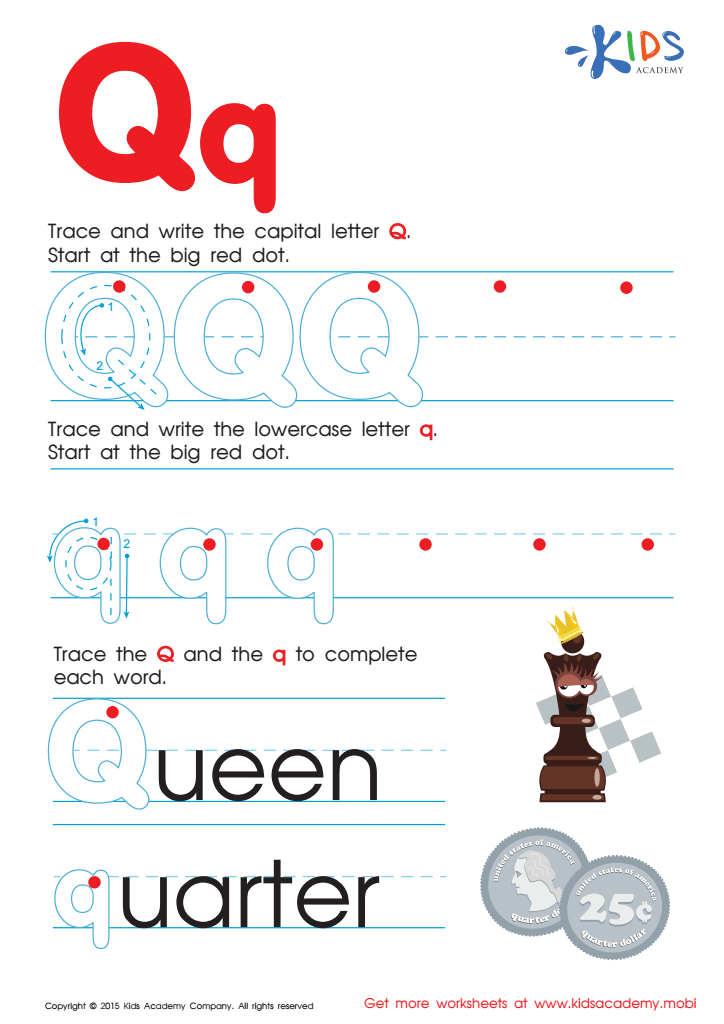
Letter Q Tracing Page
Learn the letter "Q"! Trace and write it a few times in upper and lowercase. Then help the Queen by writing her initial letter. Finally, write "quarters" and practice with more alphabet worksheets.
Letter Q Tracing Page
Worksheet
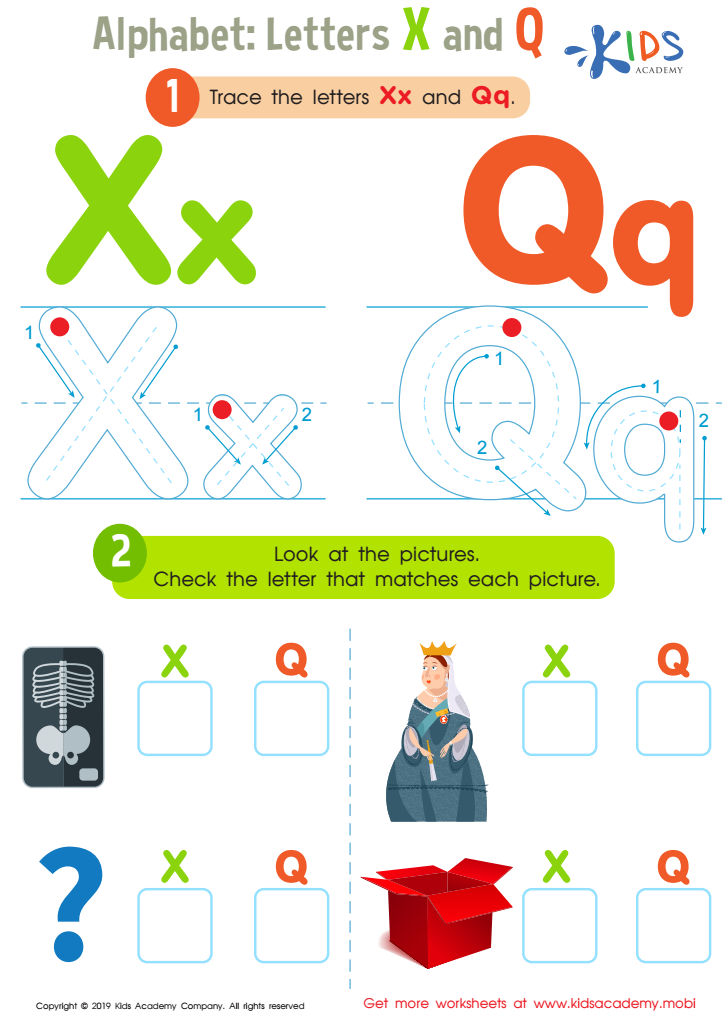
Letters X and Q Tracing Worksheet
Do you want your students to improve writing and letter recognition? This worksheet is a great place to start! Kids can trace the letters «X» and «Q» and identify pictures that match each letter. With a little encouragement, they'll do a great job!
Letters X and Q Tracing Worksheet
Worksheet
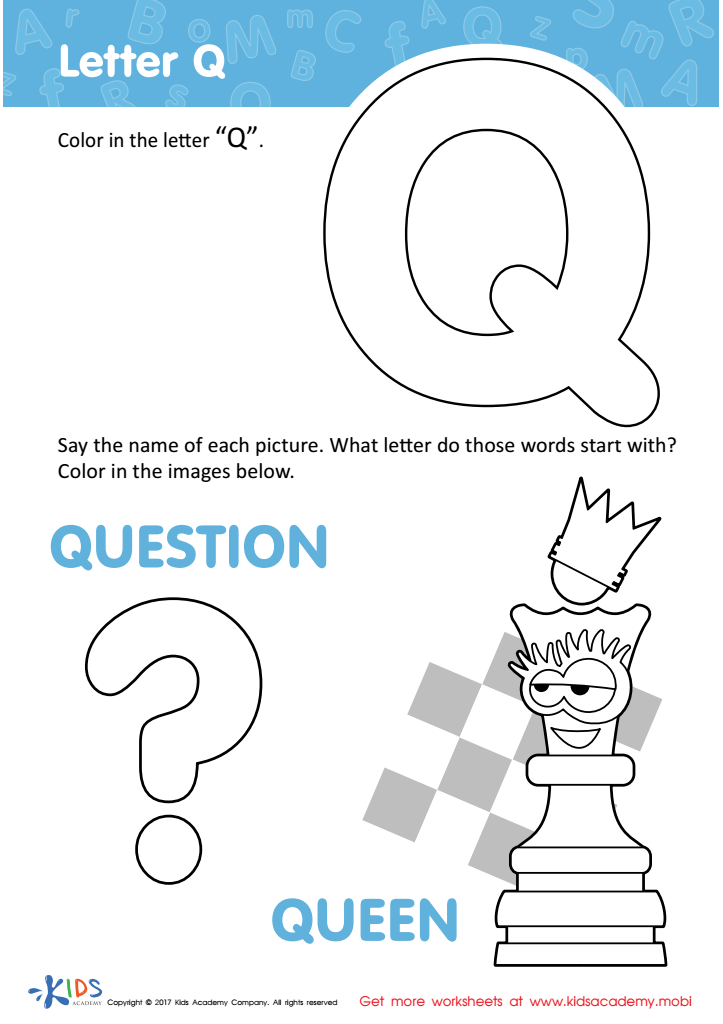
Letter Q Coloring Sheet
Kids need practice with letters not seen often. Give your child a boost with this letter "Q" coloring page! Have them color in the queen and question mark, while learning the sound "Q" makes. Fun and educational!
Download (PDF)
 Assign to My Students
Assign to My Students
Letter Q Coloring Sheet
Worksheet
Join Kids Academy for Free
Who is primarily going to use this learning content?





Letter recognition is a foundational skill crucial for early literacy development, and understanding the letter 'Q' is no exception. For children aged 7-8, mastery of letter recognition forms the bedrock of reading and writing fluency. Without recognizing letters, children struggle to decode words, severely hampering their progression in school.
Focusing on the specific intricacies of less frequently used letters like 'Q' ensures thoroughness in a child’s educational development. While 'Q' might not appear as often as some other letters, it is integral to many common words and blends, such as “quick,” “queen,” or “quit.” Proper understanding of its unique phonetic qualities—often coming in the “qu-” combination—enables children to recognize and pronounce words correctly. This serves as a stepping stone for vocabulary building, spelling accuracy, and reading fluency.
Furthermore, knowing that 'Q' is almost always followed by 'U' aids phonics and orthographic knowledge, equipping children with pattern recognition skills that support more advanced literacy tasks. Encouraging early and consistent practice with every letter, including 'Q,' ensures no gaps in letter recognition, fostering a confident, enthusiastic approach to learning that benefits the child's overall academic experience. Hence, both parents and teachers play pivotal roles in reinforcing these competencies during this critical development stage.