
Alphabet Learning Letter Recognition Worksheets for Ages 7-8
3 filtered results
Difficulty Level
Grade
Age
-
From - To
Subject
Activity
Standards
Enhance your child's reading skills with our engaging Alphabet Learning Letter Recognition Worksheets tailored for ages 7-8. Designed to make learning fun and interactive, these worksheets offer activities that help children identify, match, and write letters. By combining visuals with practice exercises, children will develop confidence in their alphabet knowledge. Our printable resources cater to different learning styles, ensuring every child can thrive. Perfect for homeschooling or classroom use, these worksheets support early literacy development while sparking a love for learning. Explore our collection today and give your child the essential skills they need for reading success!
Favorites
With answer key
Interactive
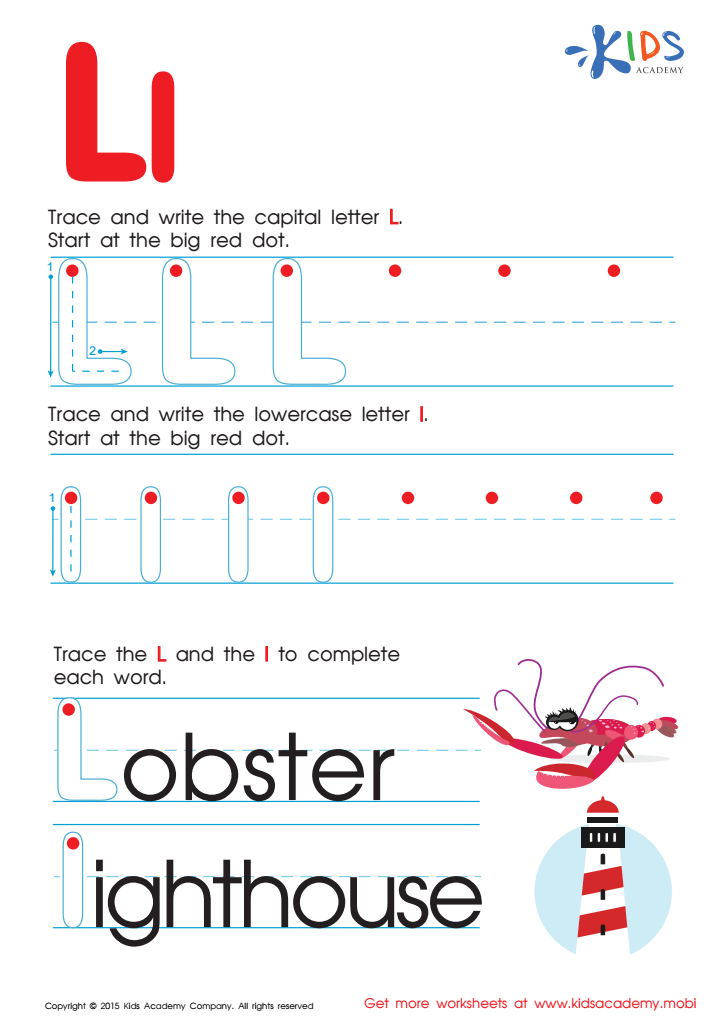
Letter L Tracing Page
Trace uppercase and lowercase letters to practice writing. Pay attention to the lowercase letters, like the "L", that are not as tall as an uppercase "I" or as short as a lowercase "i". Words like "lobster" and "lighthouse" are waiting to be completed. Enjoy!
Letter L Tracing Page
Worksheet
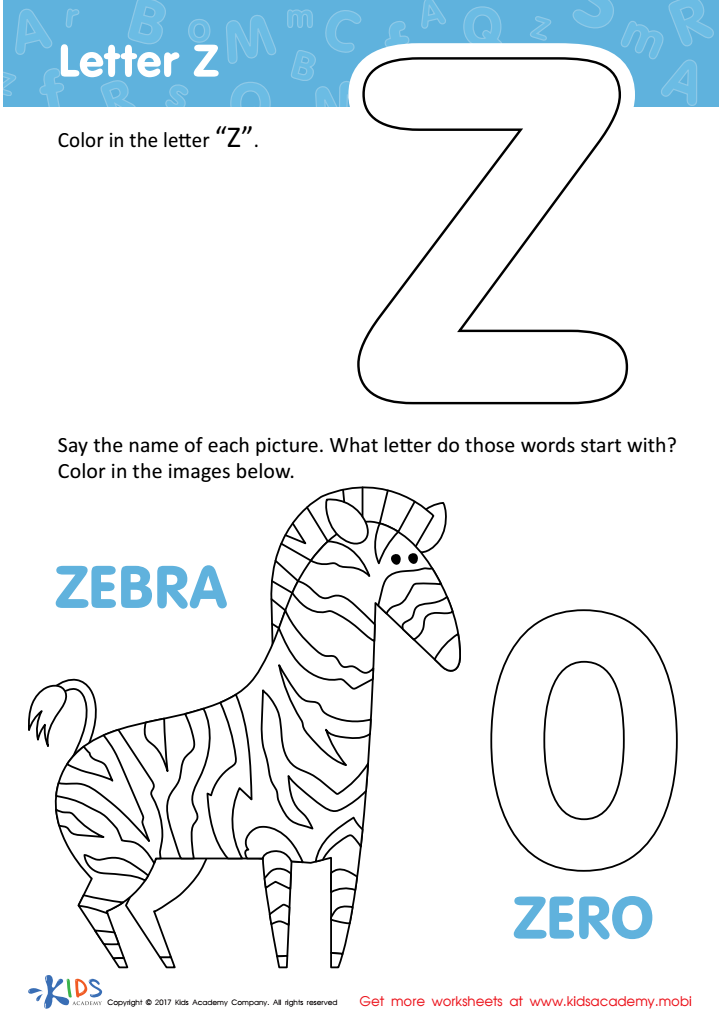
Letter Z Coloring Sheet
This coloring page featuring the letter "Z" is perfect for your child to practice letter recognition! Help them learn the unique sound it makes as they color. It'll be a fun and easy activity they won't have trouble with!
Download (PDF)
 Assign to My Students
Assign to My Students
Letter Z Coloring Sheet
Worksheet
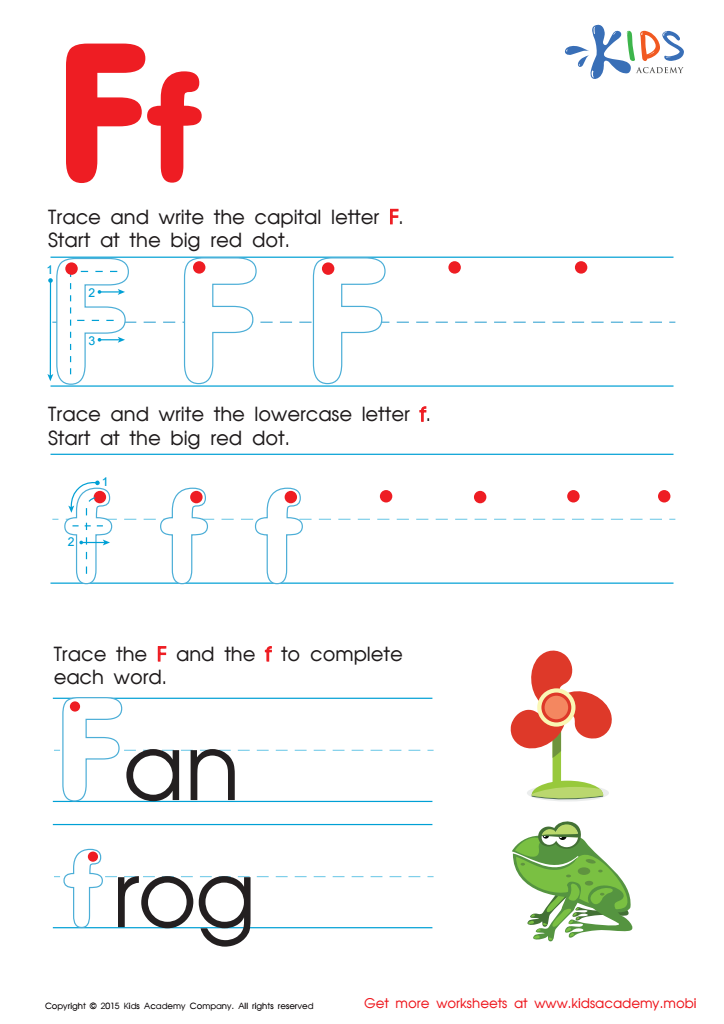
Letter F Tracing Page
Trace "F" with your pencil! Start at the red dot and draw lines — it's fun! Check it out — it looks great! Keep practicing to make it even better. Then, try completing words. Help out the broken fan and funny frog! Get free alphabet worksheets and activities for your kids. Come see our new tracing pages!
Letter F Tracing Page
Worksheet
Join Kids Academy for Free
Who is primarily going to use this learning content?








Alphabet learning and letter recognition are foundational skills that significantly influence children's literacy development, especially for ages 7-8. At this age, children transition from learning to read to reading to learn, making letter recognition crucial. Parents and teachers should prioritize this skill as it forms the basis for vocabulary development, spelling, and writing proficiency.
Recognizing letters quickly and accurately boosts children's confidence when engaging with texts, fostering a love for reading. Additionally, these skills enhance phonemic awareness, which is the ability to hear, identify, and manipulate sounds, further supporting reading skills. When children master letter recognition, they also develop better comprehension skills, as they can focus on understanding text rather than deciphering it.
Moreover, early mastery of these skills can help identify children who may need additional support. With timely intervention, educators and parents can address any challenges, setting the stage for successful literacy outcomes.
In a digital age filled with content, being proficient in letter recognition empowers children to navigate various texts, including educational material, and explore creative expressions through writing. Thus, investing in letter recognition at this critical learning stage is essential for long-term academic success and personal growth.







