Fine motor skills development Letter Recognition Worksheets for Ages 7-8
3 filtered results
-
From - To
Discover our Fine Motor Skills Development Letter Recognition Worksheets specifically designed for ages 7-8. These engaging worksheets not only help children recognize and differentiate letters but also enhance their fine motor skills through fun tracing and writing activities. Tailored to keep young learners motivated, each worksheet offers a creative approach to learning, blending education with enjoyment. Ideal for both classrooms and at-home practice, our worksheets provide a solid foundation for literacy, ensuring your child excels in reading and writing. Start your child's journey towards successful learning with our expertly crafted resources at Kids Academy.
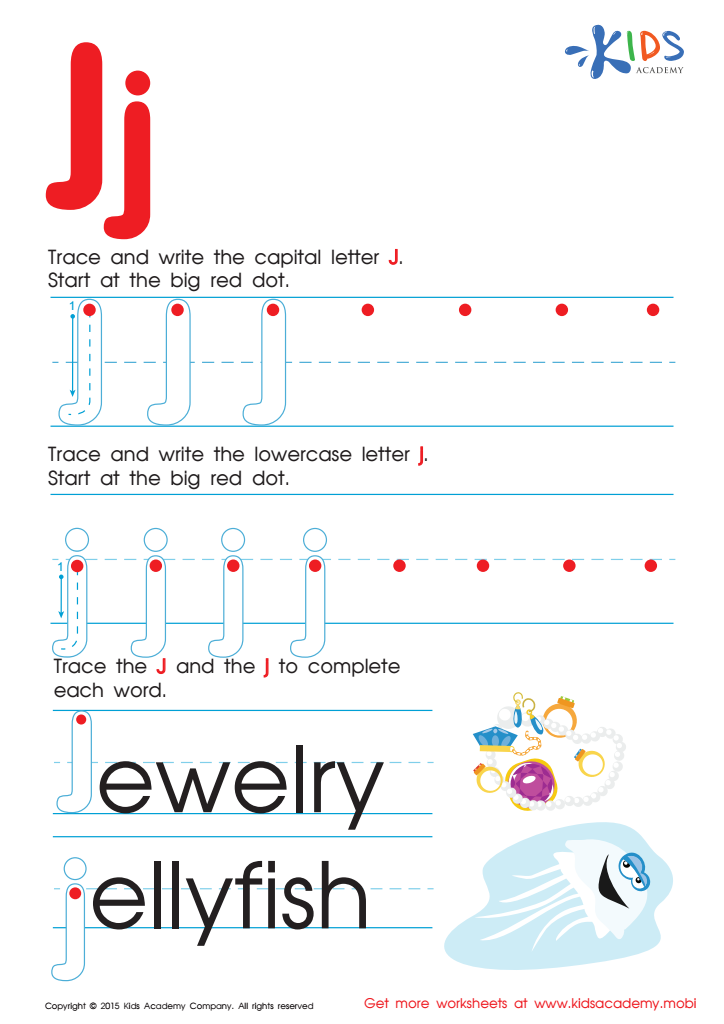
Letter J Tracing Page
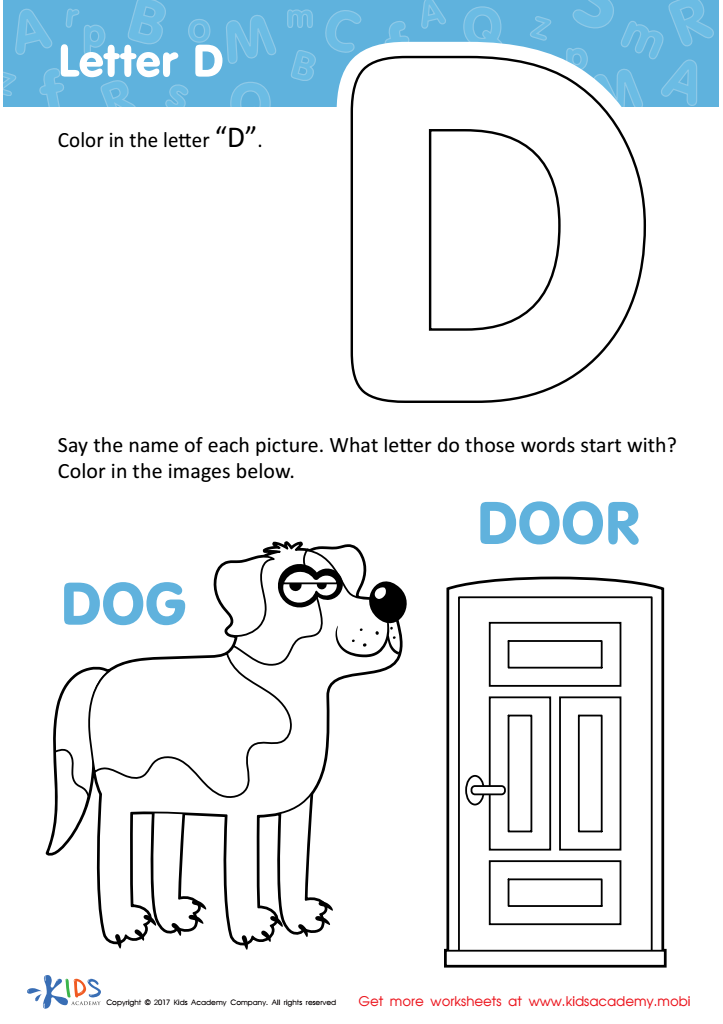
Letter D Coloring Sheet
 Assign to My Students
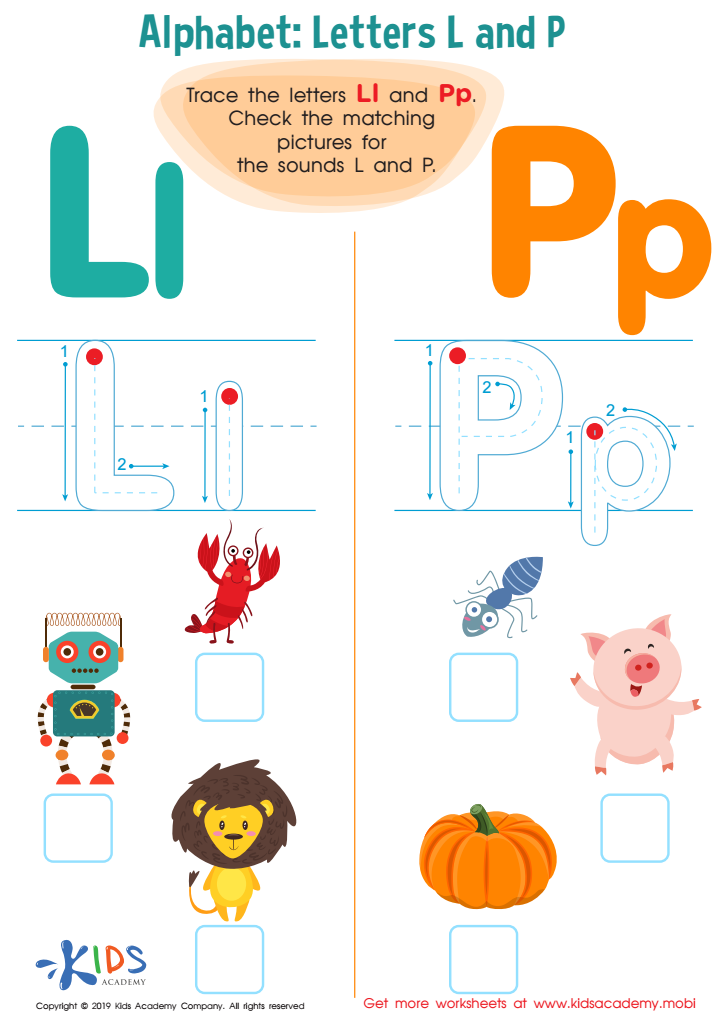
Letter L and P Tracing Worksheet








Fine motor skills development and letter recognition are foundational elements in a child's educational journey, especially for children aged 7-8. At this critical age, children are transitioning from early learning stages to more structured academic settings, where enhanced fine motor skills are pivotal. These skills involve the coordinated efforts of the brain and muscles to execute small, precise movements, such as writing, cutting, and buttoning. Proficient fine motor control allows children to hold a pencil correctly, write legibly, and complete detailed tasks efficiently, which, in turn, boosts their confidence and independence.
Letter recognition is equally crucial as it directly impacts reading and writing proficiency. Recognizing and distinguishing letters fluently lays the groundwork for phonics, spelling, and word recognition. It helps children understand the relationship between letters and sounds, facilitating their reading skills and comprehension. Similarly, it aids in accurate and speedy writing, reducing frustration and enhancing academic performance.
For parents and teachers, nurturing these skills ensures children have the necessary tools to succeed academically and socially. Activities like tracing letters, playing with modeling clay, or engaging in games that involve letter identification can make learning enjoyable and effective. Monitoring and supporting these developmental areas ultimately contribute to a child’s overall cognitive growth and school readiness.







