
Handwriting improvement Letter Recognition Worksheets for Ages 7-8
3 filtered results
Difficulty Level
Grade
Age
-
From - To
Subject
Activity
Standards
Welcome to our "Handwriting Improvement Letter Recognition Worksheets for Ages 7-8" page! Designed specifically for children in this age group, our worksheets focus on enhancing handwriting skills while reinforcing letter recognition. Each activity engages young learners through interactive exercises that promote fine motor skills and letter familiarity. The worksheets include tracing, writing, and identification tasks tailored to support children’s developmental needs. By integrating fun and learning, we aim to boost both confidence and competence in handwriting. Explore our variety of resources to help your child master their letters and emerge as confident writers. Start their handwriting journey today!
Favorites
With answer key
Interactive
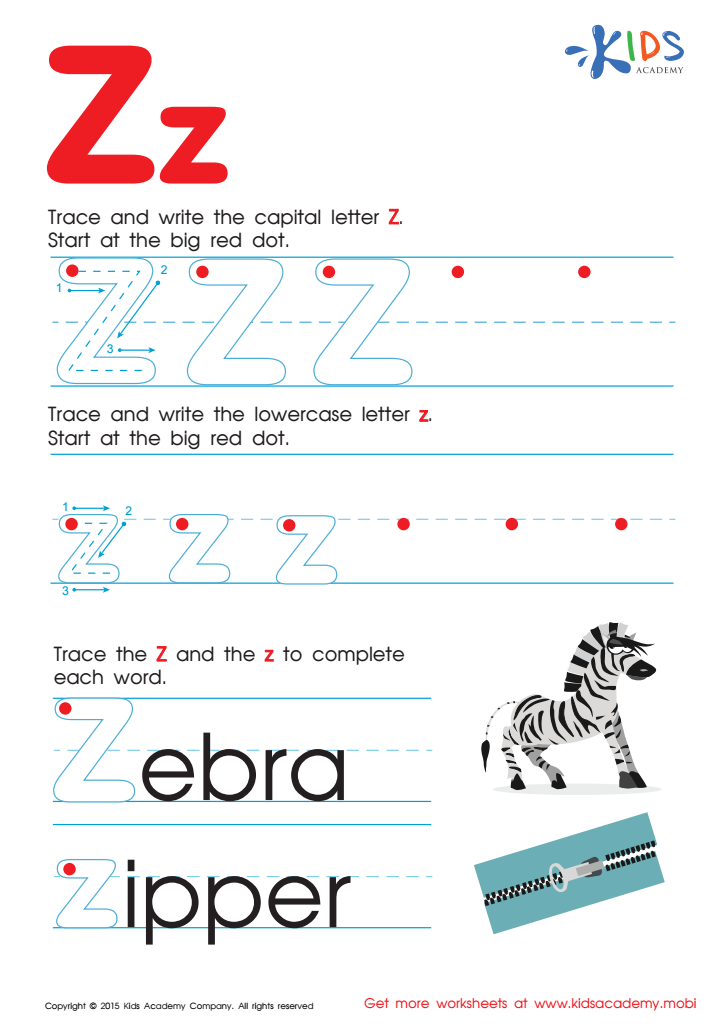
Letter Z Tracing Page
Trace and write capital "Z" and lowercase "z". Complete words "zebra" and "zipper". Be attentive and have fun! (80 words)
 Assign to My Students
Letter Z Tracing Page
Worksheet
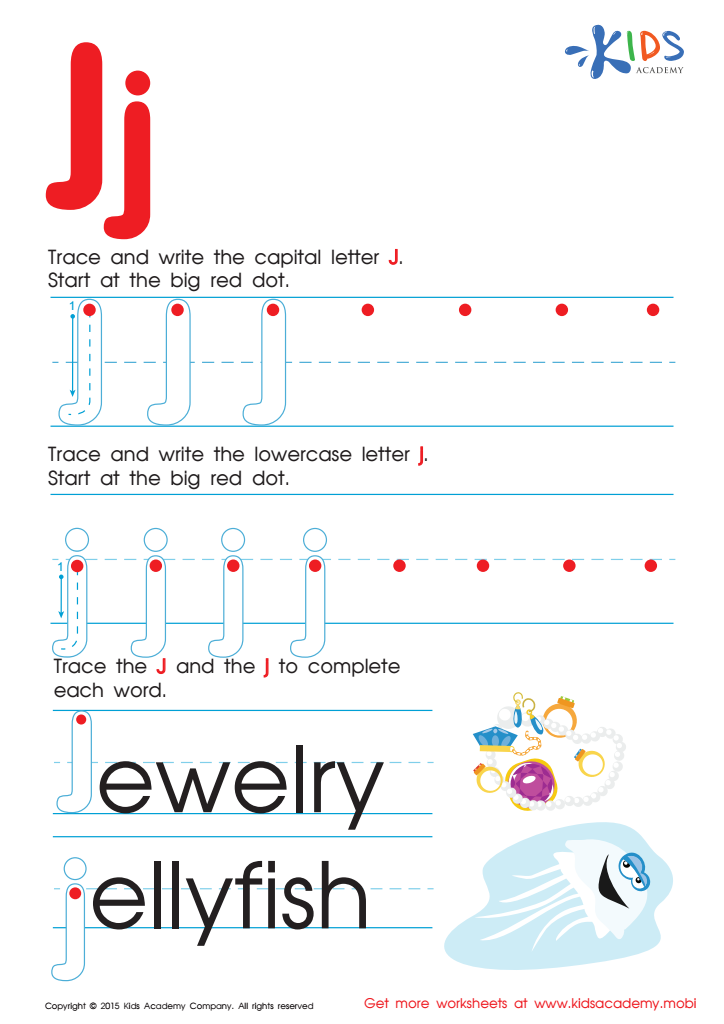
Letter J Tracing Page
Trace and write the letter "J" with our ABC worksheet - start at the big red dot! Have fun completing words like jewelry, jellyfish and more. Check out our kindergarten activities for more alphabet practice.
Letter J Tracing Page
Worksheet
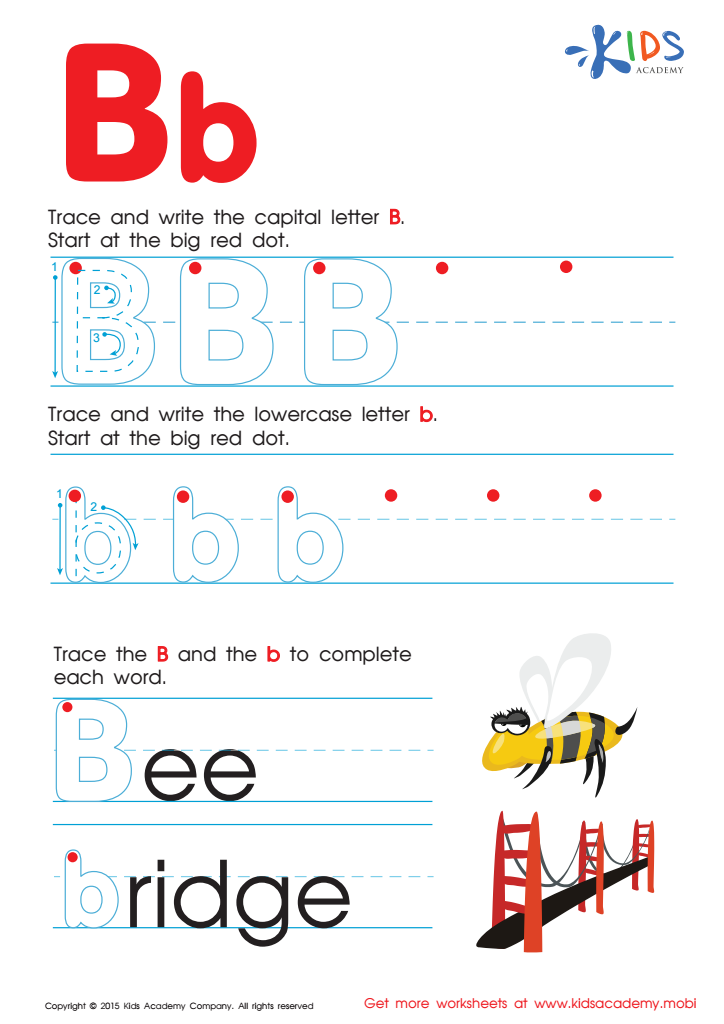
Letter B Tracing Page
Ready to learn the Alphabet? Put your pencil on the red dot and trace & write both capital & lowercase "B". Then have a look at the pictures. Catch the bee, cross the bridge & write the letters to complete the words. More ABC worksheets for kindergarten available!
Letter B Tracing Page
Worksheet
Join Kids Academy for Free
Who is primarily going to use this learning content?








Handwriting improvement and letter recognition are critical skills for children aged 7-8 as they lay the foundation for effective communication and literacy development. At this stage, children transition from learning basic letter shapes and sounds to reading and writing more complex sentences and ideas. Clear handwriting helps ensure that their thoughts and understanding can be articulated accurately on paper, boosting their confidence in academic settings.
Moreover, letter recognition is essential for reading proficiency. Children need to automatically recognize letters to decode words and comprehend texts. When parents and teachers actively support handwriting improvement and enhance letter recognition, they help instill not only foundational literacy skills but also a value for neatness and attention to detail. This in turn greatly impacts a child's ability to express themselves creatively and academically.
Additionally, strong handwriting skills encourage independence as children progress in their education. Parents and teachers can facilitate an engaging learning environment that integrates writing exercises and fun letter recognition games. Overall, by prioritizing these skills, caregivers and educators promote a more seamless transition in literacy, equipping children to excel in both written and verbal communication.







