
Letter tracing skills Letter Recognition Worksheets for Ages 7-8
3 filtered results
Difficulty Level
Grade
Age
-
From - To
Subject
Activity
Standards
Help your child master essential letter tracing and recognition skills with our engaging worksheets designed for ages 7-8. These interactive resources promote fine motor development and reinforce letter identification, making learning fun and effective. Each worksheet provides tracing opportunities, ensuring your child learns both uppercase and lowercase letters. As they practice, they'll build confidence in their handwriting skills while enhancing their overall literacy. Perfect for at-home learning or classroom activities, these worksheets cater to diverse learning styles and keep children motivated. Explore our collection today and support your child's journey toward literacy success with engaging letter tracing experiences!
Favorites
With answer key
Interactive
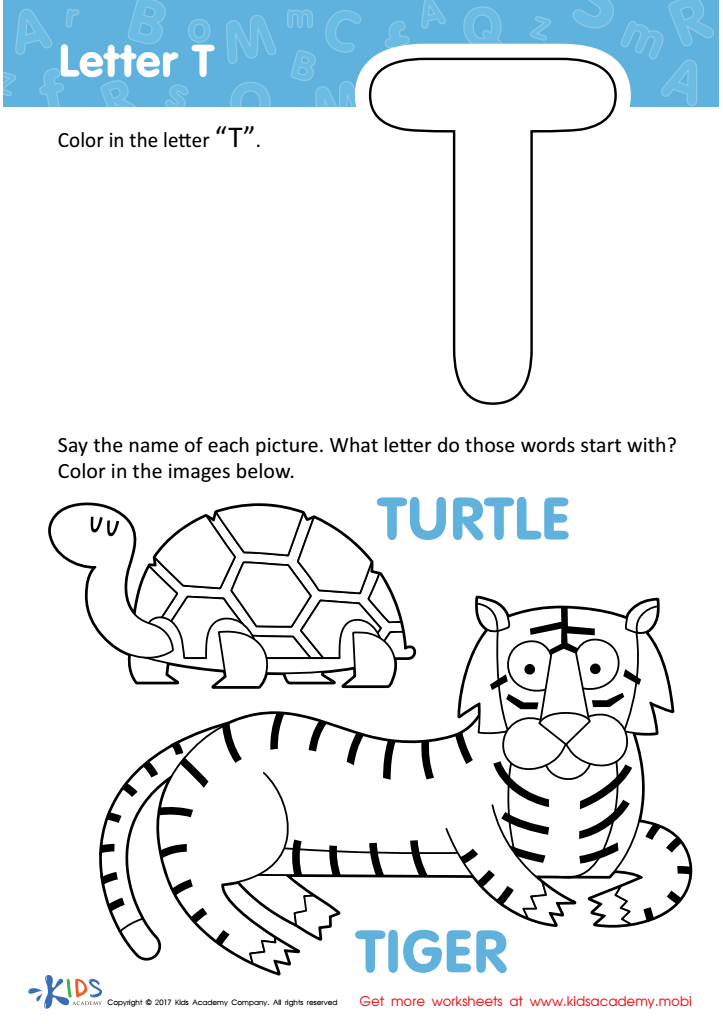
Letter T Coloring Sheet
Introduce your child to the letter "T" and its animals – turtles and tigers! With this coloring page, you can stimulate your child's imagination and creativity, while helping them recognize the letter "T". Have fun with your child and get coloring!
Download (PDF)
 Assign to My Students
Assign to My Students
Letter T Coloring Sheet
Worksheet

Letter C Tracing Page
Trace and write the letter 'C'! Put the pencil at the red dot then follow the lines – the capital letter first then the lowercase one. Cats love it and so will you! Get more free printables to practice tracing and writing.
Letter C Tracing Page
Worksheet
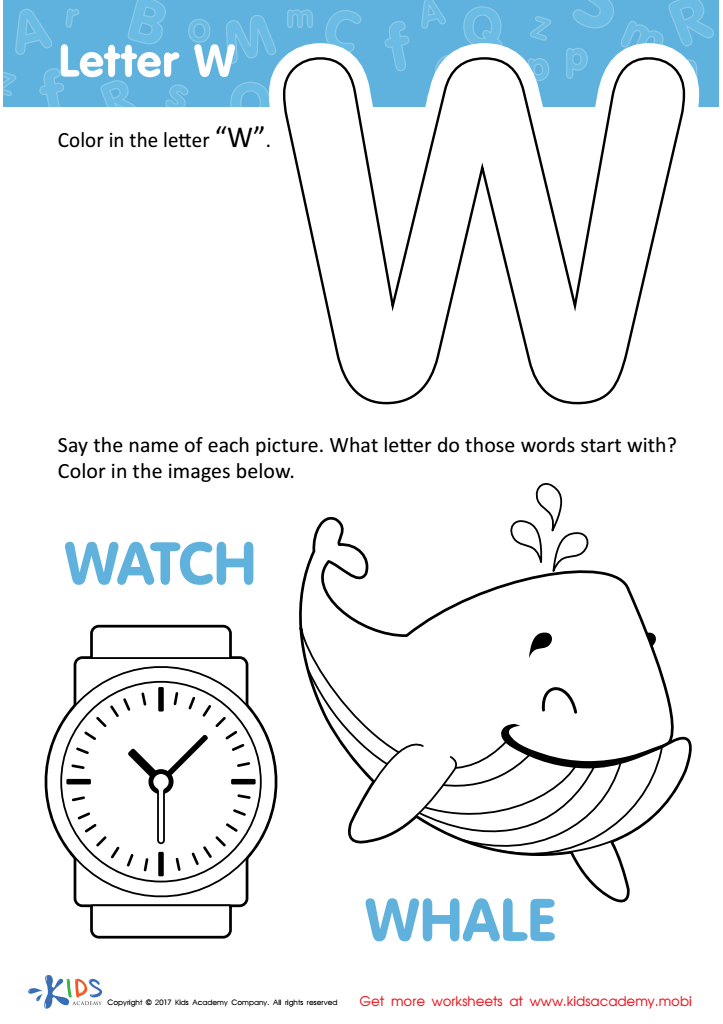
Letter W Coloring Sheet
Let your child have fun with this letter "W" coloring page! They can use their imagination to color the whale and discover the letter and its sound. Give them a helping hand to make it a whale of a time!
Download (PDF)
Assign to My Students
Assign to My Students
Letter W Coloring Sheet
Worksheet
Join Kids Academy for Free
Who is primarily going to use this learning content?








Letter tracing and recognition are crucial skills for children aged 7-8, as they build the foundation for literacy and academic success. At this age, students transition from simple letter identification to comprehension and written expression. By mastering letter tracing, children enhance their fine motor skills, crucial for handwriting, which directly impacts their ability to express thoughts on paper.
Furthermore, these skills are interlinked with phonological awareness, leading to better reading abilities. When children recognize letters and practice tracing them, they can connect sounds with corresponding letters, facilitating the reading process. Strong letter recognition skills not only improve reading fluency but also boost confidence in young learners, as they feel more capable of tackling classroom assignments.
Moreover, effective letter tracing exercises can develop focus and patience, which are essential attributes for academic success. Engaging in these activities fosters a positive attitude towards learning, encouraging children to explore writing creatively and communicate effectively. As both teachers and parents, they play a vital role in nurturing these foundational skills, understanding that investment in letter tracing and recognition now sets the stage for lifelong literacy and academic achievement later in life.







