Handwriting practice Letter U Worksheets for Ages 7-8
3 filtered results
Difficulty Level
Grade
Age
-
From - To
Subject
Activity
Standards
Enhance your child’s handwriting skills with our engaging Letter U worksheets, designed specifically for ages 7-8! These worksheets promote handwriting practice through a variety of fun exercises, helping young learners develop fine motor skills while mastering the intricacies of writing the letter U. Each worksheet includes traceable letters, practice lines, and creative activities to reinforce letter recognition and correct formation. Our activities not only strengthen handwriting but also engage children with exciting themes linked to the letter U. Perfect for home or classroom use, these worksheets are a delightful way to foster your child's writing confidence and literacy growth. Start your handwriting journey today!
Favorites
With answer key
Interactive
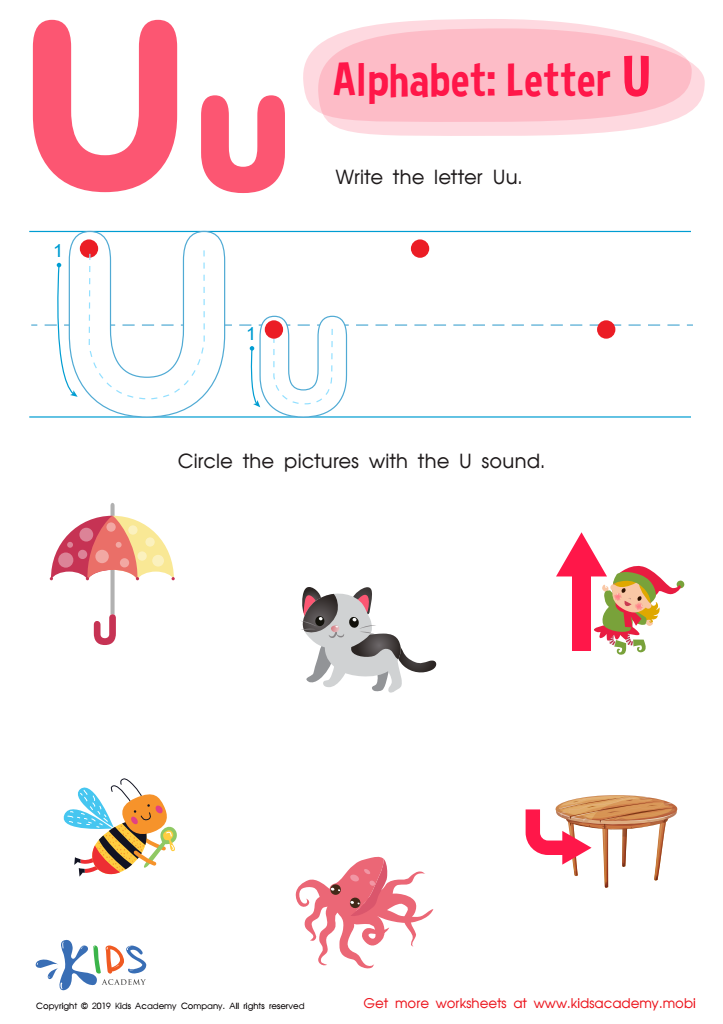
Letter U Tracing Worksheet
Your students can have fun and learn about the alphabet with this letter «U» worksheet. Pre-schoolers will trace the letter «U», circle words with the letter sound, and learn phonics while boosting their confidence. Doing these tasks will help them understand the letter more.
Letter U Tracing Worksheet
Worksheet
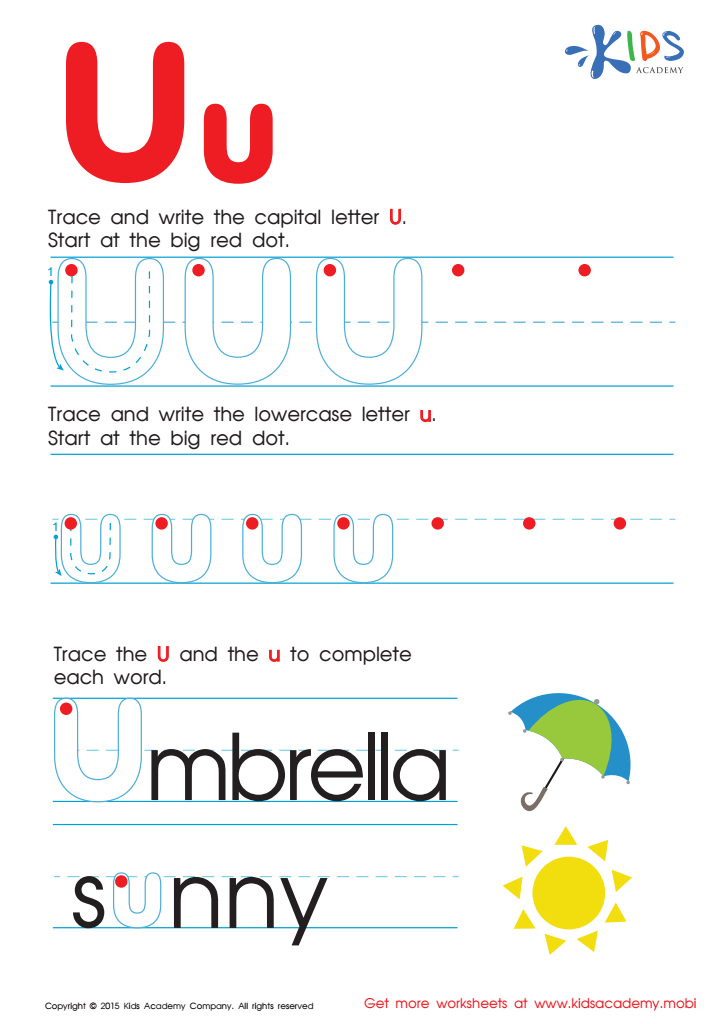
Letter U Tracing Page
Ready to trace and write the letter "U"? Use our worksheet and practice tracing both uppercase and lowercase letters. Complete the words "umbrella" and "sunny" with a capital "U". Check our full collection of alphabet printables for more activities.
Letter U Tracing Page
Worksheet
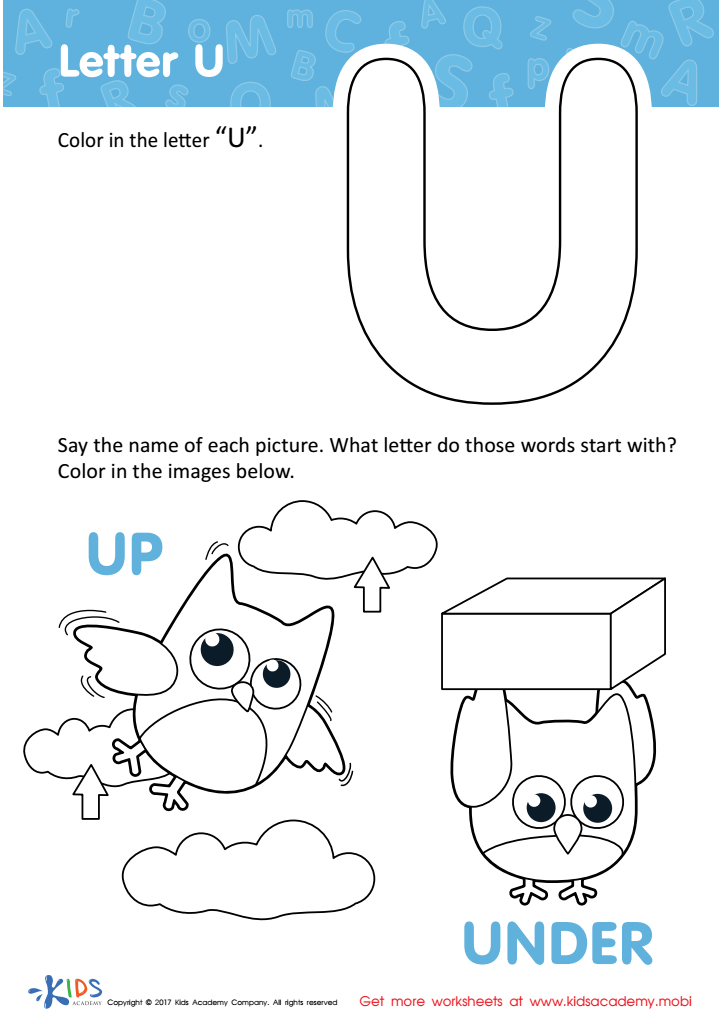
Letter U Coloring Sheet
This letter "U" coloring page helps your child learn two things at once - the letter "U" and positional words! An adorable owl character aids in understanding up and under. In a few strokes of a crayon, your child can master these concepts.
Download (PDF)
 Assign to My Students
Assign to My Students
Letter U Coloring Sheet
Worksheet
Join Kids Academy for Free
Who is primarily going to use this learning content?





Handwriting practice, particularly for specific letters like "U," is vital for children aged 7-8 as they are solidifying their writing skills, which are crucial for effective communication. At this stage, children are refining their fine motor skills, and practicing handwriting helps improve their hand-eye coordination, dexterity, and muscle memory. The formation of letters directly impacts their ability to express themselves clearly in writing, influencing their academic performance across subjects.
Furthermore, consistent handwriting practice fosters confidence in young learners. A well-formed "U" sets the foundation for writing other letters, especially those that are similar in structure, thus aiding in the development of overall penmanship. When children take pride in their handwriting, they are more likely to engage with written tasks and show enthusiasm for learning.
Additionally, handwriting practice can enhance cognitive development. As students practice writing the letter "U," they are also exercising memory and concentration skills which are transferable to other areas of learning. For parents and teachers, facilitating and encouraging handwriting practice can lead to improved literacy skills and a stronger sense of achievement and motivation in children, ultimately making learning a more enjoyable experience. Supporting this critical skill in young learners is essential for their academic journey.