Vocabulary expansion Long And Short Vowel Worksheets for Ages 7-8
4 filtered results
-
From - To
Enhance your child's reading skills with our "Vocabulary Expansion Long and Short Vowel Worksheets" designed for ages 7-8. These engaging worksheets focus on identifying and using long and short vowel sounds to bolster vocabulary and phonetic abilities. Perfect for classroom or home learning, kids will enjoy fun exercises that make mastering vowels intuitive and enjoyable. With a variety of activities, children can practice spelling, pronunciation, and word recognition, helping them become confident readers. Start enriching your child’s linguistic skills today with our expertly crafted vowel worksheets, tailored to support literacy development for young learners.
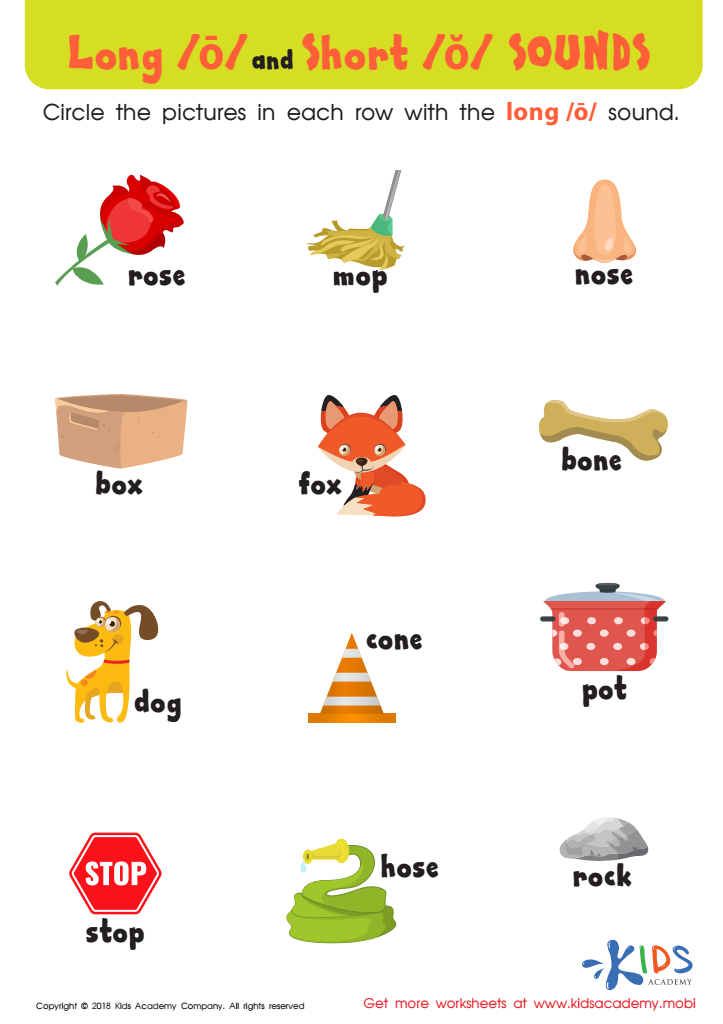
Reading: Long O and Short O Sounds Worksheet
 Assign to My Students
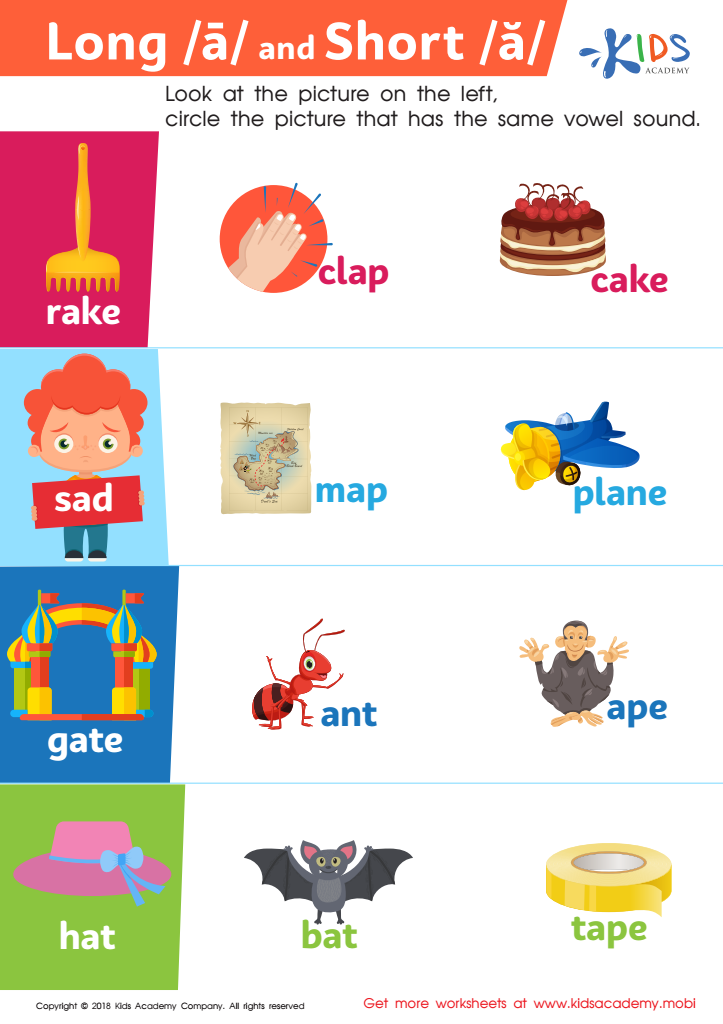
Reading: Long a and Short a Worksheet
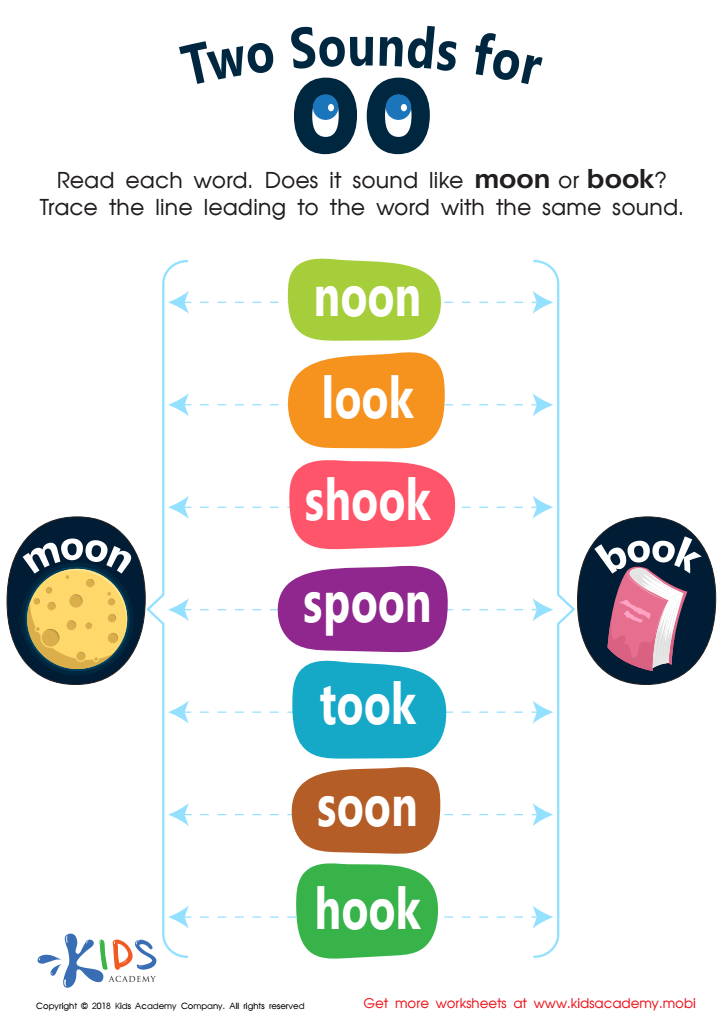
Two Sounds for OO Worksheet
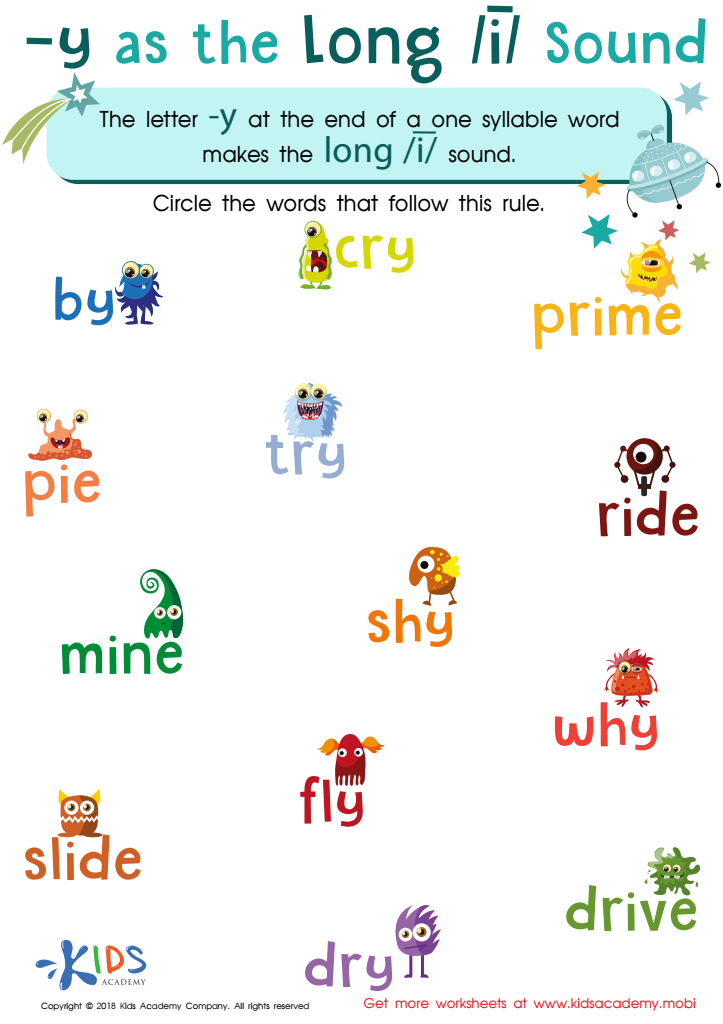
Reading: Y as Long I Worksheet




Vocabulary expansion and understanding long and short vowel sounds are fundamental for children ages 7-8, as these skills form the cornerstone of effective reading and writing. At this stage, children are transitioning from learning to read to reading to learn. Having a robust vocabulary enhances comprehension and encourages a love for reading by enabling children to understand a variety of texts. The richer their vocabulary, the easier they can make sense of complex ideas and engage with new and challenging material.
Understanding long and short vowel sounds is equally important. Phonemic awareness, particularly the ability to distinguish between long and short vowel sounds, improves children’s decoding skills. These decoding skills are essential for reading fluency, which refers to the ability to read with speed, accuracy, and proper expression. When children can quickly recognize and pronounce words correctly, their reading becomes more efficient and enjoyable.
Furthermore, proficiency in vocabulary and vowel sounds positively impacts written communication. Children who can draw from an extensive vocabulary and understand vowel sounds can produce clearer and more compelling writing, enhancing their ability to convey thoughts and narratives effectively.
In summary, focusing on vocabulary growth and mastery of vowel sounds at this critical developmental stage sets the foundation for future academic success and fosters lifelong literacy skills.