Rhyming skills development Rhyming Worksheets for Ages 7-8
4 filtered results
-
From - To
Enhance your child's language skills with our engaging Rhyming Worksheets designed for ages 7-8. These interactive resources promote essential rhyming skills that build vocabulary, improve phonemic awareness, and foster creativity in young learners. Each worksheet features fun activities that encourage children to identify, create, and match rhymes, making learning enjoyable and effective. Whether at home or in the classroom, our rhyming worksheets support developing critical reading and writing abilities, setting the foundation for future literacy. Download our easy-to-use worksheets today and watch your child's confidence grow as they explore the musicality of language through rhymes!
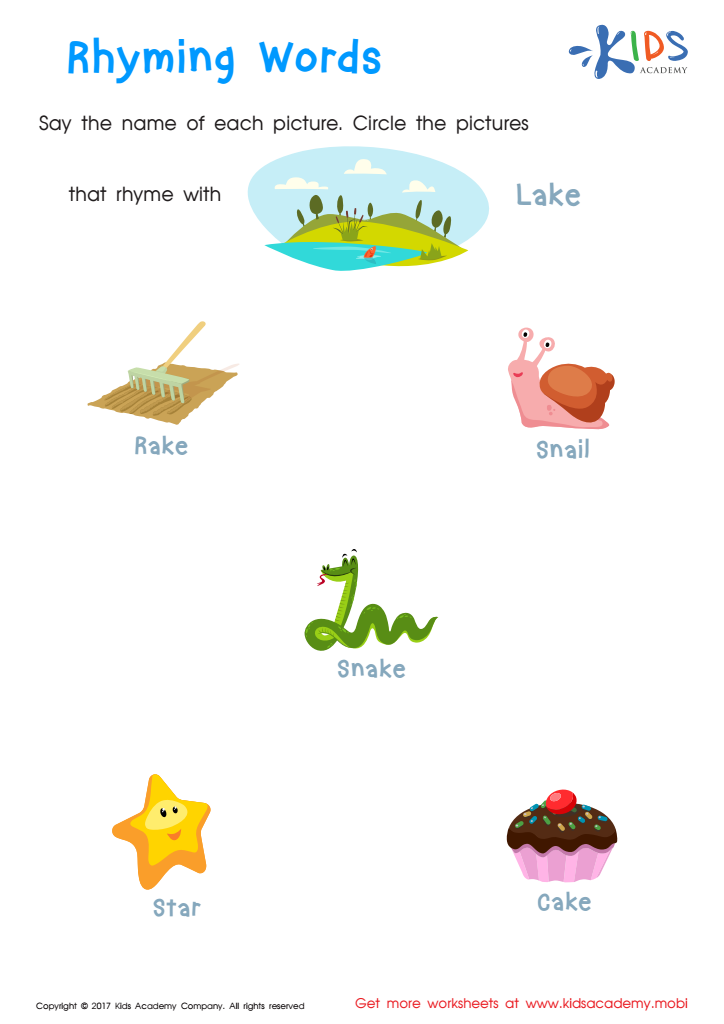
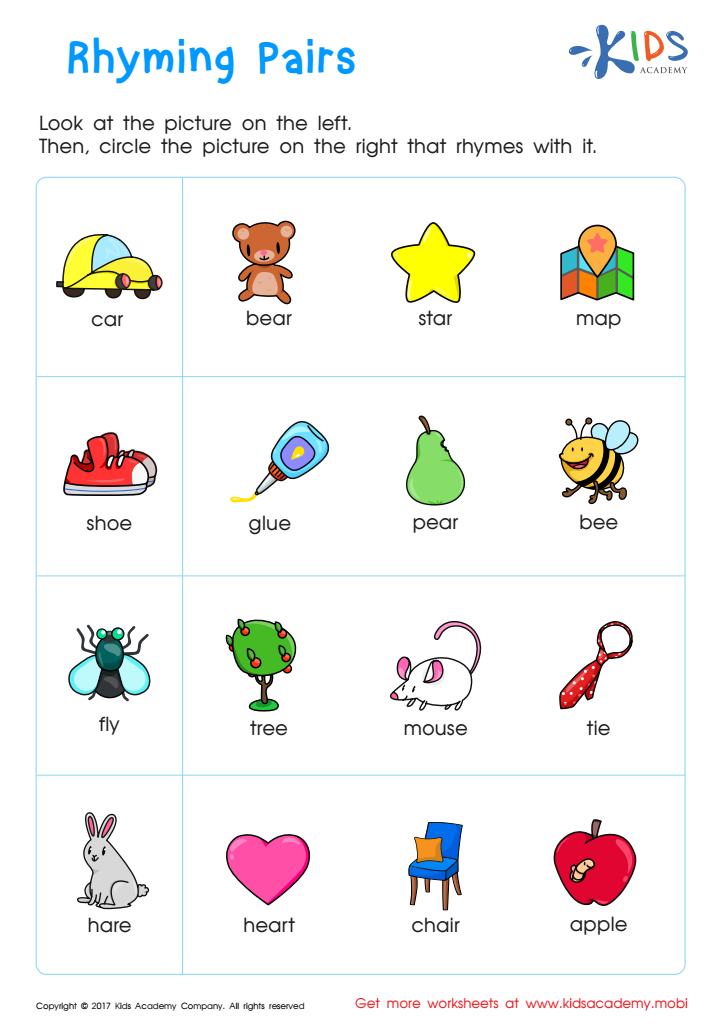
Rhyming Words Rhyming Worksheet
 Assign to My Students
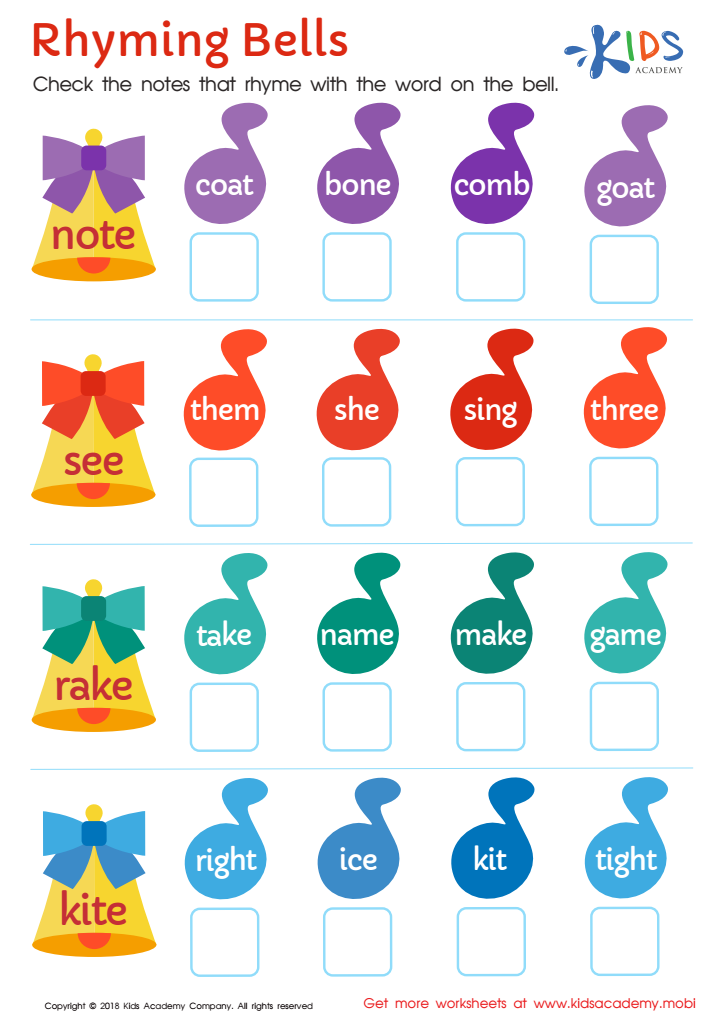
Rhyming Bells Worksheet
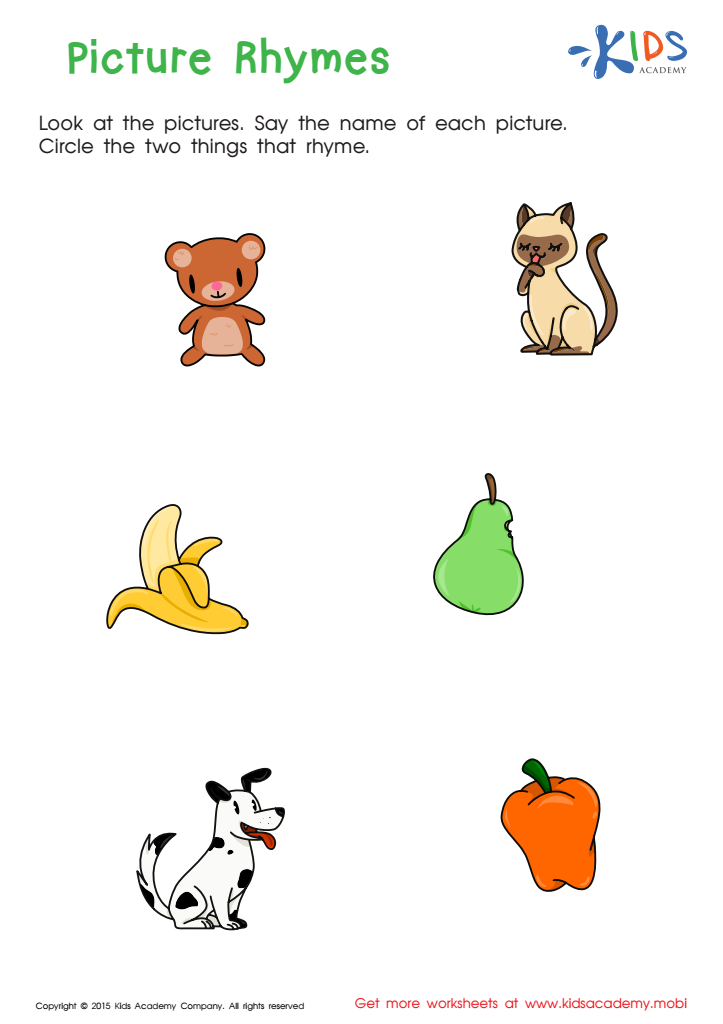
First Words: Picture Rhymes Worksheet








Rhyming skills development is crucial for children aged 7-8 as it lays a strong foundation for their literacy competencies. At this age, children are refining their phonological awareness, an essential skill that facilitates reading and writing. Understanding rhymes helps children recognize word patterns and sounds, making it easier for them to decode unfamiliar words. This skill also enhances vocabulary acquisition, allowing them to explore and express new ideas.
Furthermore, rhyming aids in memory development. When children learn poems or rhymes, they engage in repetitive listening and recitation, which strengthens their retention abilities. This cognitive exercise can improve their focus and attention span, contributing positively to their overall learning experiences.
Moreover, rhyming activities can be a springboard for creativity and language play. Engaging in playful language activities fosters a love for reading and writing, as children experiment with sounds and meanings. Finally, rhyming establishes social connections, as shared rhymes and songs can create bonding experiences between peers, parents, and teachers. Thus, nurturing rhyming skills not only enhances literacy but also cultivates cognitive, social, and emotional development, making it an essential area of focus for educators and parents.