Alphabet understanding Tracing Letters Worksheets for Ages 7-8
4 filtered results
-
From - To
Enhance your child's writing skills with our engaging Alphabet Understanding Tracing Letters Worksheets tailored for ages 7-8. Designed by educators, these worksheets will help children trace and recognize alphabet letters, improving their handwriting precision and literacy abilities. With fun activities like connecting dots and following guides, kids will learn to form letters correctly and confidently. These worksheets offer a perfect blend of practice and play, ensuring learning becomes an enjoyable experience. Develop a solid foundation in alphabet comprehension while keeping your child engaged in productive, skill-building exercises. Explore our selection today and boost your child's educational journey!
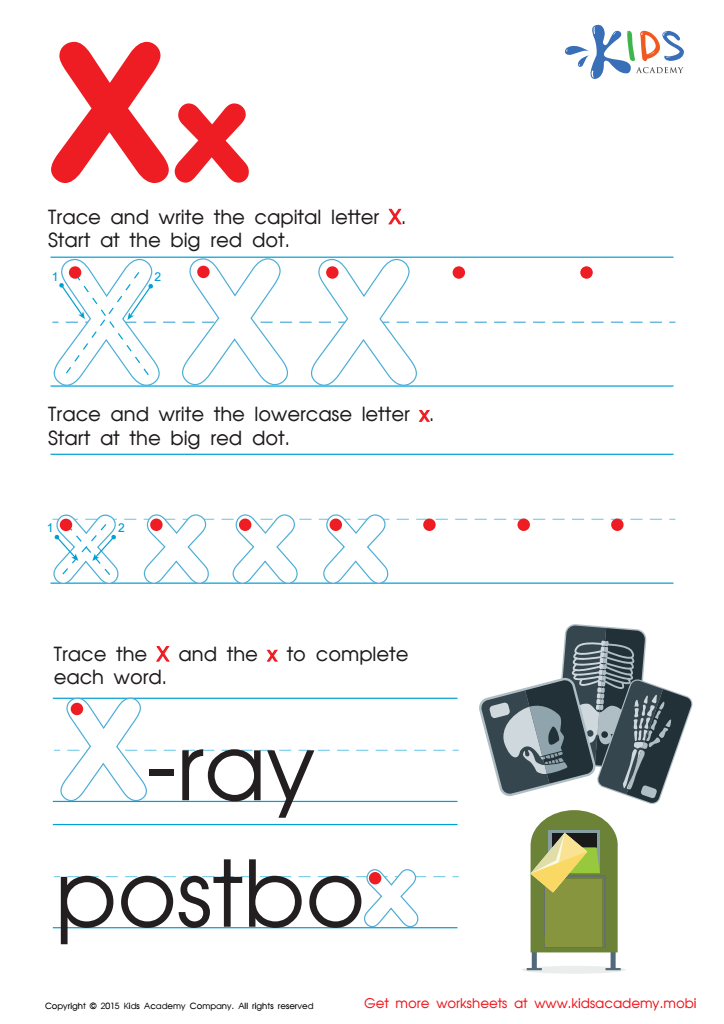
Letter X Tracing Page
 Assign to My Students
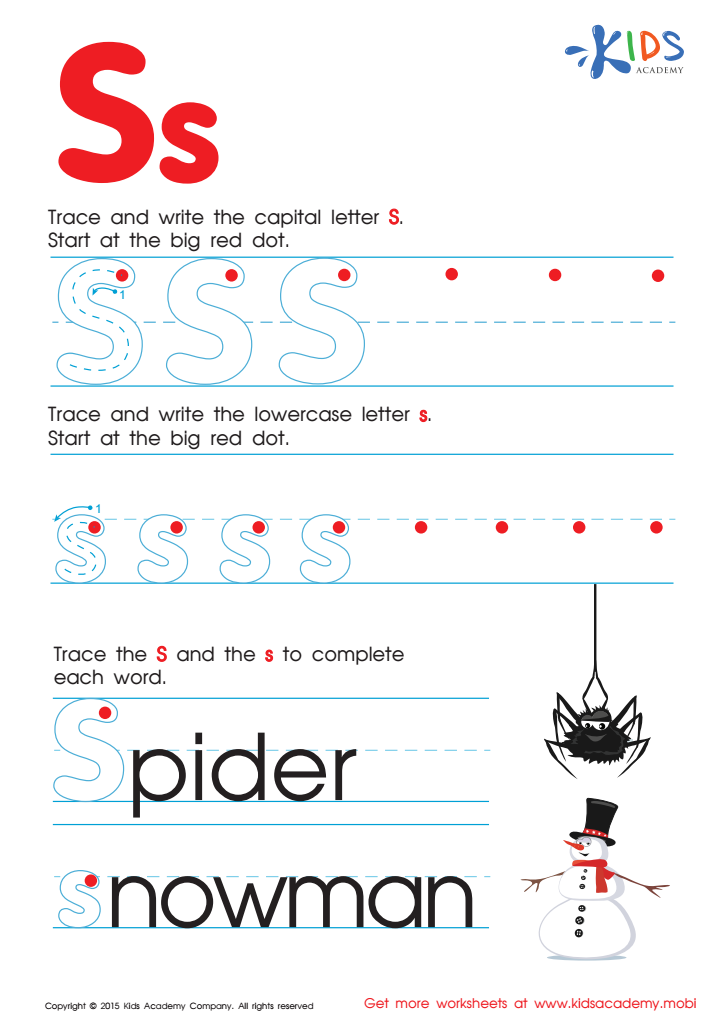
Letter S Tracing Page
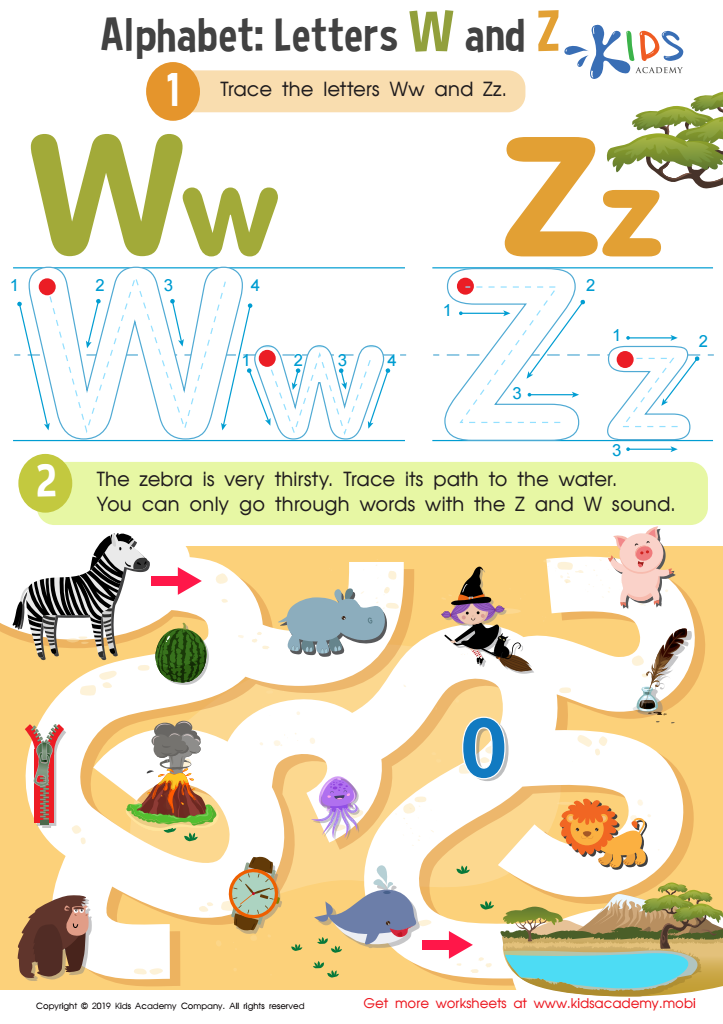
Letters W and Z Tracing Worksheet
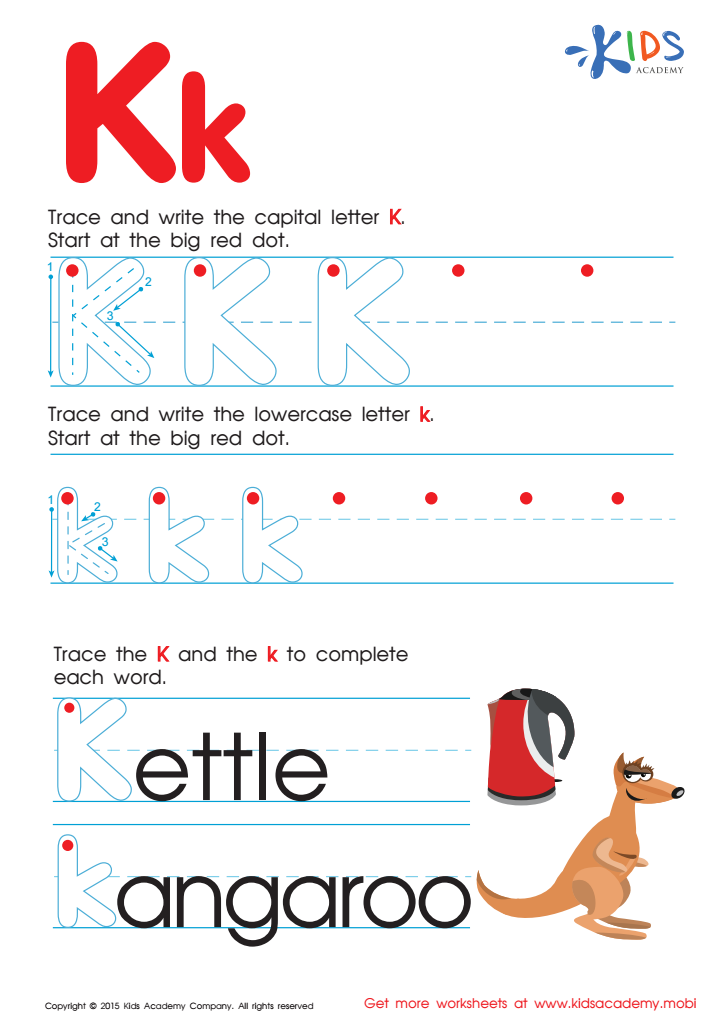
Letter K Tracing Page








Parents and teachers should care about alphabet tracing for ages 7-8 because it strengthens foundational literacy and writing skills that are essential for academic success. At this age, children transition from simple letter recognition to mastering the fine motor skills needed for precise writing. Tracing letters helps kids develop hand-eye coordination, muscle memory, and the proper formation of each letter. This prevents future writing difficulties, ensuring students can focus on content rather than mechanics.
Furthermore, tracing exercises reinforce letter-sound associations, boosting phonemic awareness—an essential pre-reading skill. By consistently practicing, children build confidence and fluency in their writing, which positively impacts their ability to express ideas clearly and read proficiently. When tracing integrates multi-sensory methods (e.g., saying the letter sound while writing), it caters to various learning styles, ensuring no child is left behind.
In our increasingly digital age, consistent tracing and writing practice act as a valuable counterbalance, enhancing cognitive development and hand-eye coordination. Prioritizing these skills at the ages of 7-8 sets a comprehensive educational foundation, supporting not only literacy but also overall academic and lifelong learning outcomes. Parents and teachers play a critical role in providing these opportunities to nurture well-rounded, competent learners.








