Letter recognition Tracing Letters Worksheets for Ages 7-8 - Page 2
26 filtered results
-
From - To
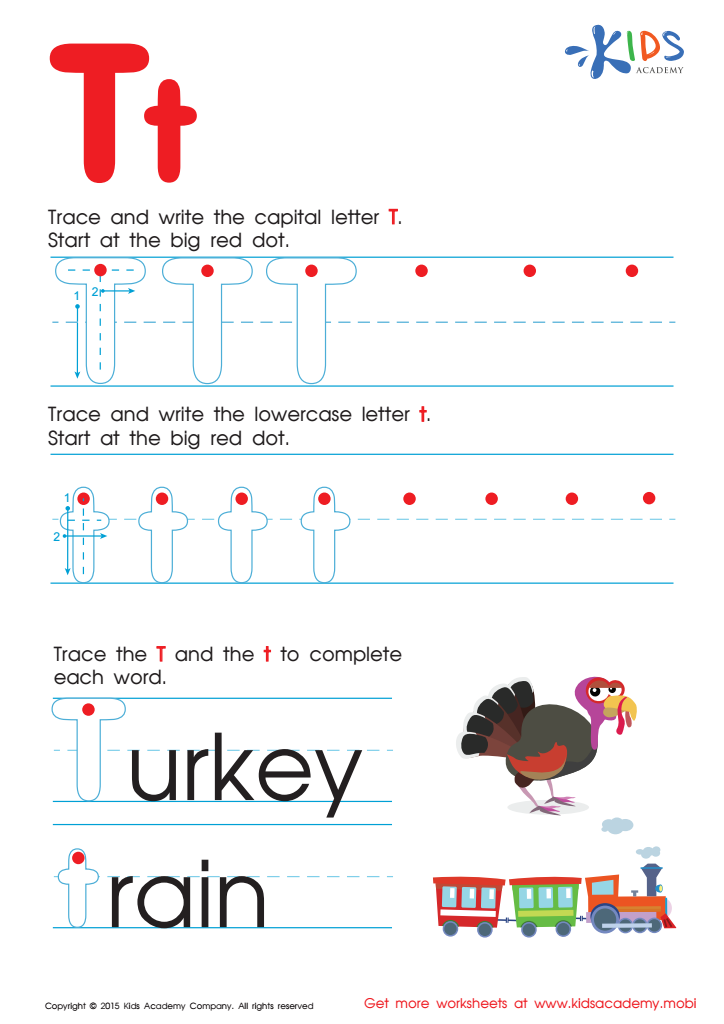
Letter T Tracing Page
 Assign to My Students

Letter D Tracing Page








Letter recognition and tracing letters are fundamental skills that serve as the foundation for literacy, especially for children ages 7-8. At this age, most children are transitioning from foundational pre-reading skills to more advanced reading and writing activities. Proficiency in recognizing and tracing letters boosts their ability to decode words, which is crucial for fluent reading. This competency directly affects their confidence and motivation to read and write independently.
Teaching children proper letter formation through tracing activities does much more than just improve their handwriting. It enhances their fine motor skills, eye-hand coordination, and spatial awareness, which are essential for all forms of written communication. These skills can also impact other academic areas, such as math, where number formation and the ability to focus on the details in a math problem are important.
For parents and teachers, ensuring children master these skills means providing them with critical tools that will influence their overall academic success. By investing time and encouragement into letter recognition and tracing practices, adults lay the groundwork for higher reading comprehension levels, improved writing skills, and overall academic achievement. When children experience early success and support in these areas, they are more likely to develop a lifelong love for reading and learning.








