Filters

28 filtered results

Clear all filters
Favorites
With answer key
Interactive

28 filtered results

Difficulty Level

Grade


Subject

    Check out this FREE Trial Lesson on Vowels for age 7-8!

    Distinguish between Long E and Short E

    Favorites
    With answer key
    Interactive
    • 7-8
    • Reading comprehension
    • Vowels
    Long and Short E Worksheet
    Long and Short E Worksheet

    Long and Short E Worksheet

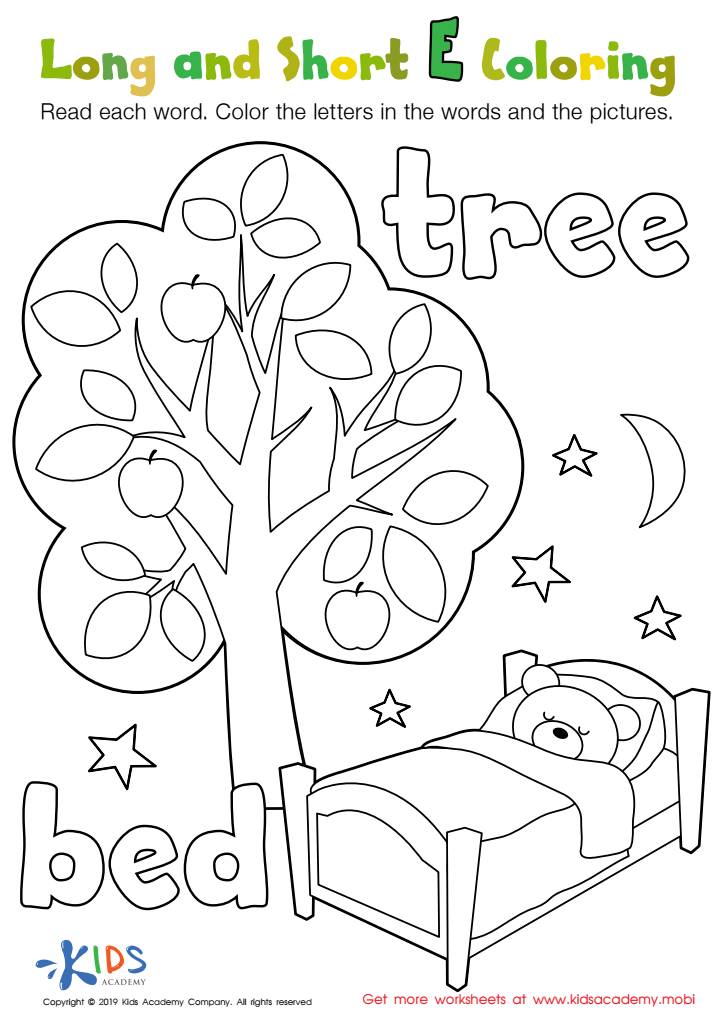
    This fun printout makes learning phonics enjoyable for Grade 3 students. Get them to read the words “tree” and “bed” to recognize the different sounds of the letter “E”. After hearing the words they can color the words and the pictures to understand differences between long and short vowels.
    Download (PDF)
    Assign to My Students
    Long and Short E Worksheet
    Worksheet
    Is It IE or Y/Ye? Worksheet
    Is It IE or Y/Ye? Worksheet

    Is It IE or Y/Ye? Worksheet

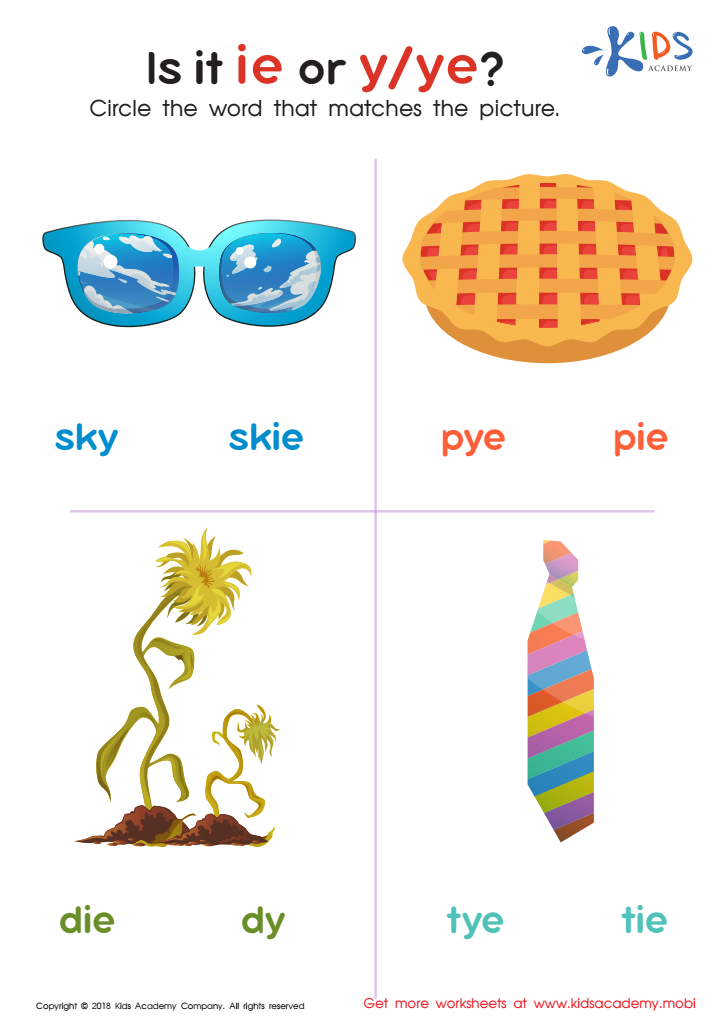
    Test your child's picture identification skills by pointing at common items in your house and asking them to name them. Then, look at the objects in this worksheet with your little one. Point at each one, ask for the name, then ask which spelling is correct. Help them circle the correct word.
    Is It IE or Y/Ye? Worksheet
    Worksheet
    Reading: IGH as Long I Worksheet
    Reading: IGH as Long I Worksheet

    Reading: IGH as Long I Worksheet

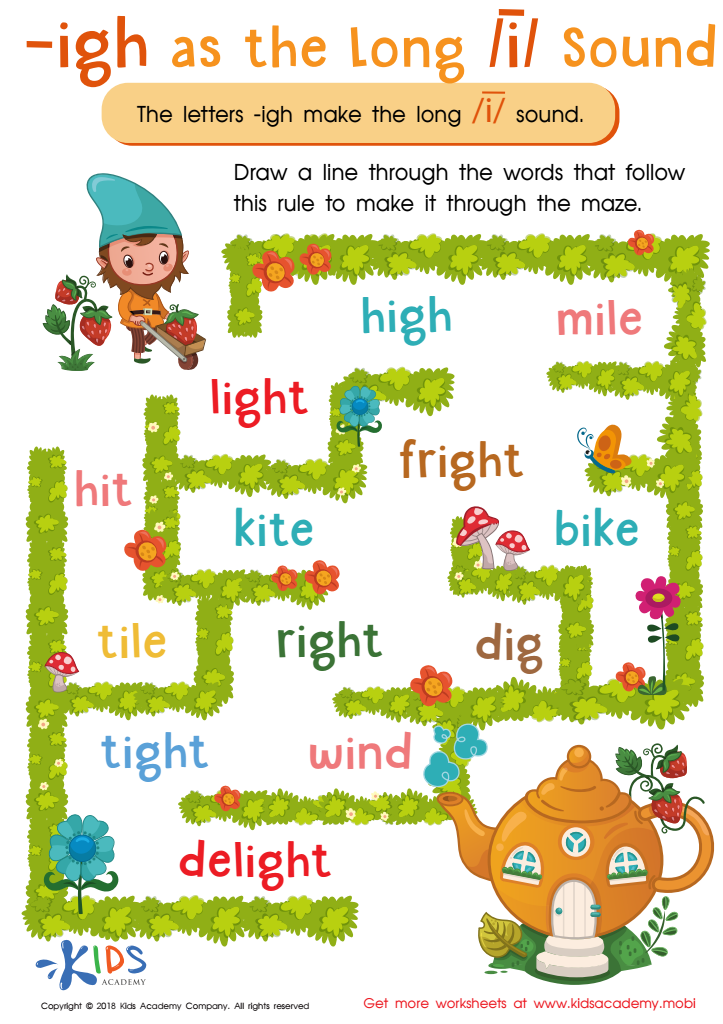
    Kids can have fun and learn with this maze! They'll look for and read words with the 'long I' sound spelled 'igh'. Most words ending with 'T' have this spelling. Decode words while learning about long vowel sounds and their spellings.
    Reading: IGH as Long I Worksheet
    Worksheet
    Phonics and Word Recognition: Assessment 2

    Phonics and Word Recognition: Assessment 2

    Phonics and Word Recognition: Assessment 2

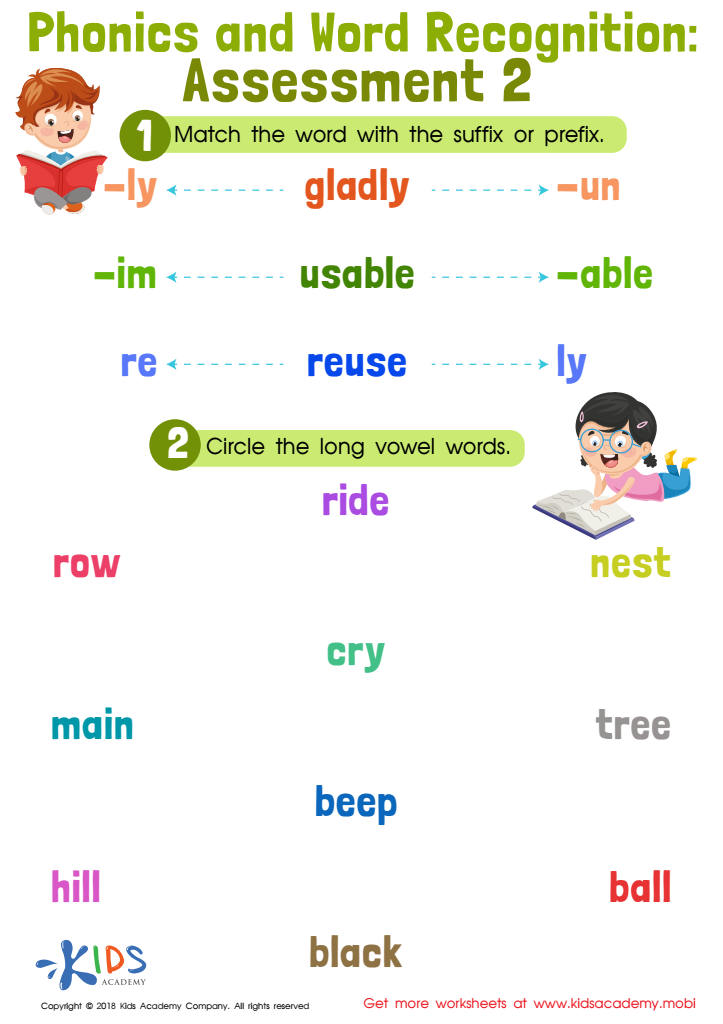
    Give kids common examples of suffixes and prefixes, such as "un-," "unhappy," "ness," "happyness." Ask them to match each word in the word recognition exercise to the correct suffix or prefix. Test phonetic understanding by having them circle the long vowel sounds.
    Phonics and Word Recognition: Assessment 2
    Worksheet


    Reading comprehension is critical for children aged 7-8 as they transition from learning to read to reading to learn. At this stage, mastering vowels is essential for building a strong reading foundation. Vowels are the backbone of word construction; understanding their sounds and how they interact within different words significantly enhances a child’s ability to decode text. By focusing on vowels, parents and teachers can help students improve their pronunciation, spelling, and overall word recognition.

    Moreover, effective reading comprehension allows children to grasp underlying concepts, navigate complex sentences, and retain information. This skill is not only vital for academic success but also for lifelong learning. As students engage with varied texts—whether stories, informational books, or poetry—having a solid understanding of vowels contributes to their ability to infer meaning and make connections between ideas.

    Additionally, fostering good reading habits early can boost self-confidence and encourage a love for literature. Supporting vowel recognition helps demystify difficult words and promotes a positive reading experience. Ultimately, investment in this phase of literacy equips children with crucial tools for navigating both present and future academic challenges, establishing a strong foundation for effective communication, critical thinking, and comprehension across all subjects.