Spelling practice Vowels Worksheets for Ages 7-8 - Page 2
29 filtered results
-
From - To
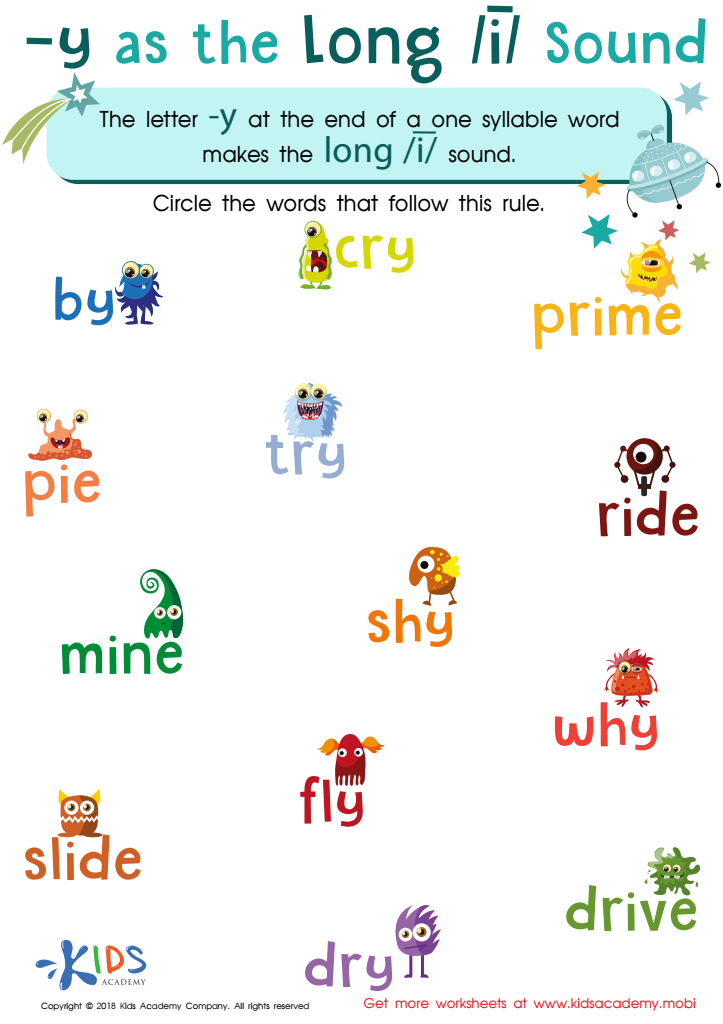
Reading: Y as Long I Worksheet
 Assign to My Students
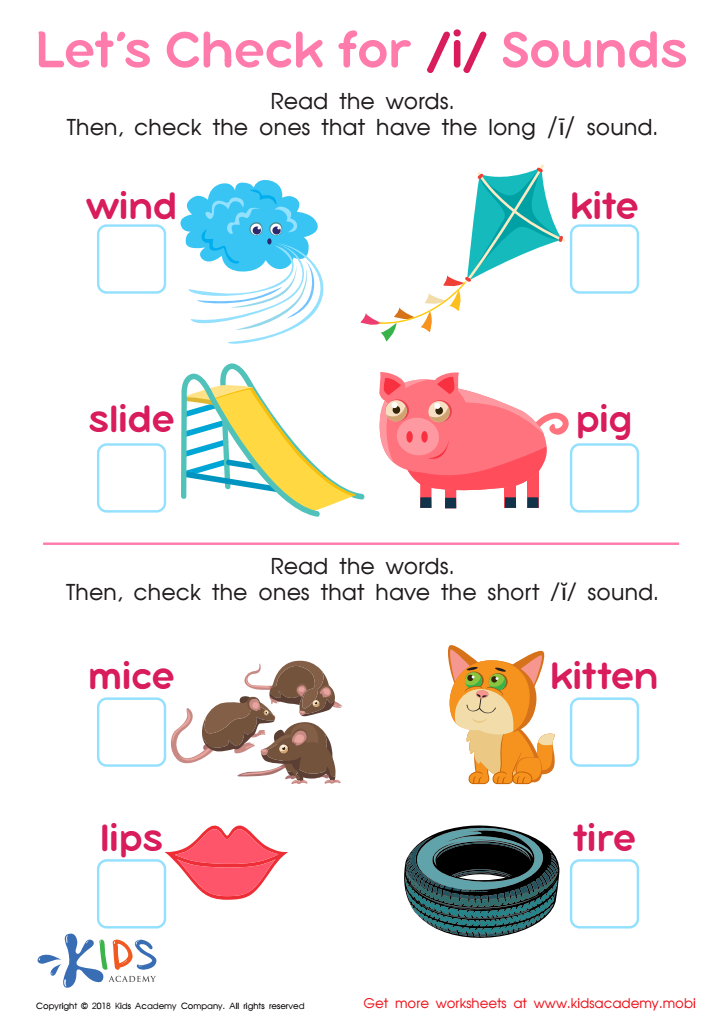
Let's Check for «i» Sounds Worksheet
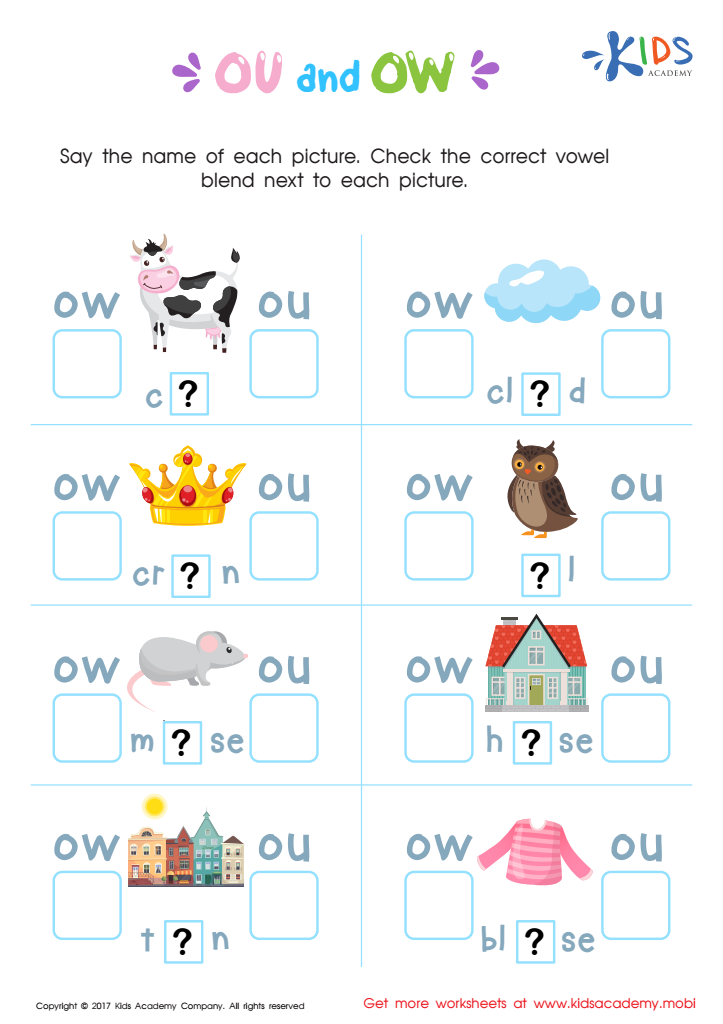
OU and OW Words Worksheet
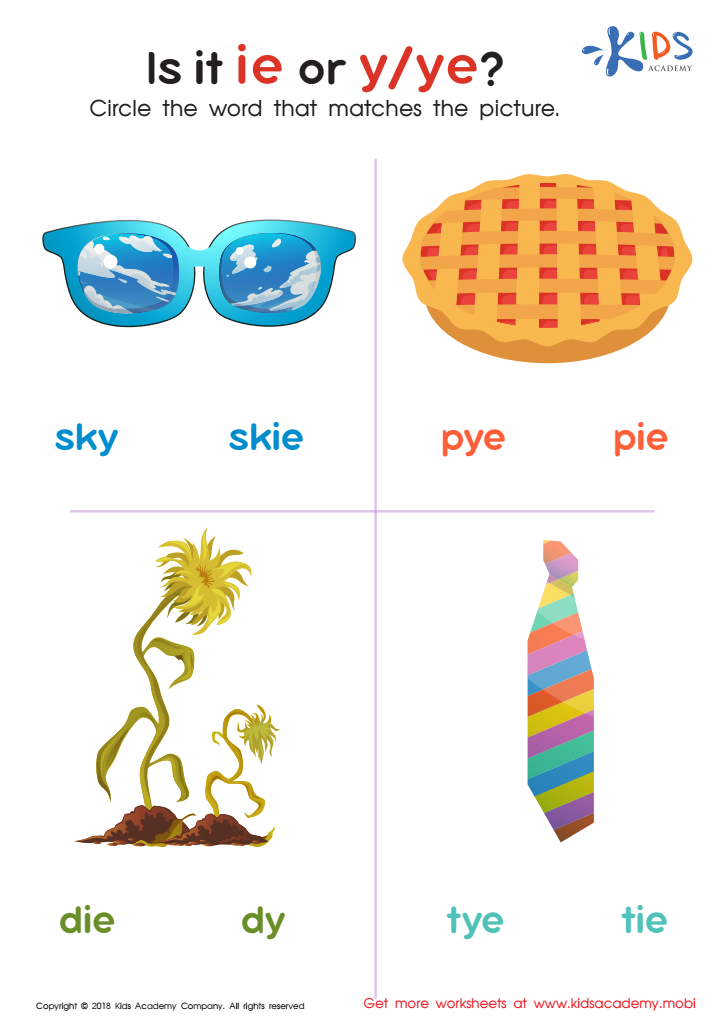
Is It IE or Y/Ye? Worksheet
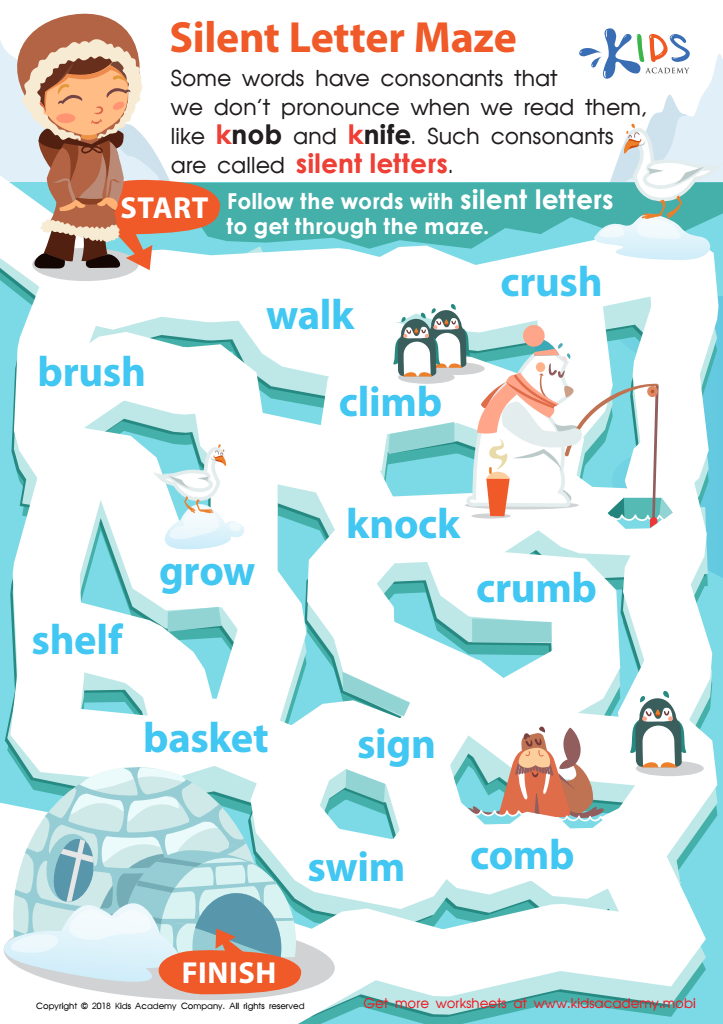
Silent Letter Maze Worksheet





Spelling practice for vowels is crucial for children ages 7-8 because it's a foundational aspect of early literacy. At this developmental stage, kids are transitioning from simple phonetic recognition to more advanced reading and writing skills. Vowels play a key role in this transition because they serve as the heart of syllables and words. Mastery of vowel sounds and spellings helps children decode new words, enhancing both their reading fluency and comprehension.
Firstly, accurate vowel spelling enables children to write more effectively. When kids know the correct vowel combinations, their writing becomes clearer and more understandable. This foundational skill helps them express ideas more precisely and builds their confidence in written communication.
Secondly, spelling practice aids in phonics instruction, which is essential for recognizing sound patterns. As children engage with different vowel combinations (such as "ai" in "rain" or "ea" in "bread"), they become better at predicting and reading unfamiliar words. This pattern recognition contributes to better pronunciation and articulation, fostering enhanced verbal communication skills.
Lastly, regular spelling practice sharpens cognitive skills such as memory and attention to detail. These skills are transferable to other academic areas and contribute to overall cognitive development. Therefore, parents and teachers who invest time in reinforcing vowel spelling sets the stage for lifelong literacy and learning success.







